









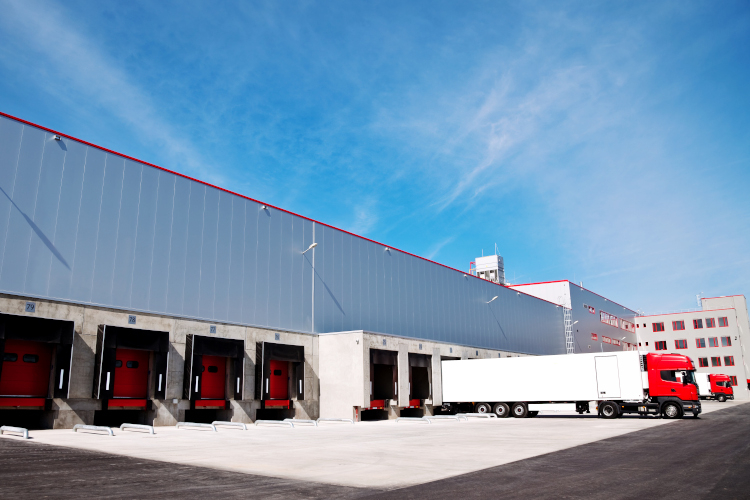
Poland, which is the fifth-largest warehouse market in the EU, has the opportunity to take over a significant portion of investments, production, and logistics processes being relocated from Asia.
30 percent of new warehouses in Europe are being built in Poland, and in terms of demand for space, we rank third, after the UK and Germany. In recent months, the investment market has slowed down slightly, but the prospects for the sector in our country are very promising. Changes in the global economy and the anxiety associated with the conflict in Ukraine have not, so far, limited the record-high interest in leasing warehouse space in our country. Demand in the warehouse market is at a record high. However, the number of new projects being implemented in this segment has fallen.
– In the first half of this year alone, almost 4 million sqm of space was delivered to tenants, about 12 percent more than a year earlier. The record-high absorption of our market, which, let us recall, exceeded 7 million sqm of space in 2021, places Poland on the European podium in terms of demand – informs Agata Karolina Lasota, Managing Director of LBC Invest. She admits, however, that the real impact of geopolitical factors on this sector in our country is not yet being felt. – The high volume of leasing recorded in the first 6 months of the year is a consequence of investment processes initiated last year. Signs of an economic slowdown are, however, beginning to be visible in the warehouse market as well. Although we can speak of a warehouse deficit in Poland, as there is only 3 percent of vacant space, there has been a decline in the number of new investments started in recent months – she explains.
A slight decline in production
Agata Karolina Lasota points out that the decline in investment activity in the domestic logistics market may prove to be temporary, as a scenario involving a broader relocation of production from China and other Asian countries to our country is quite realistic. She admits that further disruptions to global supply chains from China and rising container transport costs from Asia are effectively motivating companies to shorten supply lines. An influx of clients from Western Europe who want to relocate part of their production and logistics operations to us is also likely.
– In addition to an attractive logistics base, Poland offers investors a large internal market, lower labor costs compared to Western European countries, and well-educated people willing to work. We are receiving inquiries from companies from Russia and China that are analyzing the possibility of moving production to our country. We are also being approached by Ukrainian entrepreneurs. Companies want to secure business continuity as best as possible and are taking actions that can guarantee them uninterrupted operation in the future. They are planning to increase warehouse stocks, securing facilities for production, and striving to increase efficiency and optimize logistics costs – informs Agata Karolina Lasota.
In the second quarter of this year alone, domestic warehouse space resources grew by 2.2 million sqm. Wrocław, Upper Silesia, and the central Poland area increased their warehouse potential the most this year. Resources in the warehouse sector count approximately 26.5 million sqm of modern space. This gives us fifth place in terms of the size of the warehouse market in the European Union.
Poland is the second fastest-growing market in Europe
At mid-year, almost 4.5 million sqm of warehouse and industrial space was under construction. In terms of resource growth, this places the Polish market in second place in Europe. At mid-year, 30 percent more space was under construction than at the end of 2021, but from spring to summer, there was a nearly ten percent drop in production. If, however, we take the average of the last few quarters, the decline is already more visible. The amount of space being developed in the West Pomeranian region, Lower Silesia, and the central part of the country has decreased the most.
– Already in the summer, a decline in the number of warehouse projects being implemented in Poland speculatively was visible. Global economic turbulence and the development of the conflict in Ukraine are causing uncertainty among investors. It is difficult to estimate the real level of future construction costs. However, the largest players are still looking for land for investment, despite the persistently high land prices. Building land banks testifies to the desire of developers to return to the path of intensive investment activity. Companies expect that the market will continue to develop rapidly. They are preparing subsequent implementations, but the start of project construction is determined by prior securing of space with contracts – admits the Managing Director of LBC Invest.
The decline in the number of new investments in the warehouse sector in Poland is not related to demand. Interest in leasing remains at a record high. In the second quarter of this year, the demand for warehouses reached a historical maximum. The slowdown in the pace of market development is mainly related to difficulties in project implementation and the increase in costs of new investments.
Rents on the rise
Rising construction and property maintenance costs have also affected warehouse rental prices, which until now had remained at a very low level in Poland compared to other European markets. The highest increases were recorded in the Kraków and Tricity voivodeships and in the Warsaw area. According to LBC Invest data, since the beginning of the year, rents have increased by about 10 percent up to 25 percent, depending on the location.
– Due to the low availability of vacant space and the limitation of new supply, one can expect further increases in rental rates throughout Poland, which began to rise at the turn of the year. The Polish market is no exception; the increase in the cost of renting warehouse space is visible throughout Europe – admits Agata Karolina Lasota.
Higher rental prices are certainly a motivating factor for investors due to the increase in investment profitability. However, high prices for attractive land and twice as high costs associated with project financing by banks may cool investment activity. ESG requirements make warehouse facilities environmentally friendly, energy-efficient, and comfortable to use, but the cost of implementing such projects is also correspondingly higher.