








With a large number of products or even point-of-sale (POS) materials, logistics-related costs are unavoidable. But that does not mean you have to overpay. Smart inventory management, combined with good transport and distribution organization, can work wonders.
What can you do to reduce supply chain costs? First of all, break down individual services into their component parts. Consider what you can improve at every stage of storing, transporting, and distributing your goods. Also, keep in mind that outsourcing certain services can significantly impact both the improvement of the entire goods flow system and cost reduction.
1. Product and packaging optimization. Are the products sold by your company packed in such a way that the packages are as small as possible? Do you use the manufacturer’s original packaging when repacking goods? Do you use, for example, waste paper from old packaging as package fillers, or do you buy separate plastic fillers?
The answer to each of these questions brings you closer to concrete savings. It is very important that products occupy as little warehouse space as possible and that packaging and fillers can be reused. This is not only economical but also ecological.
2. Maximizing warehouse space utilization. If you use external warehouses, find out how the space you are paying for is being utilized.
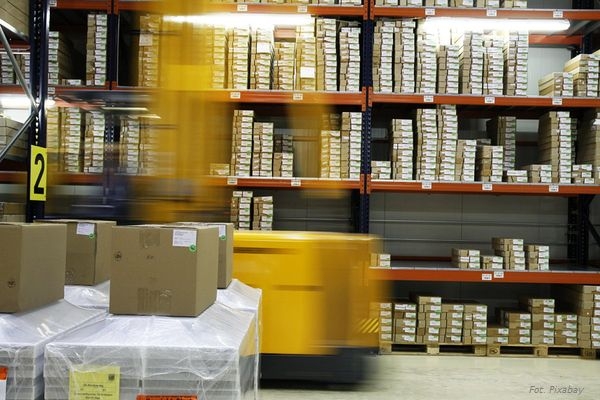
– In our warehouse, we have 1.6 pallets per 1 sq. m, while the standard conversion rate is 1:1 on average – says Urszula Rąbkowska from XBS Group. – To maximize the available space, we ensure narrow aisles in the warehouses and use storage locations of various sizes. Additionally, while caring for both costs and ecology, we use LED lighting. In turn, a clear navigation and labeling system in the warehouses translates into more efficient work.
It is worth being aware that if a warehousing company uses available space poorly and generates unnecessary costs itself, this will also translate into the fees charged to your company.
3. Reducing inventory. The problem for many companies is inadequate inventory management. Thoughtless purchases of excessive quantities of goods cause storage costs to rise. Later, however, the system for evaluating inventory in terms of its usefulness fails. As a result, products that will never be sold or used in any other way remain in warehouses, and the company incurs the costs of storing them. Remember that inventory should always be kept at the minimum level necessary for the efficient fulfillment of current orders. A big warehouse cleanup sometimes leads to a reduction in inventory by as much as 50%.
4. Universal POS materials. In many industries, it is standard to buy and store product displays used later in stores during promotional campaigns. If your company also uses them, it is worth ensuring that they are universal materials that can be reused during various campaigns. It is best if they are materials with a replaceable topper or modular ones that are easy to assemble and made of ecological materials.
5. Warehouse centralization. One central warehouse instead of thirty? Practice, e.g., at XBS Group, shows that such centralization is not only possible but also brings financial benefits to companies. However, even if your company is not among the FMCG market leaders, a smaller number of warehouses will almost always be more profitable than maintaining a network of smaller storage spaces in many locations. Sometimes less is more.
6. Avoiding oversized shipments. Both during transport and storage, the highest costs are generated by packages with non-standard dimensions. Therefore, try to keep such shipments to a minimum.
7. Transport optimization. By grouping orders and optimizing routes, you can relatively easily reduce transport-related costs. Consider whether you could combine two shipments into one or change the route so that an additional delivery or pickup of goods can be provided during a single trip.
8. Opt for outsourcing. Both in terms of warehousing and distribution, efficient outsourcing can allow for better organization and lower costs. And if different categories of services within the supply chain are handled by one company, an additional benefit will be the handling of all stages within a single IT system. This, in turn, means efficient information flow. In fact, full logistics support can cover almost everything – from purchasing and warehousing to the delivery of goods, issuing invoices, and handling complaints on behalf of your company. Fewer intermediaries mean a shorter supply chain and, consequently, savings.
These are likely not all the possibilities through which logistics can be both cheaper and more efficient. Lower costs will also be influenced by reducing the number of suppliers (especially regarding those product groups that generate low revenue) and, above all, by responding flexibly to changing market demand. By reducing unnecessary costs at every stage of the logistics chain, you can relatively easily influence the increase in the company’s profitability.