








According to data from the end of June 2022, a total of 50,990 electric passenger and commercial vehicles were registered in Poland. During the first six months of 2022, their number increased by 12,207 units, i.e., 45% more than in the corresponding period of 2021, according to the Electromobility Meter launched by PZPM and PSPA.
Fully electric vehicles (BEVs) accounted for 48% of the vehicle fleet, while the remainder (52%) consisted of plug-in hybrids (PHEVs) – 25,185 units. The fleet of electric delivery and heavy-duty vehicles also continues to grow, numbering 2,107 units at the end of June, as does the number of hybrid passenger and delivery cars, which increased to 407,466 units. At the end of last month, the fleet of electric buses in Poland grew to 762 units.
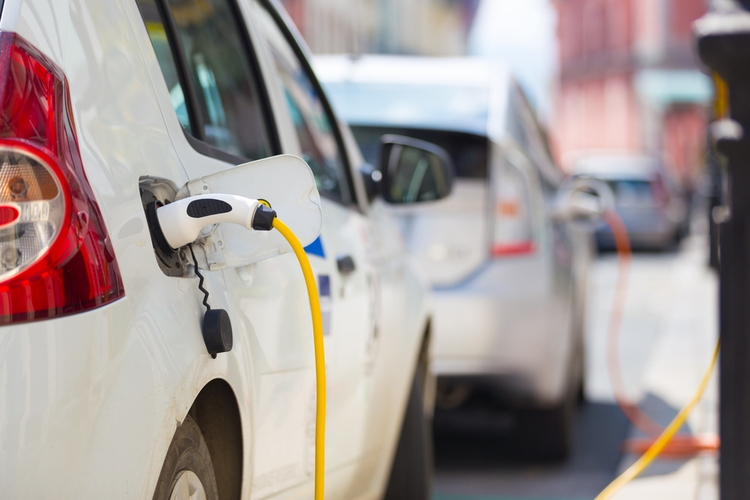
Parallel to the fleet of electric vehicles, charging infrastructure is also developing. At the end of June 2022, there were 2,232 publicly accessible electric vehicle charging stations (4,327 points) in Poland. 29% of them were fast DC charging stations, and 71% were slow AC chargers with a power of 22 kW or less. In June, 42 new publicly accessible charging stations (74 points) were launched.
– The fact that the number of registrations of battery-powered cars and plug-in hybrids, both passenger and commercial, is growing very dynamically is not surprising, especially in light of the “My Electrician” program. However, what is particularly worth emphasizing is that the number of registrations of all low-emission vehicle segments is increasing and is already approaching 40% of the market. While the number of newly registered gasoline cars remains at roughly 50% of the market, we can already say that Poland is at the forefront when it comes to moving away from diesel-powered cars. Over the last six months, their share in registrations was slightly above 10%, which is almost half the European average. Taking into account the decisions made by the European Parliament and European ministers of climate and environment regarding the practical ban on the registration of internal combustion engine cars from 2035, it should be expected that the number of registrations of low-emission cars will grow dynamically – says Jakub Faryś, President of PZPM.
– The “My Electrician” program is bringing particularly positive results in the commercial vehicle segment. The attractive subsidy amount (up to PLN 70,000) and the lack of a price limit meant that in the first half of 2022, more than three times as many zero-emission delivery vans were registered in Poland than in the first half of 2021. The real increase in buyer interest in this category of vehicles is still ahead of us due to the constantly expanding model offer of commercial EVs (currently numbering 21 variants) and the implemented fleet electrification strategies of large enterprises. Importantly, electric delivery vans are becoming increasingly practical from the drivers’ perspective – the average range of models that appeared on the market in 2022 already exceeds 250 km on a single charge, which is more than enough to carry out daily urban logistics tasks – says Maciej Mazur, Managing Director of PSPA.