









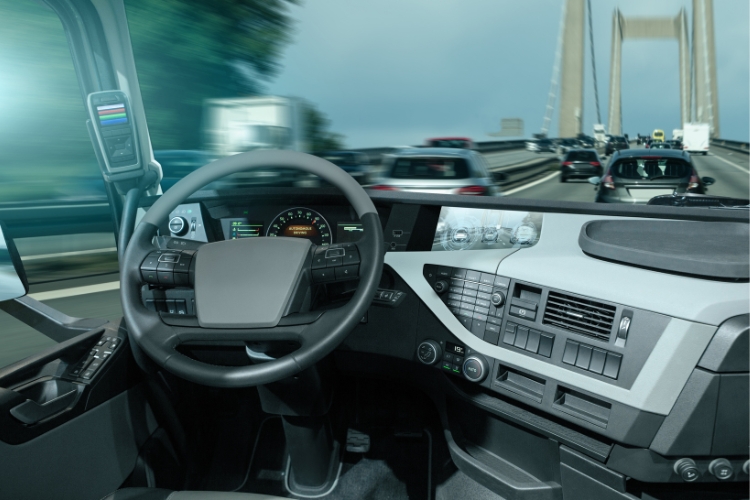
A major challenge for the logistics industry in 2025 will be the need to adapt transport processes to sustainability standards, but this is certainly not the only factor that requires special attention. Current forecasts indicate that the greatest success will be achieved by those companies that manage to maintain and expand their contact networks, thereby ensuring flexibility and comprehensive services.
Both domestic transport and international transport are facing the necessity of organizing a secure and market-resilient supply chain. Rising operating costs combined with changing legislation may lead to further shifts in the logistics market in 2025.
1. Ecology and sustainability in transport
One of the most important trends this year will be the wider use of low-emission vehicles. Making a noticeable contribution to reducing CO2 emissions is a challenge the industry has been facing for some time. CSRD requirements, which place great emphasis on this factor, are of great importance here. Vehicles with alternative propulsion currently seem to be one of the main determinants of changes in passenger and freight transport.
Pressure to implement these solutions is growing year by year due to climate change. Alternative fuels, such as biodiesel or hydrogen, are increasingly being used in transport. Pro-ecological changes have also influenced the increased use of hybrid and electric vehicles in logistics.
Such solutions, in addition to the obvious environmental benefits, help build the image of a reliable and responsible transport brand.
2. Autonomous trucks
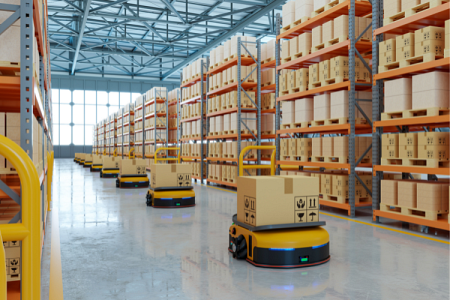
Autonomous vehicles are certainly among the most modern solutions in logistics. Currently, they are used with excellent results in closed logistics facilities, as this facilitates the implementation of required safety procedures, but the use of autonomous vehicles in logistics seems to carry many opportunities and possibilities, especially in the future. Most importantly, these are zero-emission vehicles, which allows for reducing transport costs by as much as 50-65%. A novelty may be the large-scale use of such vehicles in passenger and freight transport. Most likely, these trucks will initially require the presence of a human supervising the driving process, but over time this will be necessary to a lesser and lesser extent. It is predicted that in the future it will be possible to implement a so-called autopilot function, analogous to solutions used in aircraft. This will allow for relieving the driver, as manual steering of the vehicle will only be necessary on the most difficult and demanding sections of the route.
3. Digitalization of logistics and automation of key processes
Analyzing huge databases gives entrepreneurs a competitive advantage, as they enable detailed forecasts, effective planning, and lightning-fast reactions to changes. Modern solutions allow, among other things, tracking the flow of cargo in real-time. Image processing technologies, as well as modernized sensors, take these operations to an even higher level. This significantly increases profitability, allows for saving money, and also using resources in a smarter way.
In 2025, the automation of logistics processes will gain even greater importance. It is predicted that drones will be used on a wider scale, for example, which is expected to translate into significant time savings and even better organization.
Brands that apply automation and robotization to the fullest extent possible have the best chance of increasing their competitive advantage. AMR and AGV robots are the future of warehouses and a huge potential to be utilized in the industry. Thanks to them, it will be possible to reduce the frequency of human errors and speed up the execution of warehouse work.
Responsible and conscious actions must include strengthened protection against cybercrime. The risk of hacker attacks is still a real danger, so the use of appropriate security measures and the highest protection of customer data should be the standard.
4. Rising energy costs and personnel shortages
Optimizing processes due to environmental challenges will be the main determinant of changes for transport companies in the coming years. The industry will primarily have to face a severe increase in transport execution costs, caused by, among other things, rising energy prices, which will affect the increase in final corporate expenditures.
Logistics has also been struggling with serious personnel shortages for some time. Qualified specialists who want to permanently link their professional life with the industry are still in demand. Professional drivers, analysts, and dispatchers are valued and very well paid. Despite the fact that the shipping industry has been focusing on new technologies and artificial intelligence for several years, a human, with their professional preparation, will not be fully replaceable for a long time. Robots and AI are unable to take over the most critical processes in the transport sector.
Forecasts also clearly indicate that full truckload (FTL) transport in 2025 will largely give way to less-than-truckload (LTL) transport, and rapid adaptation to these changes will determine the positions of leaders.
5. Personalization and individualization of transport services
Logistics has been considered an industry with extraordinary development dynamics for several years, considering the entire global economy. The year 2025 will certainly bring many changes to the market, and those companies that best adapt to using modern technologies will survive. The individualization and personalization of transport services are also of key importance. A pro-customer approach, which iCaro Logistics takes special care of, will become even more essential. Effective adaptation to the growing and changing needs of the market will be supported by artificial intelligence, and innovations such as blockchain will enable the rapid detection of unforeseen problems. This will positively influence the guarantee of transport service quality, which is so important to customers. Brands that are not afraid of these changes will achieve a leading position in the market.