








Sustainable Development Goals (SDGs), Circular Economy (CE), food waste prevention, single-use plastic bags, and technological development in the recycling industry are the five concepts that will be the focus of waste management activities in the coming year. According to Stena Recycling, these are the areas around which the main trends of 2018 will be created.
– 2018 trends in waste management will be oriented around sustainable development, which benefits business, society, and the environment. This is the main trend observed globally and increasingly visible in Poland. It is gratifying that the beliefs and habits of consumers and entrepreneurs are changing, and issues that seemed impossible to implement just a few years ago are now at the center of public debate – says Piotr Bruździak, Sales and Marketing Director at Stena Recycling.
Convincing entrepreneurs to implement the Sustainable Development Goals, UN Agenda 2030 (SDGs)
SDGs (Sustainable Development Goals) concern seventeen interconnected issues agreed upon by representatives of UN member states, businesses, and numerous institutions and organizations. They set the direction for changes in the global economy. They focus on actions that would counteract social stratification and economic inequality in various regions of the world. They are also intended to strengthen peace and freedom globally. They also relate to initiatives associated with sustainable waste management and environmental protection.
Member states are currently developing solutions aimed at realizing this ambitious vision; however, for this to be possible, the business sector must get involved. Already, 64% of CEOs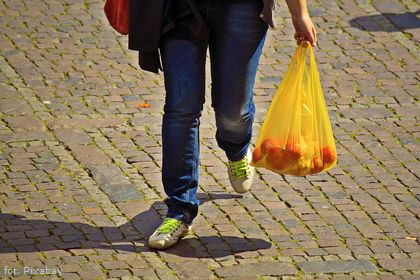 affiliated with the UN Global Compact (the world’s largest platform engaging business in the implementation of SDGs) state that issues related to sustainable development play a key role in their strategic planning and business development.
In Poland, the Ministry of Development has engaged in developing the legislative basis for this initiative. The UN goals are simultaneously in line with our country’s current development strategy, which creates a positive atmosphere around the issue. At the end of 2017, the “17/17 Campaign” was summarized, which – as part of the “SDGs in Practice” program, implemented by CSR Consulting and Stena Recycling, among others – popularized the Sustainable Development Goals among Polish enterprises. At a conference at the Ministry of Development, where the results of the activities were presented, more entities joined the group of companies supporting the initiative – there are now over 70. Such activities are necessary for the UN assumptions to stop being just theory. However, awareness of the SDGs among Polish companies is still too low. It is predicted that in 2018, more companies will join those involved in implementing the Agenda 2030 goals, and the topic will gain popularity. The key challenge will be convincing businesses that sustainable development is not just about obligations and costs, but also about benefits.
Adapting business models of enterprises to the circular economy
The linear economic model is still the most popular business concept. The circular economy, which promotes, among other things, the rational management of natural resources and greater use of secondary raw materials, will gain popularity. However, for this to be possible, companies should analyze (verify) their existing business models and look for new opportunities in the CE. And the potential is enormous. The “Waste to Wealth” publication issued by Accenture in 2015 indicated that by 2030, the transition to a circular economy could increase the value of the global economy by as much as 4.5 trillion dollars. This will certainly be an impulse for dynamic development for those who incorporate their business into a circular model at the right time.
In Poland, the idea of a circular economy is slowly breaking through to public awareness. This concept exists in public debate, but mainly during conferences, congresses, and in the media. Still, too small a percentage of entrepreneurs use and develop CE solutions in their companies. According to research conducted by Stena Recycling in 2017, just over 28% of Polish residents have ever heard of the Circular Economy. CE is most often associated with the waste management process. It is not emphasized enough that properly implemented circular economy assumptions allow not only for effective waste flow management or obtaining more favorable conditions for their collection but also for gaining a competitive advantage.
– The circular economy is a business concept that allows for the rational use of natural resources, the supplies of which are not infinite and in some cases may soon run out. It also places great emphasis on recycling, which significantly reduces the costs of obtaining materials necessary for industrial production. At the same time, it promotes efficiency and common sense. These are aspects close to every entrepreneur, which is why companies in Poland are increasingly convinced to implement CE. However, information campaigns and the promotion of specific examples that have been put into practice and are being implemented, bringing additional benefits to companies, are necessary – says Piotr Bruździak.
Further reduction of food waste
In 2017, many countries decided to counteract food waste. This was visible in the USA, where this practice was countered through the implementation of appropriate laws. France was the first country to introduce a nationwide ban on food waste in supermarkets. The Czech Republic put an end to food disposal by large stores. Since January 1st, large-format markets in that country (with an area of over 400 sq. m.) are required to donate unsold products to charities. Similar regulations apply in Italy, among others. In 2018, this trend will certainly strengthen.
This year should bring the finalization of work on appropriate regulations in Poland as well. The act processed last year, which would support the fight against waste, is at the stage of final arrangements. In our country, according to data from Greenpeace Poland, about 9 million tons of food are wasted every year. This gives an average of over 200 kg of unused food per inhabitant. So we have something to work on. Certainly, the most important thing is preventive action, promoting lower consumption, or responsible shopping. No less important is addressing the issue of recycling and recovery of waste from catering, retail chains, or the agri-food industry. Processed food waste, e.g., in the form of biomass, instead of ending up in landfills, allows for the production of clean energy.
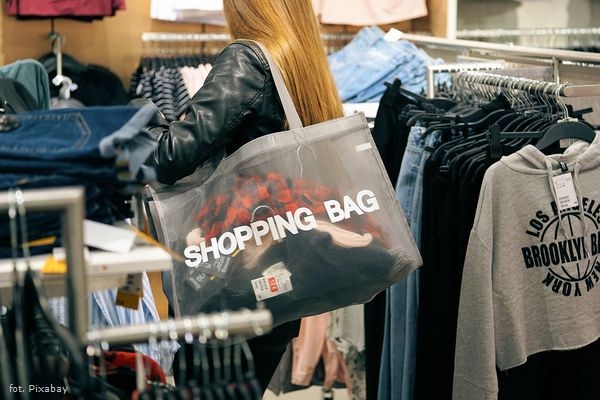
Decrease in the use of single-use plastic bags
Currently, over 40 countries worldwide have banned the use of single-use plastic bags in part or in full or have introduced fees for their use. Among them are: Ireland, Great Britain, Latvia, France, 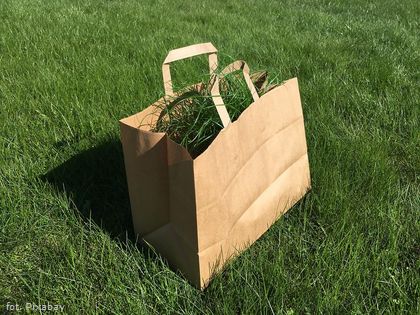 or Italy. In most countries, the regulations have led to a reduction in the use of plastic bags. The solution applied in Great Britain brought surprising results. Within a year of introducing a 5-pence fee, the consumption of single-use plastic bags fell by 85% (data: UK Department for Environment, Food and Rural Affairs, July 2016).
The Ministry of the Environment in Poland has introduced a recycling fee, which is intended to limit the consumption of plastic bags. This regulation entered into force on January 1, 2018. However, it is necessary to raise ecological awareness, look at the entire process of managing this product, and have a constructive discussion between all parties: administration, entrepreneurs, and consumers. These are elements that would allow completing the new act and developing effective solutions in the field of recycling and recovery of single-use plastic bags, which we will not eliminate completely at this moment. In 2018, a further reduction in the use of plastic bags in Poland and around the world is expected. In addition to legislation, this process will be supported by growing consumer awareness.
Technological development of the recycling industry
The recycling industry is one of the most innovative branches of the economy. A good example is the development of the industry in the United States (robotization and automation of the waste sorting process, reducing carbon dioxide emissions in logistics, e.g., through the use of CNG fuel, attempts to use autonomous vehicles). Experts from Waste Dive indicate that 2018 will be a time for investment in innovation.
Christer Forsgren, Technical and Environmental Director at Stena Recycling International, believes that 99% of the waste in landfills is material that we can recover, but the cost of recycling makes it currently unprofitable. In less than 10 years, extracting raw materials from landfills will become an important field of business because the content of elements such as copper or gold in the waste there is higher than in mined ore.
Stena Recycling is actively participating in the development of technology used in the recycling industry. Over a year ago, the Stena Nordic Recycling Center began its operations – the most modern and largest, occupying an area of 80 football pitches, waste processing plant in Europe. Already today, the technological solutions applied there allow for the recovery of 95% of materials from a scrapped car. Until recently, this seemed unattainable. Forsgren also points out that the use of robots in the waste management industry will grow. Their application in the field of recycling is still very limited.