









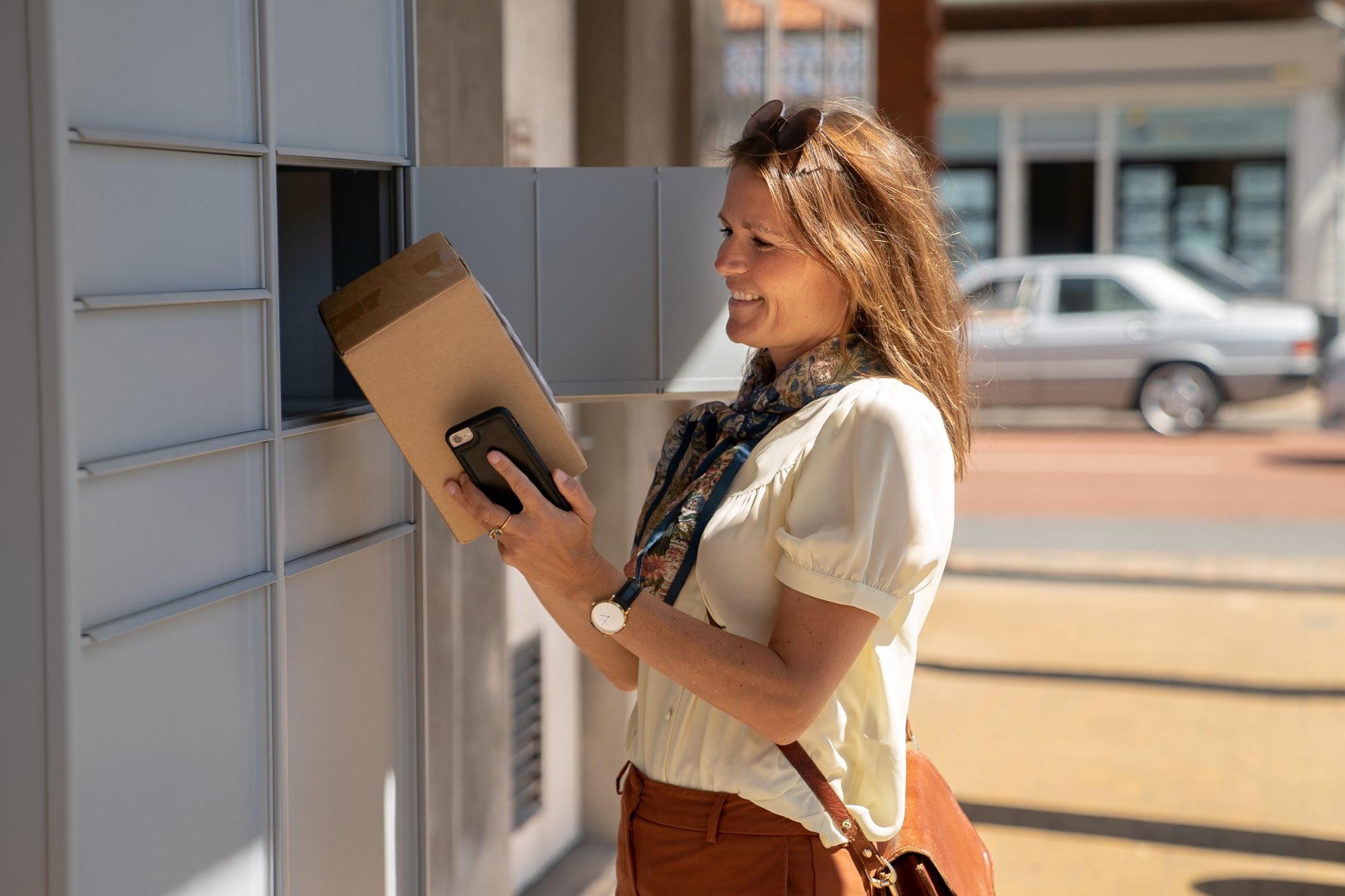
According to the “Last-Mile Innovation Report,” the growth of out-of-home (OOH) deliveries will be one of the most important trends in last-mile logistics. The increasing number of shipments, cost pressure, and the need to reduce emissions mean that the traditional door-to-door delivery model is giving way to solutions based on parcel lockers, PUDO points, and micro-hubs.
The global B2C market generated approximately 121 billion shipments in 2025, and the total number of handled parcels exceeded 400 billion. Forecasts indicate that by 2028, this will reach nearly half a trillion shipments annually. At this scale, further increasing the number of couriers or vehicles will not solve the problem of rising costs and limited network capacity. The way deliveries are organized and the ability to consolidate shipments outside the recipient’s address are becoming increasingly important.
The OOH model allows for the delivery of dozens or even hundreds of shipments to a single location at once, rather than making individual deliveries to subsequent addresses. This reduces the number of stops, shortens travel routes, and decreases the number of failed delivery attempts. As a result, fleet utilization improves, operating costs decrease, and operators can handle a larger volume of shipments without proportionally increasing resources. Therefore, OOH infrastructure is a fundamental element in designing modern logistics networks. However, the key is not the number of devices, but their placement. It is worth paying attention to the concept of “slipper distance,” which is the distance a user is willing to walk without having to plan an extra trip. A dense network of collection points means that a parcel can be picked up during daily activities, such as on the way to work, school, or the store. Only then do OOH solutions bring full benefits to both operators and the environment. If collection requires a special car trip, a significant part of the ecological effect is lost.
– says Łukasz Łukasiewicz, Operations Manager at SwipBox Poland.
This is particularly important in the context of emission reduction. Electrifying fleets alone is not enough to achieve ambitious climate goals. Electric vehicles reduce exhaust emissions but do not decrease the number of trips or the problem of urban congestion. The greatest effects are achieved only by combining low-emission vehicles with a dense OOH network, intelligent route planning, and a high level of infrastructure utilization. In the most ambitious scenario, emissions per shipment could drop from approximately 139 to just 13 grams of CO₂.
Micro-hubs also play a significant role, allowing some operations to be moved closer to recipients and utilizing cargo bikes or small electric vehicles for the final stage of delivery. Their effectiveness, however, depends on appropriate locations, the sharing of infrastructure by different operators, and integration with other elements of the logistics network. Simply launching a new point does not increase efficiency if it is not part of a coherent shipment flow management system.
– adds Łukasz Łukasiewicz.
The perception of parcel lockers themselves is also changing. They serve as an element of a larger logistics infrastructure, the value of which stems not only from the device’s parameters but primarily from the ability to integrate with operator systems, flexible network management, and adapting functionality to local needs. In practice, this means that competitive advantage is determined not by a single locker, but by the quality of the entire ecosystem that enables efficient planning, scaling, and handling of the growing volume of shipments.
Source: SwipBox