









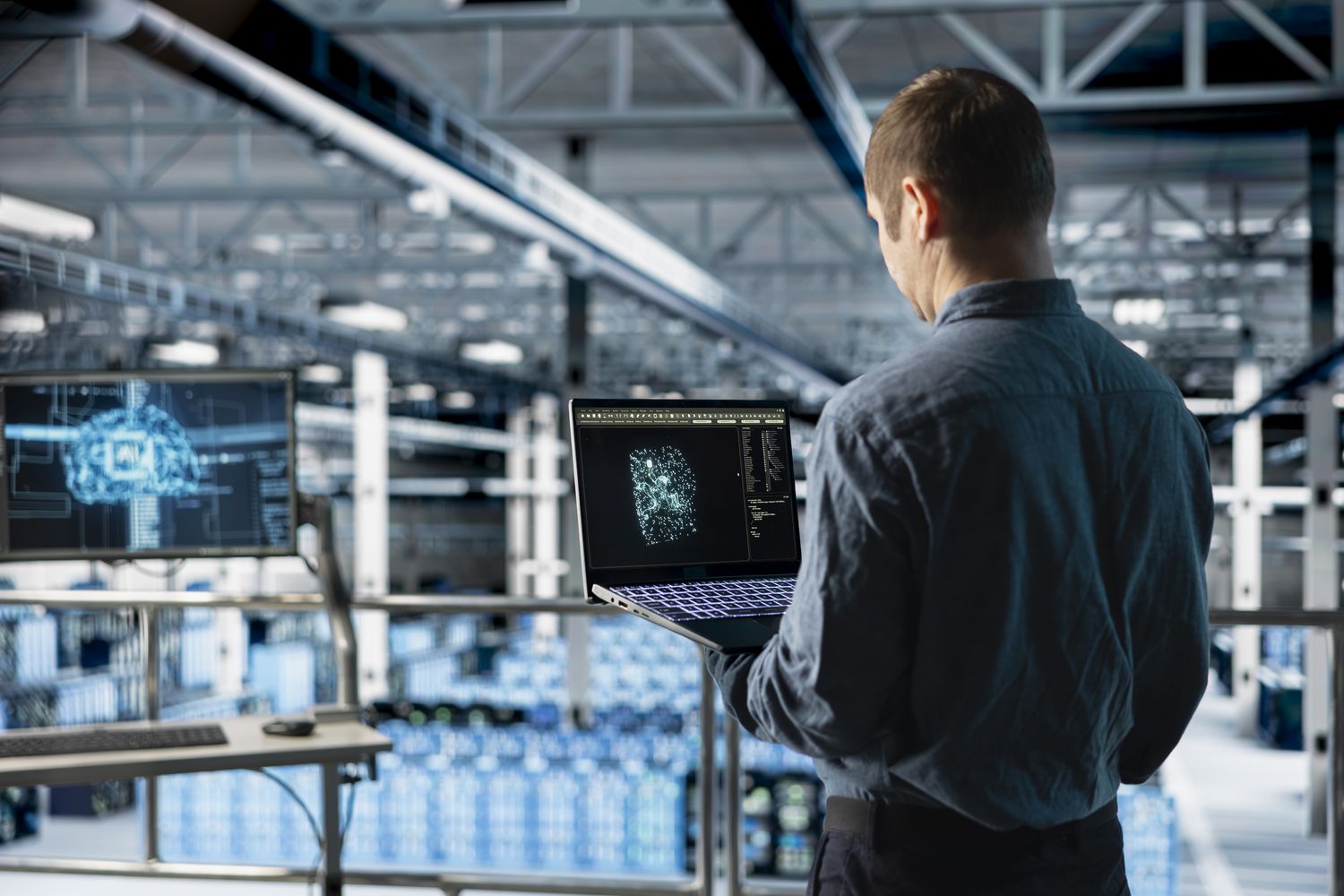
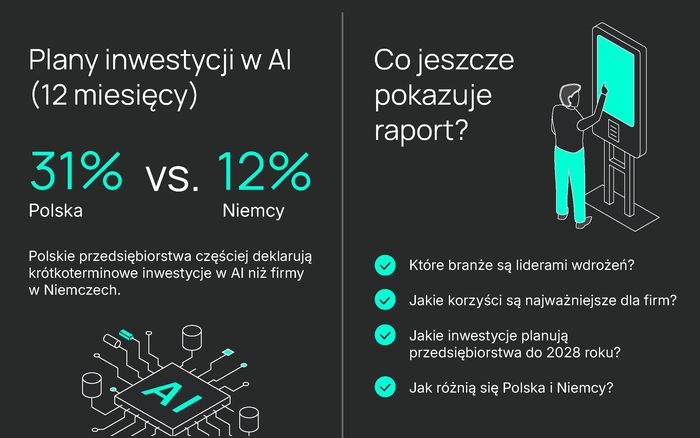
44 percent of Polish logistics specialists in the retail industry believe that the biggest barrier to implementing artificial intelligence in warehouses is high costs, according to a study by PSI. Meanwhile, for comparison, from the perspective of German companies, the main problem is integrating AI with existing systems. Although the challenges are different, the demand for greater automation of logistics processes on both sides of the Oder is felt equally.
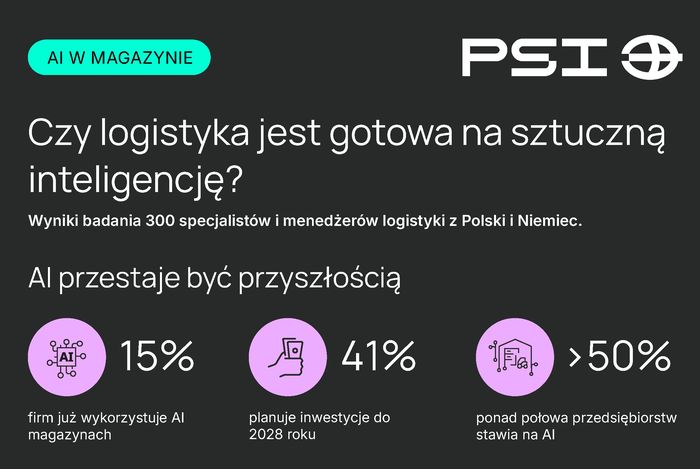
Although most companies in the retail and e-commerce industry have been intensively interested in what AI has to offer in terms of logistics for some time, only a small fraction have a mature implementation strategy. The report “Intelligent warehouses: how AI is changing logistics”, conducted by Civey on behalf of PSI, shows that in Poland the biggest modernization obstacle to introducing AI in retail is the budget (44 percent), and in Germany, it is technical integration (37 percent).
The difference between Poland and Germany is not accidental. In Poland, the cost barrier often stems not so much from the price of the technology itself, but from the lack of a clearly calculated ROI and concerns about a long payback period. However, it should be remembered that introducing AI does not have to be a big leap. Well-designed implementations start with narrow, high-value use cases, such as slotting prediction, picking path optimization, or warehouse load forecasting, says Mikołaj Garbarek, Senior Vice President Logistics CEE Lead at PSI Polska.
It is not the quantity but the speed of implementation that counts
As the expert emphasizes, logistics in the retail and e-commerce sector is entering a phase where the pace of business change is becoming more important than the scale of operations itself. Therefore, a new category of implementation projects is becoming increasingly visible on the market – defined as the CITO approach, where the key resource is not the budget or functional scope, but time. It is used when a system must be launched quickly, even if some functionality is only developed in subsequent stages.
CITO scenarios appear most often in crisis situations, during the rapid launch of new e-commerce operations, or during dynamic organizational growth – he explains, citing the case of a domestic company that faced the need to launch a new, highly automated distribution center in a very short time. – Instead of full process optimization from the beginning, an approach focused on quick operation launch and working on the system standard was applied, he adds.
Time is the greatest currency of warehouses
The fact that time is the most valuable currency in retail warehouses is also evidenced by the fact that as many as 70 percent of Civey study participants indicate that the most important advantage of introducing artificial intelligence is saving time and costs. In turn, 56 percent believe that AI works best in tasks related to warehouse optimization.
Integrating AI tools and assistants with WMS systems allows for the creation of an entire warehouse automation control center, including robots, sorters, internal transport systems, and documentation. In this way, picking paths can be shortened by up to thirty percent and operational efficiency can be increased by about twenty percent – explains Mikołaj Grabarczyk.
However, it should not be forgotten that technology itself is not the deciding factor. Equally important is the organizational maturity on the client’s side and the model of cooperation between teams. There is no doubt, however, that the changes taking place in retail logistics point in a clear direction. Competitive advantage is less and less a result of the functionality of IT systems themselves, and more and more a result of the speed of their implementation and the ability of companies to utilize their potential.
Source: PSI, Photo: Freepik