









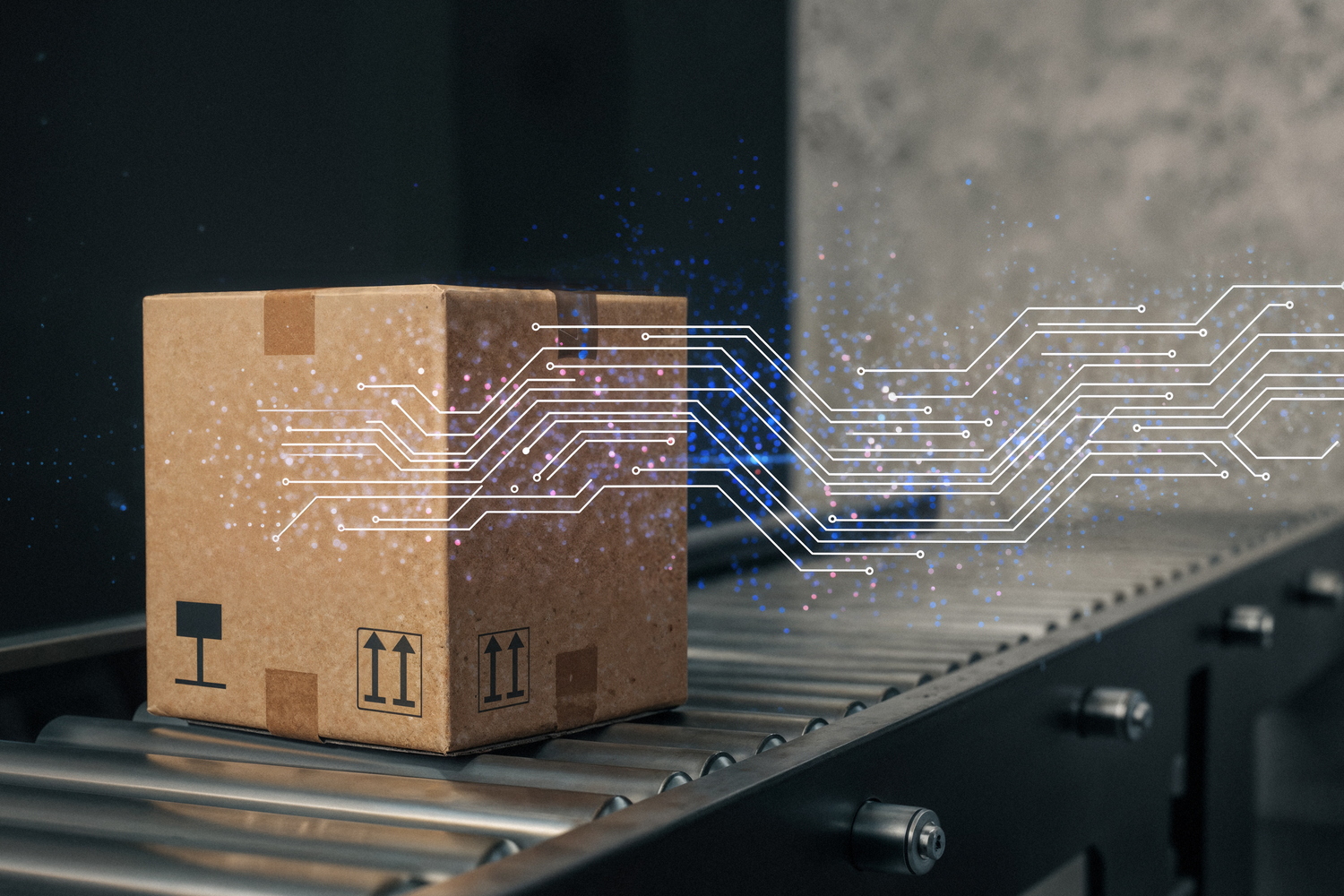
Increasing market volatility and disruptions in global supply chains are forcing greater predictability and control over processes. However, delays, stock shortages, or sudden spikes in demand do not have to mean working under time pressure. As the latest FM Logistic report on the use of artificial intelligence in logistics shows, the TSL industry is moving faster and faster from reacting to problems to predicting them.
From firefighting to predictive management
Solutions based on data and advanced analytics are one of the key applications of artificial intelligence in logistics. According to data from the report, about 50 percent of companies do not have full visibility into their supply chain, which limits their ability to minimize risk and respond effectively to disruptions. Meanwhile, the cost of supply chain disruptions is estimated at 184 billion dollars annually, so the lack of full visibility into this process is a costly problem. FM Logistic is developing solutions that analyze, among other things, historical data, delivery timeliness, transport routes, and order characteristics to identify disruption risks in advance.
A few years ago, artificial intelligence in logistics was mainly associated with data analysis. Today, it is already realistically supporting operational decision-making and helping to predict events before they affect the flow of deliveries. This is a direction that will define the development of modern supply chains in the coming years – says Rafał Woźniak, Operations Director for Poland at FM Logistic.
Data remains the foundation
The effectiveness of such solutions, however, depends on the quality of data, which is why logistics operators are investing in tools that ensure full visibility of processes throughout the entire supply chain. An example is the Control Tower system developed by FM Logistic, which integrates data on transport, inventory, carriers, documents, and customer service into a single analytical environment.
The scale of the capabilities of such tools is shown by the example described in the report: one of FM Logistic’s clients delivers to 120 countries from a single warehouse, and the Control Tower supports the coordination of the entire process, ensuring consistency of operations and efficient flow of information. This makes it possible to monitor operations in real-time and respond faster to changing market conditions. This is confirmed by the example described in the report: a sudden drop in temperature caused an increase in demand for windshield de-icer at points of sale located at gas stations in Poland. Data analysis allowed for quickly identifying locations requiring stock replenishment and redirecting deliveries accordingly.
AI is already delivering measurable results
Implementations using artificial intelligence in warehouse processes are also already bringing measurable results. FM Logistic Poland was the first logistics company in the world to implement Google AlphaEvolve technology to optimize order picking algorithms.
As a result, picking route efficiency was improved by over 10 percent, and the annual distance covered by operators was reduced by over 15,000 kilometers without additional investment in infrastructure. The results of the implementation show that solutions using AI can already translate into concrete operational and business benefits today.
Artificial intelligence also supports quality control of warehouse processes. As the report points out, solutions using image analysis can automatically detect picking errors or shipment damage before they leave the warehouse.
The new role of the logistics operator
The development of artificial intelligence is also changing the way logistics operators work with their clients. Tools that support access to information, process automation, and faster decision-making are becoming the new standard.
Generative artificial intelligence supporting customer service is also gaining importance. As described in the report, solutions using language models can automatically retrieve order data and prepare personalized responses to customer inquiries. This allows for shorter service times and reduces the time spent on manually searching for information.
A logistics operator has long ceased to be just a provider of warehousing and transport services. Increasingly, it acts as a strategic partner helping clients better understand data, predict demand changes, reduce risk, and increase the efficiency of the entire supply chain – emphasizes Rafał Woźniak.
As a result, logistics is gradually moving from reacting to problems to predicting them, and data and artificial intelligence are becoming some of the most important tools supporting this change.