









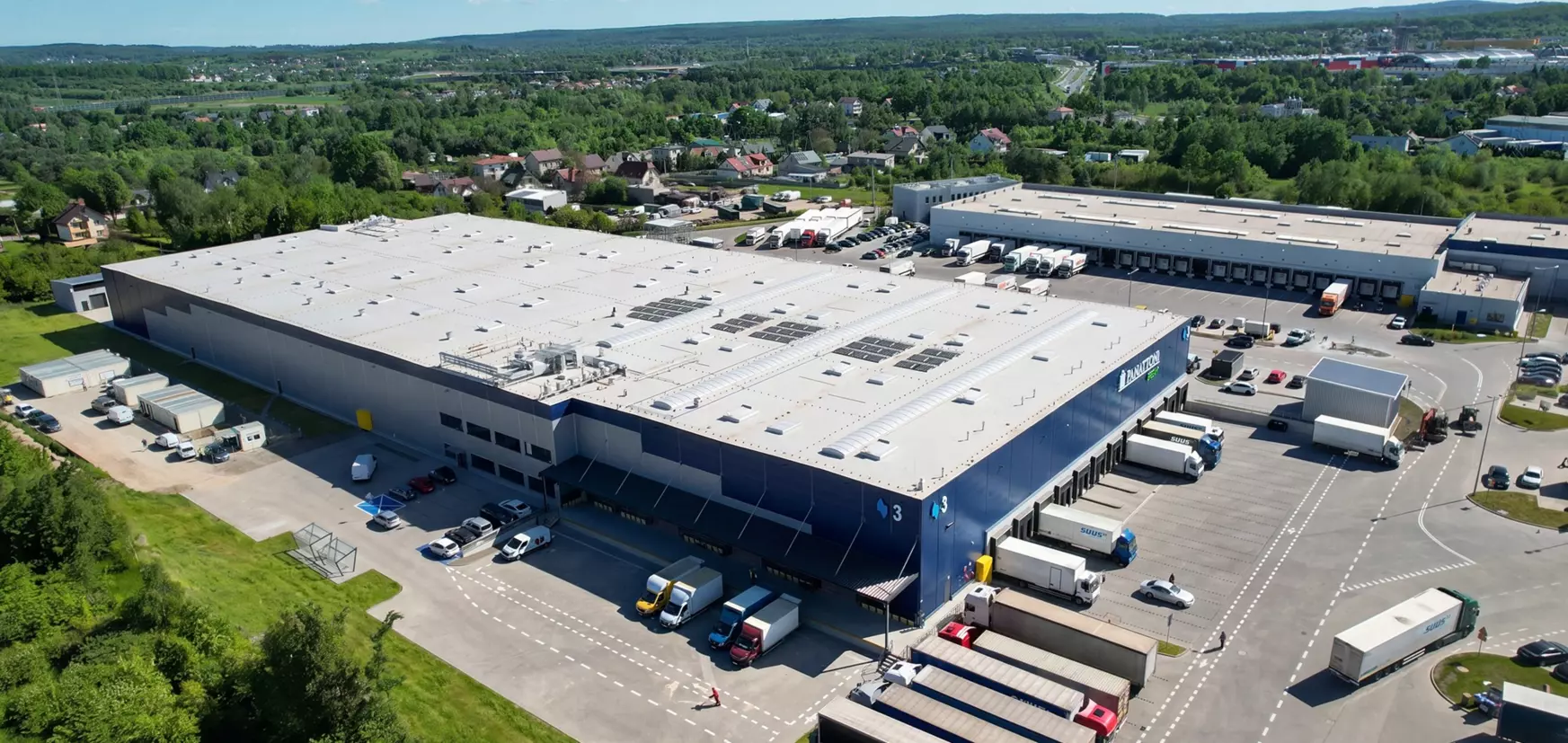
Panattoni has commissioned the final stage of Panattoni Park Kielce – with this, the developer has completed the construction of the first class A industrial park in the Świętokrzyskie Voivodeship. The complex, located at the administrative border of Kielce, comprises four modern buildings with a total area of approximately 66,000 sqm, tailored to the needs of companies in the logistics, manufacturing, and e-commerce sectors.
The completion of Panattoni Park Kielce concludes a project that has played a significant role in the development of the industrial space market in the Świętokrzyskie region. We were the first developer to introduce modern class A space to Kielce, and today we see how the region is strengthening its position on the logistics map of Poland. Its central location between Warsaw and Krakow and access to key transport routes make Kielce an increasingly popular choice for operational activities. Panattoni Park Kielce was designed as a flexible space for companies with varying scales of operations.
– says Dorota Jagodzińska-Sasson, Managing Director at Panattoni.
The final stage of the investment was a hall with an area of over 13,000 sqm, which was commissioned in May 2026. Tenants from the automotive industry and a logistics operator will soon begin operations in the facility. The building will receive a BREEAM environmental certificate, and the solutions applied reduce energy and water consumption as well as carbon dioxide emissions.
Panattoni Park Kielce is located approximately 6 km from the city center, near the Kielce Zachód junction, which connects the S7 expressway with the DK74 national road. Its location on the Warsaw–Krakow route provides access to the main transport corridors in the country.
The Świętokrzyskie region remains one of the more promising warehouse markets in Poland. The development of industrial space in Kielce strengthens its role in national distribution and the servicing of supply chains in Central and Eastern Europe. Panattoni Park Kielce supports this process, serving as an essential element of local infrastructure.
Source: Panattoni