









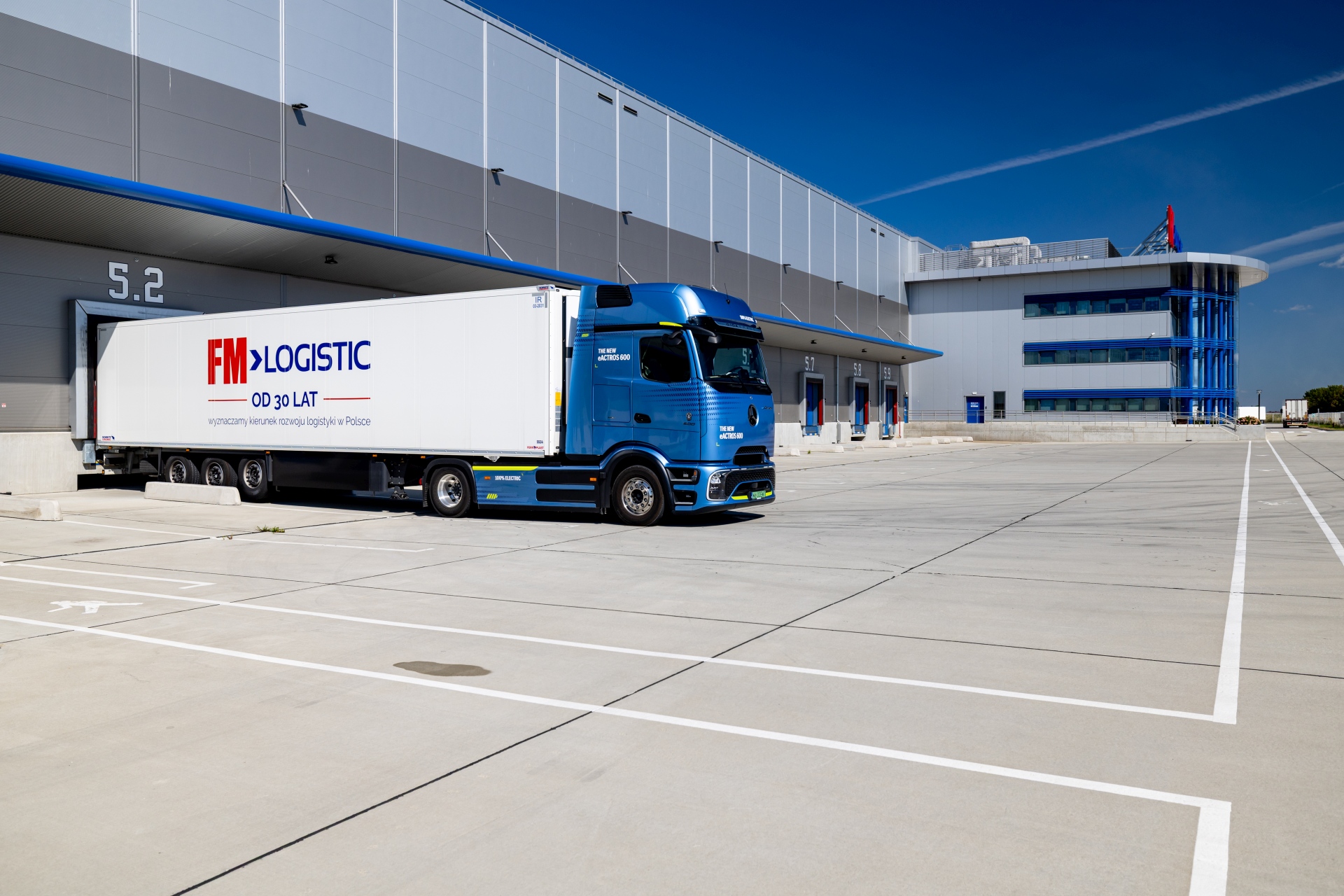
Since the beginning of 2026, FM Logistic has launched three new groupage transport routes: to Austria, Germany, and the Baltic states. The company is developing its European network of connections in response to changing market needs, the growing importance of regional supply chains, and the increased demand for more frequent deliveries of smaller batches of goods. The new connections include daily departures and short transit times.
European supply chains are currently undergoing a clear transformation. Companies are increasingly shortening and regionalizing their distribution networks. These changes are driven by factors such as rising cost pressure, the need to reduce inventory levels, and dynamic shifts in demand. Transport solutions that allow for faster responses to market needs and more efficient delivery planning are becoming increasingly important.
Central and Eastern Europe is benefiting from these changes, and Poland is strengthening its position as one of the region’s key logistics hubs. In response to these trends, FM Logistic is expanding its network of groupage connections.
FM Logistic strengthens regional logistics connections
The new connections include regular departures to Germany, Austria, and the Baltic states, and are part of the development of FM Logistic’s regional transport network.
For Germany, the delivery time is 2–3 business days; for Austria, 3–4 business days; and for Lithuania and Latvia, deliveries are completed within 2 days.
More and more companies today are moving away from the model of storing large inventories in favor of more frequent deliveries made exactly when the need arises. This requires efficient and regular transport connections and greater predictability of the entire delivery process. The development of groupage connections allows us to better meet these needs and respond more quickly to changes on the customer side.
– says Mariusz Bala, International Groupage Director at FM Logistic.
Germany, Austria, and the Baltic states are gaining importance
The new routes respond to the growing importance of regional transport corridors in Europe.
Germany remains Poland’s most important trading partner and accounts for over a quarter of Polish exports. Austria plays a significant role in the distribution of goods in Central Europe, while the Baltic states are gaining importance due to the development of the Via Baltica corridor and north–south transport infrastructure.
These routes are playing an increasingly important role in building regional distribution networks serving Central and Eastern Europe. Developing connections in these directions allows for increased delivery predictability and supports companies expanding their international operations.
Digital transport support and developed infrastructure
The development of FM Logistic’s European groupage network is supported by digital solutions that enable real-time shipment monitoring, integration of customer systems, and automation of data exchange. The company uses, among others, Track & Trace solutions that allow for tracking delivery status on an ongoing basis, EDI/API integrations that streamline data exchange with customers and business partners, and the MySCM platform, which supports the management of logistics processes and access to operational information.
FM Logistic’s operational infrastructure also remains a key element of its development. The company has over 1 million m² of warehouse space, 16 logistics platforms, and 29 cross-docking warehouses in the Central European region. Extensive infrastructure and operational competencies allow FM Logistic to flexibly adapt logistics solutions to the needs of various industries and business models.
Source: FM Logistic Central Europe