









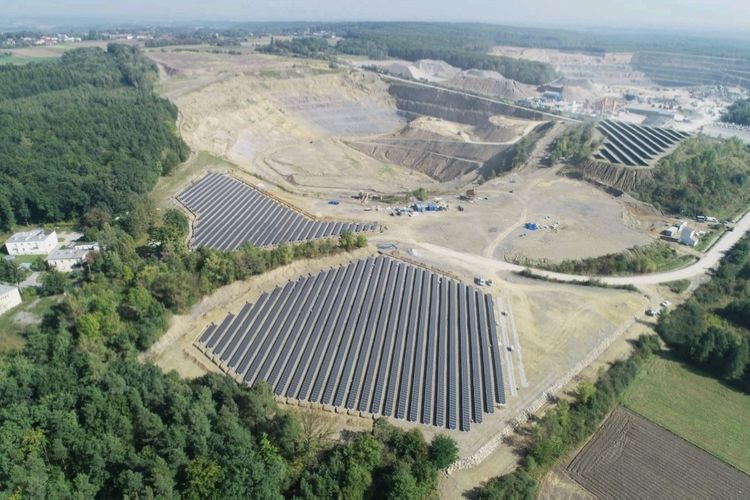
In an era of advancing electrification and dynamic changes in global supply chains, energy in the logistics sector is no longer just an operational cost. Energy strategy is increasingly becoming a key element of logistics infrastructure. In this context, long-term Power Purchase Agreements (PPA) from renewable energy sources (RES) offer predictability and stability, becoming a strategic tool for building a competitive advantage.
PPA for logistics – from cost control to a catalyst for growth
A PPA is a long-term contract concluded between a renewable energy producer and a high-demand consumer, guaranteeing a fixed or indexed price for a period of 5 to even 25 years.
Traditionally, these contracts were used to hedge against price fluctuations, but today they play a much broader role – they enable precise business planning and the making of multi-year investment decisions.
For logistics operators, this change is crucial. Stable energy costs free up capital and reduce uncertainty, allowing companies to scale operations, automate warehouses, expand cold storage infrastructure, and accelerate fleet electrification in a safe and predictable manner.
As a pioneer in the Polish renewable energy sector, EDP observes that the logistics industry – in the face of growing energy demand, volatile prices, and the risk of supply interruptions – urgently needs solutions that ensure cost predictability and operational reliability. In this context, the development of hybrid systems combining RES with energy storage, along with long-term PPAs, is becoming a key infrastructure solution: the PPA ensures price stability, and energy storage enables continuous and reliable supply, mitigating the intermittency characteristic of renewable sources – says Ireneusz Kulka, Country Lead, EDP in Poland.
Growing demand is redefining logistics
The TSL sector (Transport – Spedition – Logistics) is characterized by a rapidly growing demand for electricity. The electrification of heavy and light commercial vehicle fleets, robotic picking processes, and the development of distribution centers with cold storage infrastructure require huge and stable energy supplies.
Energy is becoming a limiting factor for growth. In many locations, the lack of sufficient grid connection capacity is already a real barrier to the construction of new facilities. Additionally, demand is increased by AI-based data analysis, which requires high-performance IT infrastructure. With the projected dynamic growth of e-commerce, a long-term energy supply contract under predictable conditions is becoming crucial for the continuity and scalability of operations.
Risk mitigation and operational resilience
Supply security is a priority in logistics. Grid overloads or power limitations can disrupt the work of automated distribution centers and paralyze operations. PPAs strengthen resilience by enabling the development of new, dedicated renewable sources. Increasingly, operators are going a step further by combining these contracts with Battery Energy Storage Systems (BESS). Storage facilities allow not only for receiving energy at predictable prices but also for storing it and using it during periods of peak demand or grid instability, ensuring the continuity of infrastructure operations. In this context, energy is no longer just supplied – it is actively managed.
Supply models – from on-site installations to massive volumes
Green energy contracting models are closely tailored to the specifics of logistics infrastructure. An example of an on-site solution is the strategic cooperation between Greenyard Logistics Polska and EDP. The distribution center in Żabia Wola decided to build a 2 MWp photovoltaic installation – approx. 4,400 panels on roofs and the ground. A flexible, 15-year PV-as-a-Service model based on a PPA structure was implemented, but applied directly on-site. Thanks to this, the operator secures zero-emission energy supplies without committing its own capital, while operational and maintenance risks are assumed by the technology partner – EDP.
On the other hand, for companies with a distributed structure or huge demand, large off-site contracts are the ideal solution. An example is the partnership between Carrefour Polska and EDP, in which a PPA secures 50 GWh of clean energy annually from external farms, covering nearly one-third of the national demand of the Carrefour network. This proves that this model is capable of meeting the requirements of the largest supply chains.
These examples show that different contract models can be combined and adjusted depending on the location of operations, energy intensity, and investment priorities. They also emphasize the importance of cooperation with a partner such as EDP – which provides integrated, tailored solutions and is constantly expanding its portfolio in response to the growing energy needs of logistics operators.
Business benefits and ESG impact
Implementing PPA-based models brings measurable benefits to operators. Beyond budget stabilization, the ability to achieve ESG goals is of great importance. The Greenyard Logistics Polska investment will reduce CO₂ emissions by over 1,300 tons annually, and the Carrefour contract will allow for avoiding nearly 54,000 tons of emissions. The largest global players now expect logistics partners to use RES – PPAs and on-site solutions are ceasing to be merely a cost-saving tool and are becoming a passport to cooperation with the biggest brands.
PPA as a pillar of competitive logistics
In the era of transport electrification and supply chain digitalization, long-term renewable energy security is becoming the foundation of modern logistics. Price stabilization through PPA contracts, supported by investments in local generation systems that eliminate capital risk, allows operators not only to neutralize rising costs but also to build full operational resilience.
For the TSL sector, a well-designed energy strategy is today not so much a competitive advantage as a necessity. Under conditions of increasing regulatory requirements, climate pressure, and price volatility, PPAs combined with local generation constitute a practical foundation for maintaining competitiveness in Europe.