









Rising labor costs, a massive staffing gap, and a technological race in which Poland still has a lot to catch up on – these are the main conclusions from the latest industry report “Where are you heading, logistics?” prepared by ManpowerGroup.
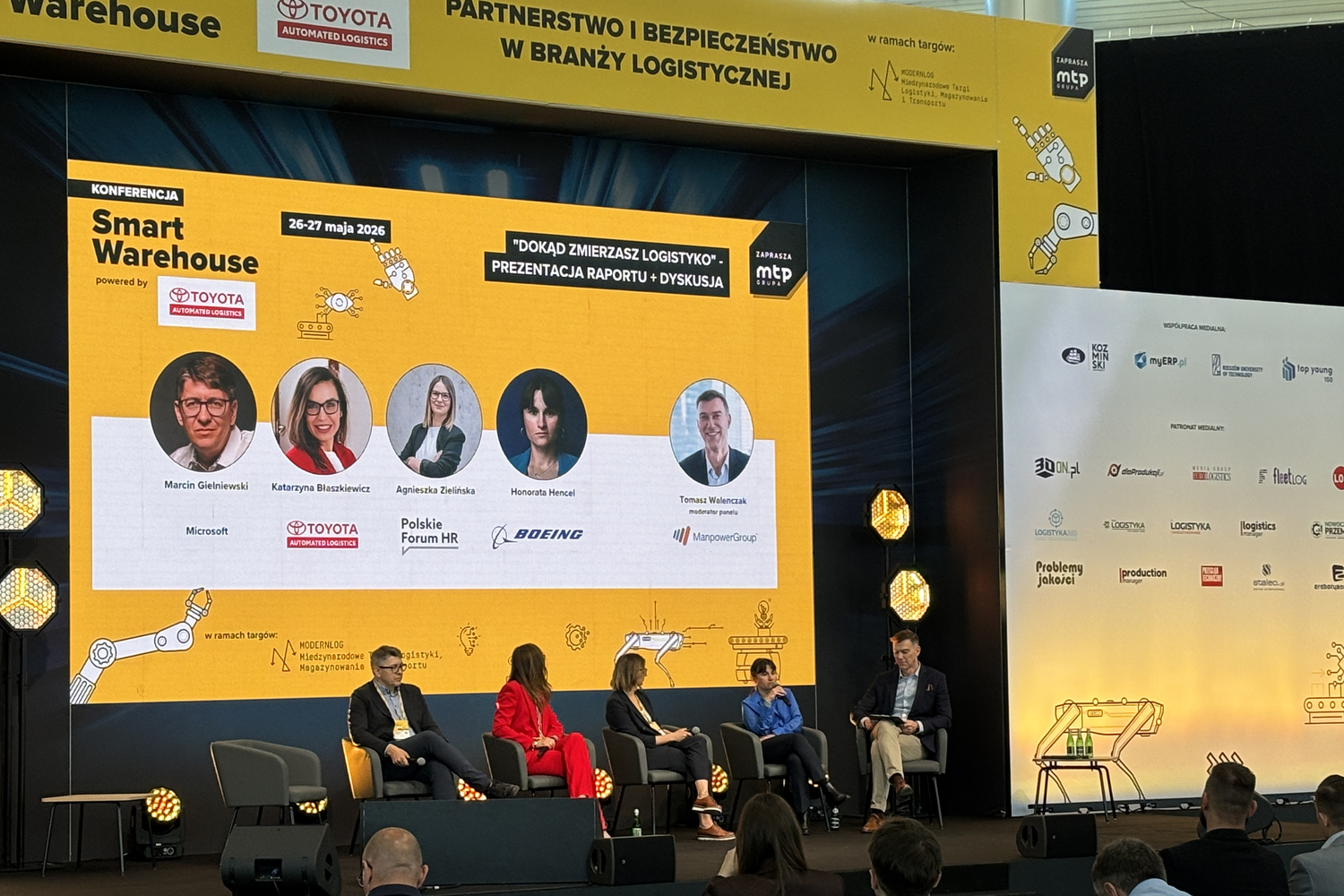
During the discussion on the results of the “Where are you heading, logistics?” report, which involved analysts, technology providers, and business practitioners, the latest data on the condition of Polish logistics were discussed. On one hand, the industry shows a willingness to invest; on the other, it faces a harsh demographic and geopolitical reality.
Moderate optimism in times of turmoil
According to the report, sentiment in the industry remains relatively good, although there is no shortage of cautious voices. Representatives of companies operating on the international stage point to the need for constant adaptation to market shocks. And even though we are good at managing in difficult situations, we are aware of the threats facing employers.
I belong to the group of optimists when it comes to the development of technology and artificial intelligence. I am glad that as many as 70% of respondents see the future of logistics in positive colors. However, I advocate for moderate optimism. Estimated growth in the industry is around 10%, and considering today’s world – full of conflicts, strong competition, and rising energy costs – this is still a very positive result – says Marcin Gielniewski, Technology Strategist at Microsoft.
Clash with demographics: 150,000 drivers missing
One of the strongest points of the debate was the issue of the labor market. Over a million people are already working in the Polish transport, forwarding, and logistics sector, and employment has grown by 25% in recent years. However, as Agnieszka Zielińska from the Polish HR Forum notes, this model of development is currently exhausting itself.
We have reached the proverbial demographic wall. The shortage of workers will be very significant, which is especially visible in positions such as drivers. We are already missing about 150,000 of them, and over the next 10 years, this market gap will only grow – the panelist warned. She also pointed out a market paradox: – On one hand, we optimistically declare the implementation of automation, but on the other – among the most sought-after professions, there are still those basic positions that we should have automated long ago.
Warehouses of the future need engineers
The answer to staffing shortages is expected to be the robotization of warehouse processes, which is pointed out by as many as 40% of survey respondents. Katarzyna Błaszkiewicz from Toyota Automated Logistics, present at the discussion panel, dispelled the myth of machines taking away jobs.
We are replacing people where errors need to be reduced and we are eliminating inefficient tasks. At the same time, we are creating new jobs. Upskilling and reskilling employees are becoming key here – she explained. She also pointed to the biggest bottleneck of the transformation: – With automation, we encounter a serious problem: we are severely lacking people with technical, IT, and analytical skills. We lack engineers who would handle coordination and, later, the updating of systems.
Poland against the background of the world
Is Polish logistics ready for a technological revolution? Labor costs force changes. Data from the NBP cited during the debate show that employment costs already account for an average of 14% of companies’ operating expenses, and the minimum wage in Poland has increased by nearly 80% over five years.
Unfortunately, we are at the end of Europe. We cannot compare ourselves with our western neighbors. In Poland, there are about 60-70 robots per 10,000 employees, while in Germany there are over 400. We are losing this fight even with the Czechs and Slovaks – says Agnieszka Zielińska from the Polish HR Forum.
The situation is exacerbated by the fragmentation of the industry. There are about 150,000 logistics entities operating in Poland, most of which are in the SME sector. While giants have ready-made automation strategies, smaller companies still need to understand that rising labor costs have ceased to go hand in hand with productivity.
We are competing not only in European markets and with the USA. Let’s remember that in Asia, there are not 400, but about 700 robots per 10,000 employees. With significantly lower labor costs in Asia, we must keep this in the back of our minds at all times. The opportunity to close the gap lies in structural funds and funds from the KPO – adds Agnieszka Zielińska.
Evolution instead of revolution?
Despite pointing out clear educational and investment barriers, the debate ended with a constructive conclusion: building trust among customers and reaching for EU funding can be a lever for the Polish TSL sector.
Polish logistics has huge potential for adaptation – concluded Tomasz Walenczak from ManpowerGroup. – The most important thing is to follow the right, technological direction with the help of funds. If we want to maintain a competitive position in the market, we have no other choice.
The “Where are you heading, logistics?” report clearly shows that the next decade will be a test of innovation for Polish logistics. Those who manage to combine the management of modern technologies with the appropriate transformation of their staff will survive.
The article was based on an expert panel as part of the Smart Warehouse conference.