









The attractiveness of jobs in warehouses and production plants is increasingly determined not only by salary and the type of contract, but also by the quality of the daily work environment. The CTP Poland report “Employee well-being: from rotation to retention” shows that 51 percent of employees pay attention to ergonomic workstations, 49 percent to modern air conditioning and heating, 55 percent to commuting subsidies or public transport, and 51 percent to access to a canteen or meal subsidies. This is a clear signal that competitive advantage in the industrial sector today begins with the space where employees spend every day.
According to a survey conducted among production and warehouse employees working in facilities built by various developers, only 46 percent of respondents rate their workplace positively. The most frequently cited problems are excessive noise, experienced by over 7 out of 10 respondents, temperatures that are too high, noted by 69 percent of those surveyed, and insufficient access to daylight, pointed out by 62 percent of people. In addition, 61 percent mention a lack of fresh air, and about 64 percent mention limited access to quiet zones.
From a market perspective, it is becoming increasingly clear that competitive advantage today does not end with location or rent rates. The quality of the workplace is also determined by whether an employee has an ergonomic workstation, access to daylight, appropriate thermal conditions, and a space where they can take a breather. That is why we are developing our CTParks as more than just infrastructure for operations. We design them as a work environment that supports people on a daily basis.
– says Piotr Flugel, Managing Director at CTP Poland.
One example of such solutions is the Clubhaus concept – a multifunctional common space developed by CTP in business parks across Europe. The first facility of this type in Poland is being built in the CTPark Warsaw West complex. As part of the Clubhaus, plans include opening a canteen, a small shop, and space for meetings and training, as well as a medical facility offering occupational medicine services. The final scope of functions will be shaped flexibly, in accordance with the expectations of the park’s users. This type of infrastructure aligns with market trends regularly identified in research, providing employees with better daily organization, easier access to social facilities, and higher comfort in their daily functioning on-site.
The CTP Poland report also shows that nearly 40 percent of employees expect green areas around their workplace, and almost one in four points to the need for creating outdoor recreational zones.
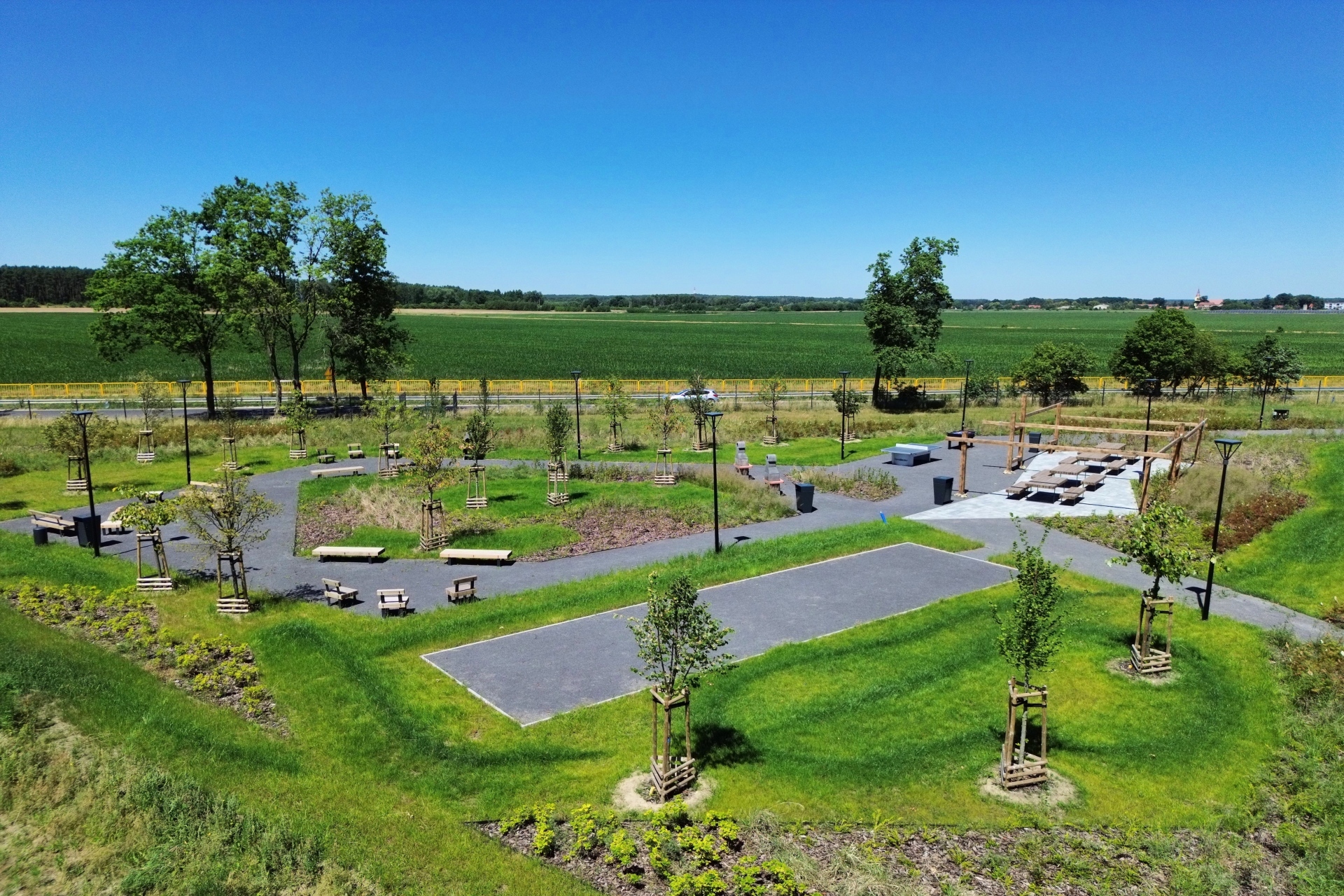
Greenery is no longer just an aesthetic element or part of an ESG policy, but a real tool for improving the employee’s daily experience. Depending on the location, CTPark users have access to patios with benches, relaxation zones, barbecue areas, or outdoor gyms. When designing green areas, we cooperate with ecologists and sustainability consulting firms. We see that because of this, people want to work in our parks. By investing in nature, we respond to their expectations – in just eight investments, we have planted thousands of trees and shrubs and established several thousand square meters of flower meadows.
– explains Piotr Flugel.
The topic of commuting and accommodation is also gaining importance. This is particularly relevant in locations where the scale of operations and the profile of tenants require additional organizational support. An example is the planned hotel project at CTPark Iłowa, which, depending on the tenant’s needs, will be able to provide accommodation for over 270 people. This will be another CTP investment, following the Clubhaus formula, in infrastructure that goes beyond standard warehouse and production space. Such a solution has not only a logistical dimension but also an employee-focused one. Data cited by CTP shows that although 54 percent of respondents commute up to 10 km to work, 12 percent travel 21–30 km daily, and 6 percent over 30 km. Among those without their own transport, as many as 63 percent plan to change employers precisely because of burdensome commutes.
Today, a well-designed workplace must take into account the entire rhythm of an employee’s day – from the commute, through working conditions, to the possibility of rest and efficient functioning. That is why we are developing solutions that address the specific operational challenges of tenants while simultaneously improving the daily experience of their teams. Clubhaus, green common zones, or the planned hotel project in Iłowa are an expression of this way of thinking.
– concludes Piotr Flugel.
Source: CTP Poland