









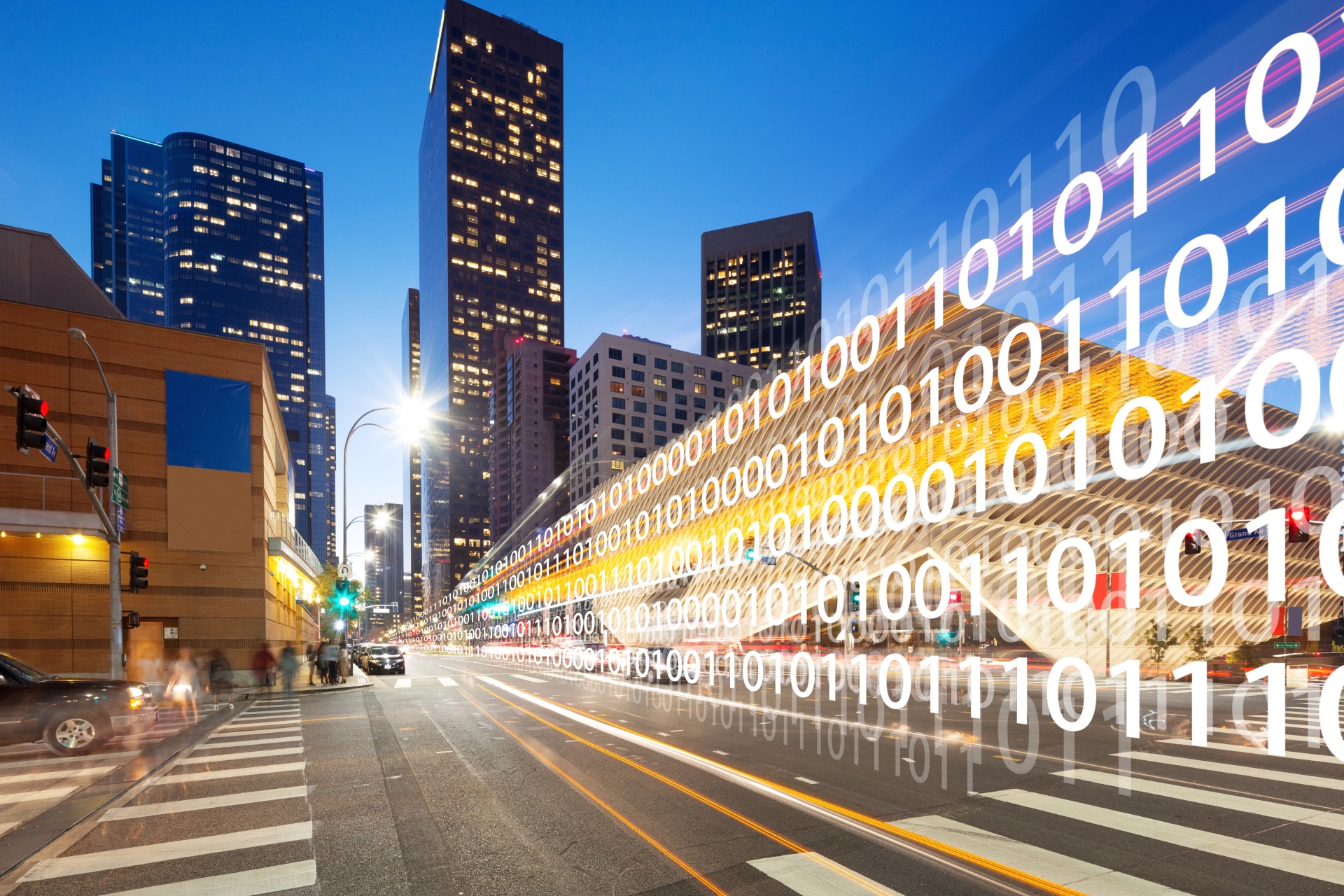
Transport in cities is changing faster than ever before. This is the sector that must significantly meet growing challenges, such as dynamic urban development or the need for decarbonization. In their report “AI for Future Cities: Transport,” Arup experts show that artificial intelligence may be the answer to many problems related to the future of urban mobility. Thanks to AI-based tools, it will be possible to plan, monitor, and respond more effectively in real time. Are cities ready for these changes?
More than half of the world’s population already lives in cities, and by 2050 this percentage is expected to rise to 70 percent.[1] At the same time, the importance of transport decarbonization is increasing. This prompts local governments to intensively search for solutions that will ensure effective mobility for an ever-growing community while reducing CO₂ emissions. Advanced algorithms and computer systems can help with these changes. They have been supporting the functioning of urban mobility for years, and according to the Arup report “AI for Future Cities: Transport,” the implementation of artificial intelligence-based solutions will lead to even more effective operations. Arup experts point out that thanks to AI, systems will respond in real time to obstacles such as traffic jams, infrastructure failures, or public transport delays, and even forecast them, introducing completely new possibilities for managing urban transport. However, to harness this potential, many cities will need to modernize existing infrastructure, adapting it to the new requirements of AI-based systems.
AI forecasts risks in urban transport
Artificial intelligence can significantly reduce the risk of disruptions in transport networks, helping to ensure smooth routes. Experts point out in the report that AI will allow for the creation of systems capable of, among other things, forecasting traffic congestion, both on main streets, in public transport, and at intersections. This will make it possible to plan traffic on an ongoing basis to further reduce delays and improve travel fluidity. Moreover, artificial intelligence will allow for the planning of repairs before failures occur. This will be possible, among other things, by conducting inspections of tracks and other infrastructure elements, combining current measurements with historical data. It will also accelerate the response to crisis situations by automatically detecting and diagnosing faults.
Artificial intelligence is already helping to maintain infrastructure. During measurements of the High Speed 1 railway line and in projects for UK Power Networks, engineers used a tool that combines 360° imaging with computer vision algorithms. This enabled safe and remote assessment of tunnel conditions in areas with difficult access. Data was collected by autonomous vehicles and robots, and then analyzed using machine learning. This reduced the number of manual inspections, lowered work risks, and streamlined infrastructure maintenance planning.
Urban transport planning with artificial intelligence
Arup experts also emphasize that artificial intelligence will play a key role in urban transport planning. AI-based creation of digital twins of cities will allow for testing various scenarios in real time, without interfering with the actual space. In practice, this means that traffic modeling in the transport network will be conducted by simulating schedules, routes, and capacity depending on the changing needs of passengers. The report also predicts the need for significant changes in the functioning of urban transport due to the possible rapid development of autonomous vehicles.
Perhaps the most immediate and direct impact of artificial intelligence on urban mobility will be related to the mass deployment of autonomous vehicles. This, in turn, may affect the appearance of streets. In cities with autonomous vehicles, places for short-term stops will become particularly important. Such vehicles need them to pick up or drop off passengers. At the same time, a society moving in this way may need fewer parking spaces. This space could be used for the development of residential areas, green spaces, or paths for pedestrians and cyclists.
Technology in human hands
Ultimately, however, it is people, not algorithms, who will determine whether AI becomes a tool for improving the quality of life or whether it exacerbates existing problems in cities. Engineers note that the future of transport does not depend solely on technological capabilities, but on the decisions of designers and city managers. Many urban centers are not yet ready for the implementation of advanced automation. Often, basic tools are missing, such as stable connections, sensor coverage, or consistent data exchange protocols.
The potential of AI in transport management does not depend on the algorithms themselves, but on the quality of the digital infrastructure on which they are to operate. Many cities still base their transport systems on outdated, fragmented databases, closed operator platforms, incompatible standards, and inconsistent communication channels between institutions. Artificial intelligence needs a consistent, open environment with a large amount of high-quality data – including sensor and camera networks, passenger traffic, operational data, and information on infrastructure status and energy consumption. Therefore, the development of AI will often have to be preceded by investments in infrastructure, standardization, and data sharing.
– says Agnieszka Tatarczak, Digital Team Leader at Arup.
Advanced analytics is increasingly organizing and integrating data generated at every stage of transport operation. Due to the rapid development of technology, artificial intelligence will become a key component supporting decision-making, process optimization, and real-time mobility management.
[1] https://unstats.un.org/sdgs/report/2023/Goal-11/
Source: Arup