









Express delivery services, which have been developing on the Polish market for several years, are no longer associated solely with delivering hot meals. Product purchases are playing an increasingly large role in q-commerce. At Glovo, every fourth courier is carrying something other than restaurant food. While grocery products dominate the purchase structure, deliveries of items such as flowers or electronics are growing dynamically. The company plans to add further categories and brands to the application, which is intended to become a mobile shopping mall.
A report by Fortune Business Insights indicates that the global q-commerce market, i.e., fast-delivery shopping, is expected to reach a value of nearly $200 billion this year. Analysts forecast that it will grow at an average annual rate of approximately 8.5 percent until 2034, reaching a value of $385 billion.
The delivery model is developing very rapidly in Poland. We can see this through several key parameters. The number of restaurants using the delivery model in Poland has already reached over 10,000 and has more than doubled over the last three years. If we talk about the number of orders, it has quadrupled over the last four years of our operations. This shows how much the quick delivery model has appealed to the Polish consumer. We predict that the growth momentum will remain at a similar level and that we will observe at least double-digit growth for the entire category every year.
– says Dawid Ledziński, Director of Q-commerce at Glovo Poland, to the Newseria agency.
Quick commerce has been developing in Poland since approximately 2019. Initially, it mainly covered the gastronomic offer. Players present on the domestic market focused on developing cooperation with restaurants for the first few years. As the Glovo expert emphasizes, the market entered its next phase around the beginning of 2025, adding home-delivery grocery shopping services.
At Glovo, we started this stage much earlier, in line with our strategy. However, we see that more and more players are appearing in this sector. The third phase of delivery application development is the growth of non-food categories, i.e., the retail industry, so that application users have access to order everything they need. These include both planned and emergency purchases.
– says the company representative.
At Glovo, approximately 25 percent of orders consist of non-restaurant categories. These are mainly grocery purchases.
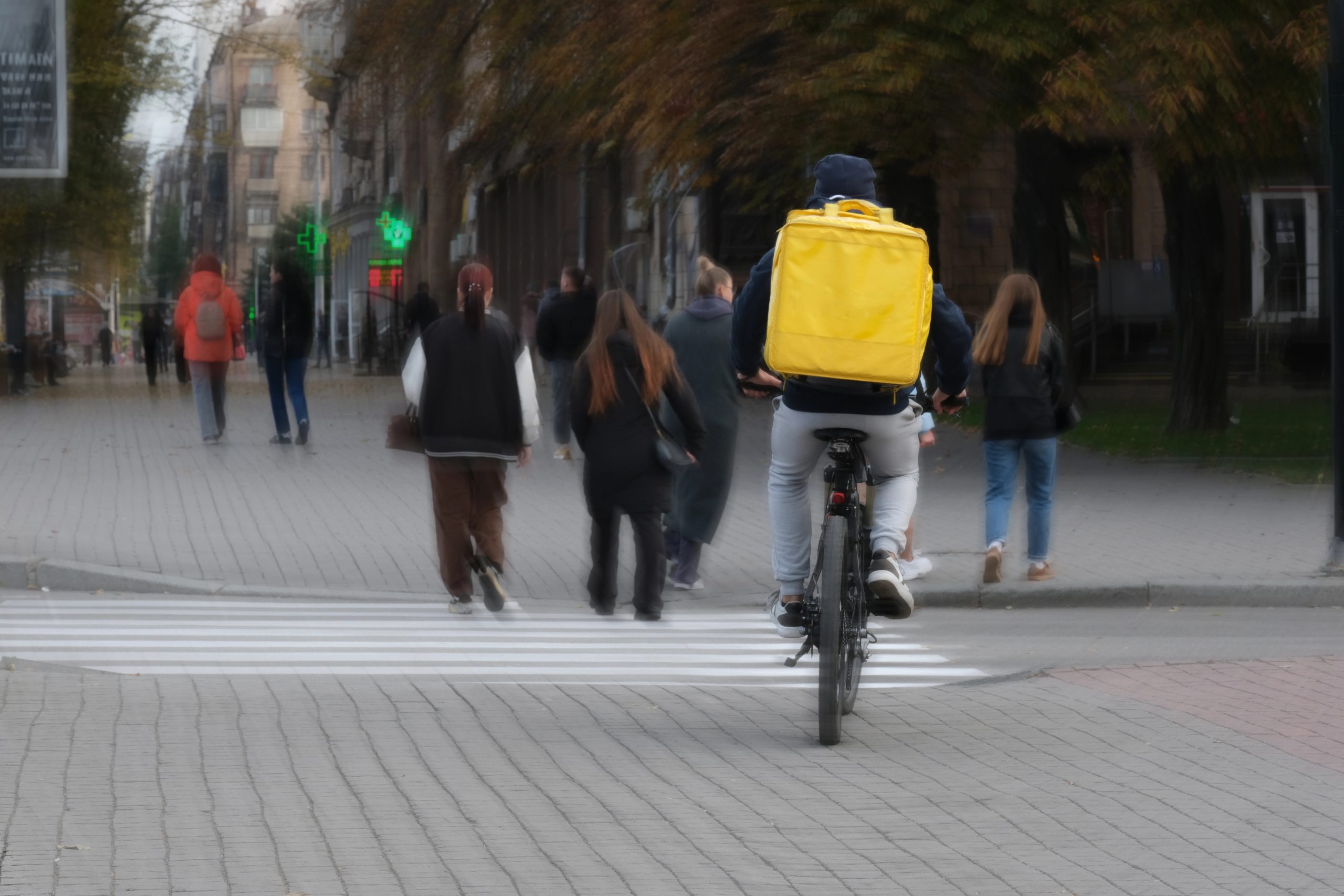
If we look at the streets and couriers with Glovo backpacks, we can imagine that every fourth backpack does not contain pizza or a kebab, but rather an item from the q-commerce category. We are strongly developing non-grocery items from categories such as flowers, electronics, pet food, or cosmetics. For us, these categories are now a key growth engine because they allow us to attract new consumers to the category for whom ordering meals from restaurants may not be attractive.
– points out Dawid Ledziński.
Among Glovo’s partners are chains of drugstores, convenience stores, supermarkets, electronics stores, pet supply stores, and florists. The flower category enjoys great interest, especially on days like Valentine’s Day or Women’s Day, when many couriers with yellow backpacks line up at flower shops. Data from 2024 indicates that on March 8, flower orders increased 42-fold compared to an average day of the year.
Poland is a very important market for Glovo. It is one of the markets on which we base our growth strategy, very attractive due to the macroeconomic situation. We have more and more affluent consumers who have less and less time. The delivery service, which saves consumers the time they so desperately lack, fits perfectly into this scenario. This makes Poland the only market in the world where as many as five global delivery application players operate. In addition, we also have large local players operating in the dark store sector.
– says the Director of Q-commerce at Glovo.
The model based on a network of dark stores assumes that the company has its own warehouses in the city where it stores products and from where the courier delivers them to the customer. The platform model in which Glovo operates is based on cooperation with partners, including shops and restaurants. They are responsible for completing the order, which is then delivered by a courier.
In the coming years, we will focus on several topics. The first is the further development of the categories of partners present on the platform. Glovo wants to be a shopping mall accessible via an app. We can imagine that all the stores that a consumer can find in a shopping mall should also be in the application. Among the key categories, I would mention sports goods, clothing, jewelry, books, toys – these have a large field for development in quick delivery marketplaces. Of course, existing categories can also be developed with additional partners so that the consumer has a full range of choices for purchasing on the platform.
– announces Dawid Ledziński.
Existing categories are also being supplemented with new functionalities. For example, in the case of grocery shopping, the customer will be able to decide at the order placement stage whether they would like to receive a substitute if one of the products is missing.
The third element of development is retail media. Glovo is already running a large retail media business in Poland, but we are constantly working on the development of these tools and their measurability so that cooperation with brands that sell their products on the platform can continue to be developed.
– says the Glovo representative.
According to IAB Poland data, the domestic retail media market, i.e., advertising using space and data available to stores, applications, and sales platforms, is growing by an average of 30 percent annually, being one of the strongest trends in the advertising industry. This is an area where advertisers are clearly increasing their budgets.
An important area of investment and development is technological innovation. Artificial intelligence is being implemented both in internal company processes and in contacts with consumers, couriers, and partners.
We see great potential in artificial intelligence to improve the consumer shopping experience and how they use the application. We want the offers they see on their phone screen to be as well-tailored to them as possible, and for the searches they enter into the application to yield the best possible results.
– emphasizes Dawid Ledziński in an interview during the Retail Summit.
Source: Newseria / Glovo Poland