









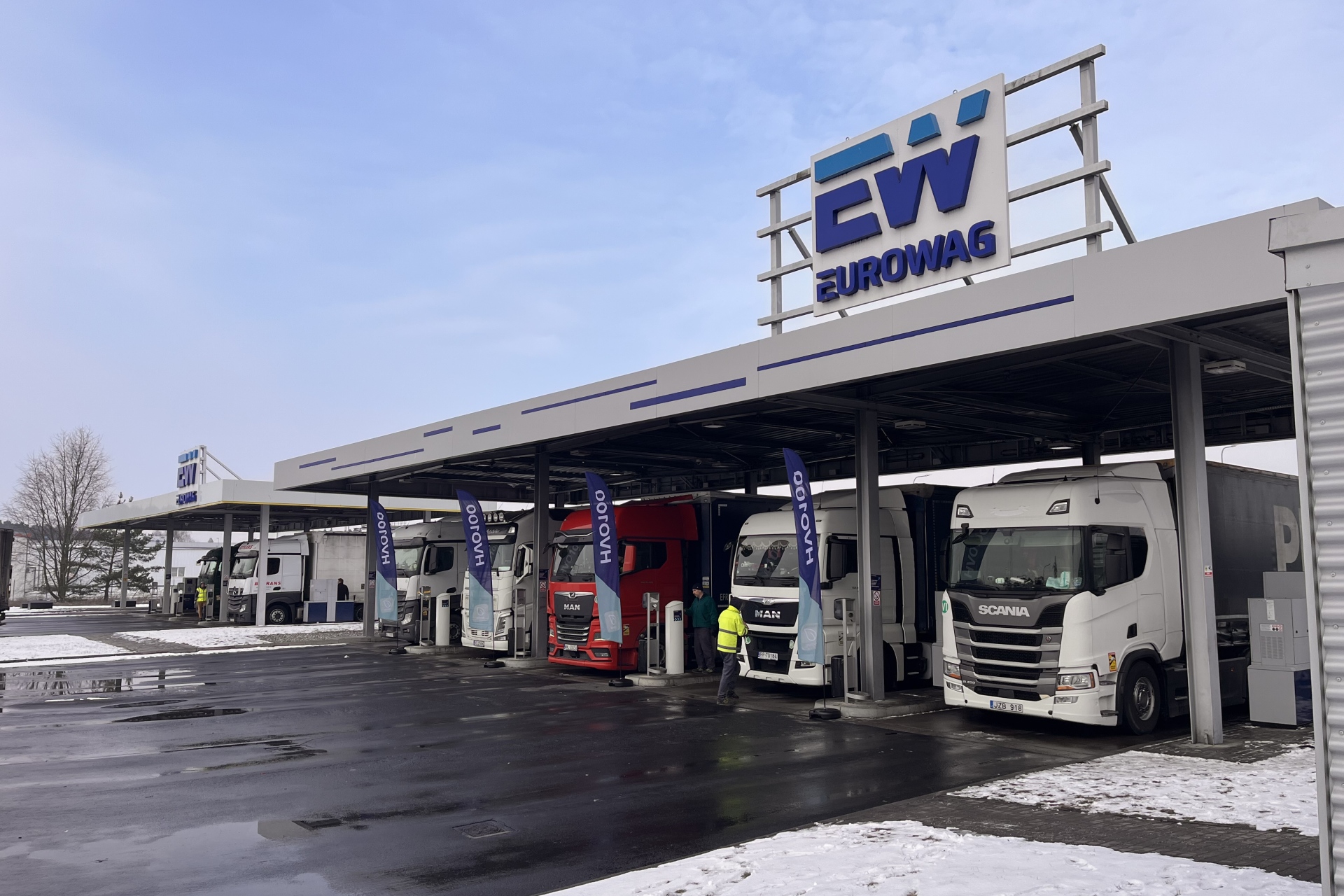
Eurowag, one of the leading service providers for road transport in Europe, is preparing to launch its second Truck Park in Poland. Located in Torzym, the facility will feature a self-service station offering HVO100 – a fuel derived exclusively from renewable raw materials. It enables a reduction of the carbon footprint by up to 90 percent. It can be used in most diesel-powered vehicles without the need for technical modifications and does not affect fuel consumption.
Eurowag opened its first HVO100 refueling station on February 17, 2026, in Słubice. It is part of a Truck Park that provides professional drivers with service facilities and the infrastructure needed on the road.
We are planning to launch the Truck Park in Torzym very soon, on April 30, 2026. In addition to HVO, it will also be possible to refuel with traditional diesel, AdBlue, and windshield washer fluid. Spare parts for trucks will also be available. We will also prepare an appropriate number of parking spaces and infrastructure facilities to increase the comfort of drivers’ work. A restaurant and a three-star hotel will be built. The facility will also include other amenities for drivers, such as a laundry and a hairdresser.
– says Lajos Veer, Director of Operations and Energy Procurement at Eurowag.
Eurowag plans to further expand its HVO100 network in Poland. In the fourth quarter of 2026, the company intends to launch two more Truck Parks, which will be built in Suwałki and Okmiany.
Biofuel produced from waste fats and oils
HVO100 (Hydrotreated Vegetable Oil) is an advanced synthetic renewable fuel made from waste fats and oils. It allows for an immediate reduction of the carbon footprint. Compared to diesel, it also has a negligible impact on the emission of particulate matter and nitrogen oxides into the environment. HVO100 is a drop-in fuel, allowing transport companies to avoid the need for fleet investments while supporting the decarbonization of transport. In terms of performance, it fully corresponds to diesel and can be used interchangeably. This fuel has a higher cetane number (>70), which allows for smoother engine operation. It also has better lubricating properties and more reliable starting in low temperatures.
The high oxidative stability of the renewable fuel also allows for long-term storage and reduces the risk of engine oil dilution. HVO100 can be mixed with traditional diesel. It works in most diesel engines. Compatibility information can be confirmed by checking if the “XTL” symbol appears on the fuel filler cap. This type of biofuel is most widely used in the Benelux countries and Scandinavia. Eurowag plans to further expand its HVO100 refueling offer, which it wants to make available at all its so-called Truck Parks (currently there are about 30 of them). In addition to Poland, these stations are also located in the Czech Republic, Austria, Romania, Spain, Slovakia, and Hungary.
Eurowag: road transport decarbonization is not based on a single technology
Every day, about a thousand new diesel trucks are registered in Europe. This does not make the path to reducing the carbon footprint easier. Thanks to HVO100, even such a vehicle can become almost environmentally neutral. Renewable diesel allows the road transport sector to quickly and cost-effectively reduce CO₂ emissions.
– says Attila Dsupin, Energy Senior Vice President at Eurowag.
It is precisely the level of CO₂ emissions that is at the center of the national strategies of European Union countries when introducing new tolls for the use of motorways and expressways. Vehicles with higher emissions are subject to higher rates for this reason.
Eurowag has been focusing for years on reducing the environmental impact of road transport and is one of the European leaders in this area. The company is launching LNG stations. It is also expanding its bioLNG offer for customers. In parallel, it is developing electromobility solutions.
Our goal is to provide customers with a full portfolio of services that support sustainable logistics. Decarbonization of transport is not based on one solution. Achieving climate goals requires the use of various technologies. These include gaseous and liquid biofuels. Electric batteries and hydrogen also play an important role. The choice depends on the specific situation of the carrier and the needs of the customers.
– explains Matthias Maedge, Vice President of Road Transport Decarbonization at Eurowag.
More information about Eurowag’s offer in the field of conventional and alternative fuels can be found on the company’s website.
Source: Eurowag