









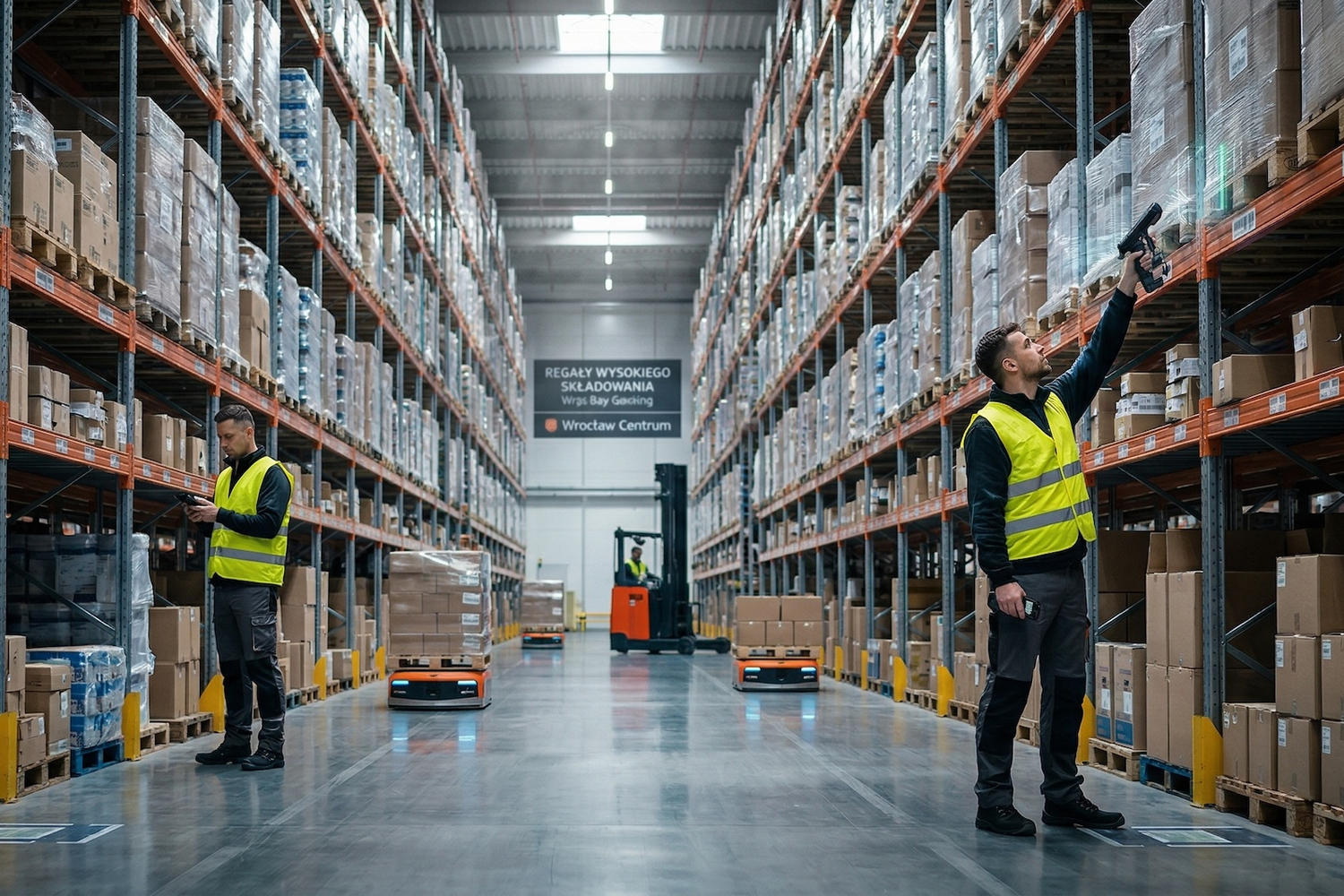
Purchasing mobile terminals for a warehouse is a decision that comes back every 3–5 years – either in the form of a smoothly operating fleet or in the form of escalations from operators and invoices for repairs of equipment that was supposed to last another two years.
Over 25 years in the automatic identification industry, I have seen hundreds of implementations. The pattern of errors repeats itself: someone chose a terminal based on the lowest price, compared two columns in the specification, and signed the order. Meanwhile, what determines the success of a purchase usually does not fit into a parameter table.
A terminal is not a smartphone in an armored case
A mobile terminal is an industrial computer with an integrated barcode scanner, designed to work in conditions where a regular phone would not survive a week. The difference does not lie in the casing itself — it lies in the ecosystem: the length of operating system support, the availability of accessories, the ability to remotely manage the fleet, and the predictability of costs over the years.
In 2026, there are over 80 models on the Polish market at prices ranging from 2,200 to over 7,600 PLN net. The spread results from real differences in durability, scanner, connectivity, and support ecosystem.
Five criteria that a warehouse manager overlooks – but shouldn’t
1. Total cost of ownership instead of unit price
The price of a terminal is 30–40% of the total cost of ownership over 5 years. The rest is accessories (200–1,500 PLN per piece), spare batteries (150–350 PLN, replacement every 12–18 months), mobile device management system licenses (50–120 PLN/year), service (300–800 PLN/year), and downtime costs.
Practical rule: a 2,500 PLN terminal without a service contract and with 3-year Android support may cost more to operate than a 4,000 PLN terminal with 10-year support and a fleet management platform included in the package.
Specific calculations for various configurations are presented in the 2026 mobile terminal ranking with net prices.
2. Operating system support – the silent killer of investment
Android dominates — 98% of new terminals in 2026. But not every Android is the same. The market leader offers up to 10 years of security updates, while others end at 3 years. After support ends, the terminal becomes a security hole in the network that connects to the warehouse management system and ERP software.
With a 5-year operating cycle — the minimum is 5 years of support from the date of purchase.
3. Drop resistance — it’s not about the height, but the type of floor
“1.5 m onto concrete” is roughly the height from which a terminal falls from an operator’s hand. In a standard warehouse with a smooth epoxy floor, 1.5 m is enough. In a cold store, where the floor is wet and icy — a minimum of 1.8 m, preferably 2.4 m. In heavy industry and distribution centers — 3.0 m.
Resistance to repeated shocks (tumble tests) is just as important as a single drop — a terminal that falls apart after the fiftieth drop from 0.5 m is not suitable for 3-shift work.
4. Scanning module – range is not everything
Standard range (up to 50 cm) — picking, packing. Extended range (5–8 m) – racks up to the third level. Long range (up to 13–21 m) — high-bay warehouses with forklifts.
Trap: many companies buy long range “just in case,” paying 500–1,000 PLN more per piece, and then perform 90% of scans from 30 cm. Match the range to the actual operation.
5. Fleet management platform – not an option, but a necessity
With 5 terminals, you can manage manually. With 50 — it’s impossible without a mobile device management system. A good platform allows you to remotely upload updates, configure security, block unauthorized applications, and diagnose problems without physical access to the device.
Check the compatibility of the manufacturer’s platform with your current tool — migration is a hidden cost of 50–100 PLN per device. A detailed comparison of parameters and casing types for each scenario can be found in the complete guide to choosing a mobile terminal.
New on the market: what is changing in 2026
The new generation of Zebra terminals — models TC501 and TC701 with the Qualcomm Dragonwing Q-6690 processor offer three times more computing power and a dedicated artificial intelligence engine. In addition, Wi-Fi 7, 5G, built-in UHF RFID reader, and AC670 scanner with a range of up to 30 meters. TC501 (273 g, 2.44 m resistance) targets retail, TC701 (284 g, 3.66 m resistance) — distribution centers and cold stores. Full comparison in the Zebra TC501 and TC701 review.
5G in terminals — still niche in Poland, but makes sense in last-mile logistics and field services. An example is the M3 Mobile models — their comparison SM24 vs SM25 shows how manufacturers differentiate terminals into a version with full connectivity and a cost-optimized version.
Local artificial intelligence — the latest processors support local artificial intelligence models, which opens the way to optical character recognition without the cloud and identification of damaged labels.
Hot-swappable battery — a top-tier feature a year ago, in 2026 it is moving to the mid-range. For work on more than one shift — an absolute requirement.
In conclusion
Choosing a mobile terminal for a warehouse is a decision that affects operator productivity and IT department costs for the next 3–5 years. Start with the questions: what is my operation, how many scans per day, for how many years do I plan this fleet? And calculate the total cost of ownership — because a 2,200 PLN terminal that you replace after 3 years costs more than a 4,000 PLN terminal that will last 6 years.
Jakub Tiuchty — automatic identification specialist with 25 years of industry experience. He advises on the selection of mobile terminals, label printers, and barcode scanners for logistics, manufacturing, and retail companies.