









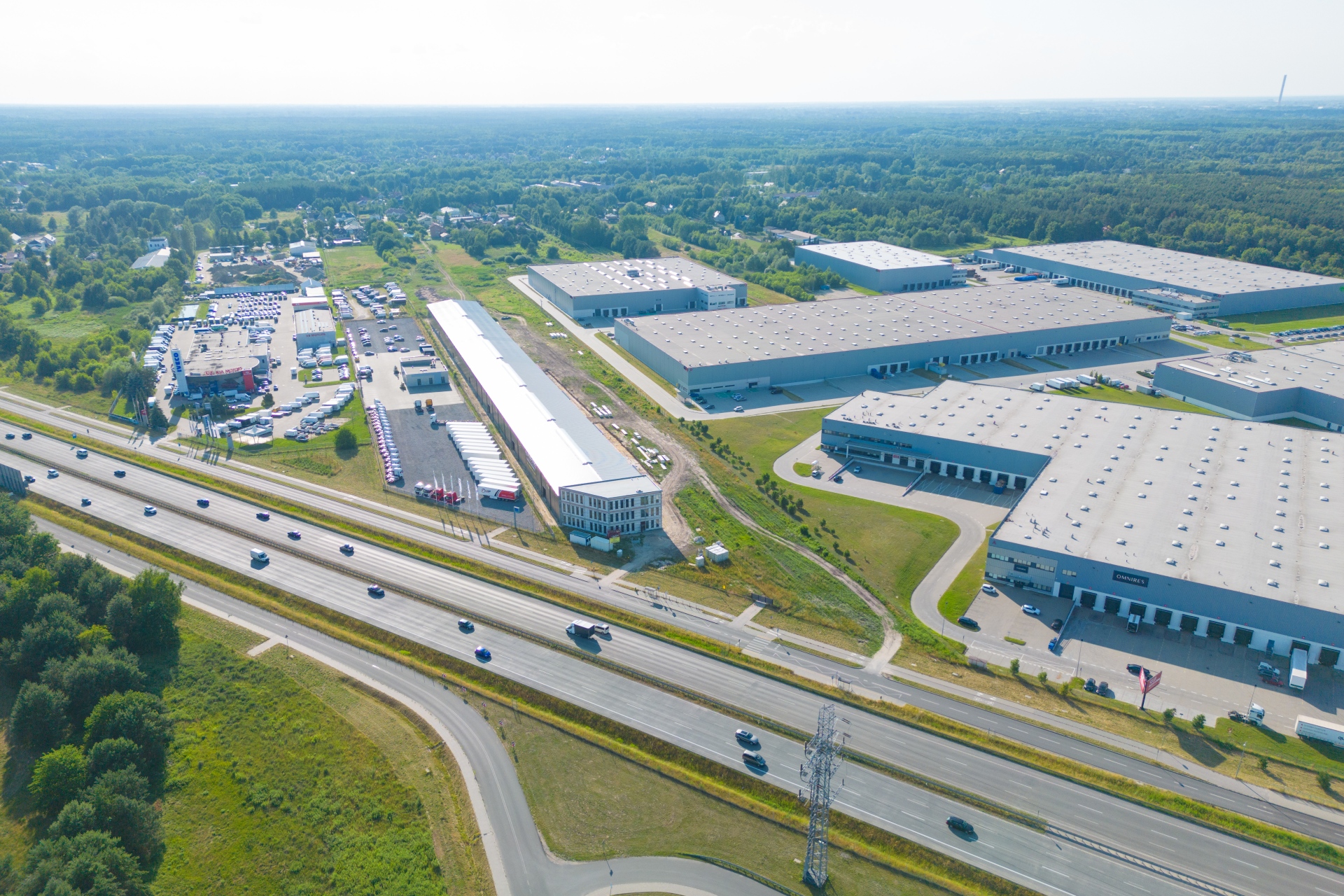
In the warehouse market in Poland, the quality of projects and the alignment of investments with real demand are becoming increasingly important. Developers and investors are focusing on warehouse space of the highest standard, and land banks are being released gradually, according to the CBRE report “2026 Poland Real Estate Market Outlook”. According to CBRE experts, the logistics sector in Poland is gaining importance in global supply chains. Despite growing investor interest, rental rates in Poland remain among the lowest in Europe.
In recent years, the warehouse market in Poland has developed very dynamically, but a change in the approach to the development of new projects is now visible. Developers are increasingly focusing on the quality of warehouse space rather than on rapidly increasing the scale of investments.
Increasing emphasis in the market is being placed on matching investments to demand and factors such as land availability, infrastructure, or local labor markets. The growing diversification of tenants and the development of warehouse technologies confirm the maturation of this sector.
– says Michał Śniadała, Head of Industrial & Logistics at CBRE.
The supply of new warehouse space is beginning to stabilize. Developers are no longer carrying out as many projects as in 2021–2022, and the relatively short construction cycle of warehouses allows for a faster response to market changes. As a result, it is easier to adjust the scale of investments to current demand.
Higher demand and tenant diversity
The warehouse market is recording a clear recovery in demand, driven by both e-commerce companies and manufacturing enterprises. Data indicate that in 2025, 6.6 million sqm of space was the subject of lease agreements. This is the third-best result in history. The number of inquiries from companies representing various industries is increasing, which confirms the growing diversification of tenants – characteristic of mature markets.
Tenant decisions are influenced by an increasing number of factors differentiating individual locations, including the availability of power capacity, the stability of the local labor market, or the quality of the property. An important element is also the mitigation of supply chain disruption risks.
– adds Michał Śniadała, CBRE.
In search of land
The level of space under construction has remained at a moderate level for almost two years and does not exceed 2 million sqm. With the development of the logistics sector, the importance of factors related to the location of new investments is growing. Limited availability of attractive land and labor resources are becoming some of the key elements analyzed by investors. In many regions of Europe, there is a shortage of sufficiently large plots for logistics development, which is why companies planning the construction of logistics centers or production plants are increasingly analyzing local labor markets and the availability of workers in detail.
Despite the low number of new investments and high demand, significant rent increases should not be expected in the short term. However, the market is beginning to differentiate – in the best locations, property owners may adopt a more conservative approach to incentive packages offered to tenants.
An increasingly strong position in Europe
In terms of net demand last year, Poland took second place, behind Germany. Thanks to its favorable geographical location and developed infrastructure, the country is an attractive location for investors and logistics operators. This is supported by the good use of the favorable geographical location – a dense network of high-quality roads, airports, and ports that are gaining importance on a global scale.
Source: CBRE Group, Inc.