









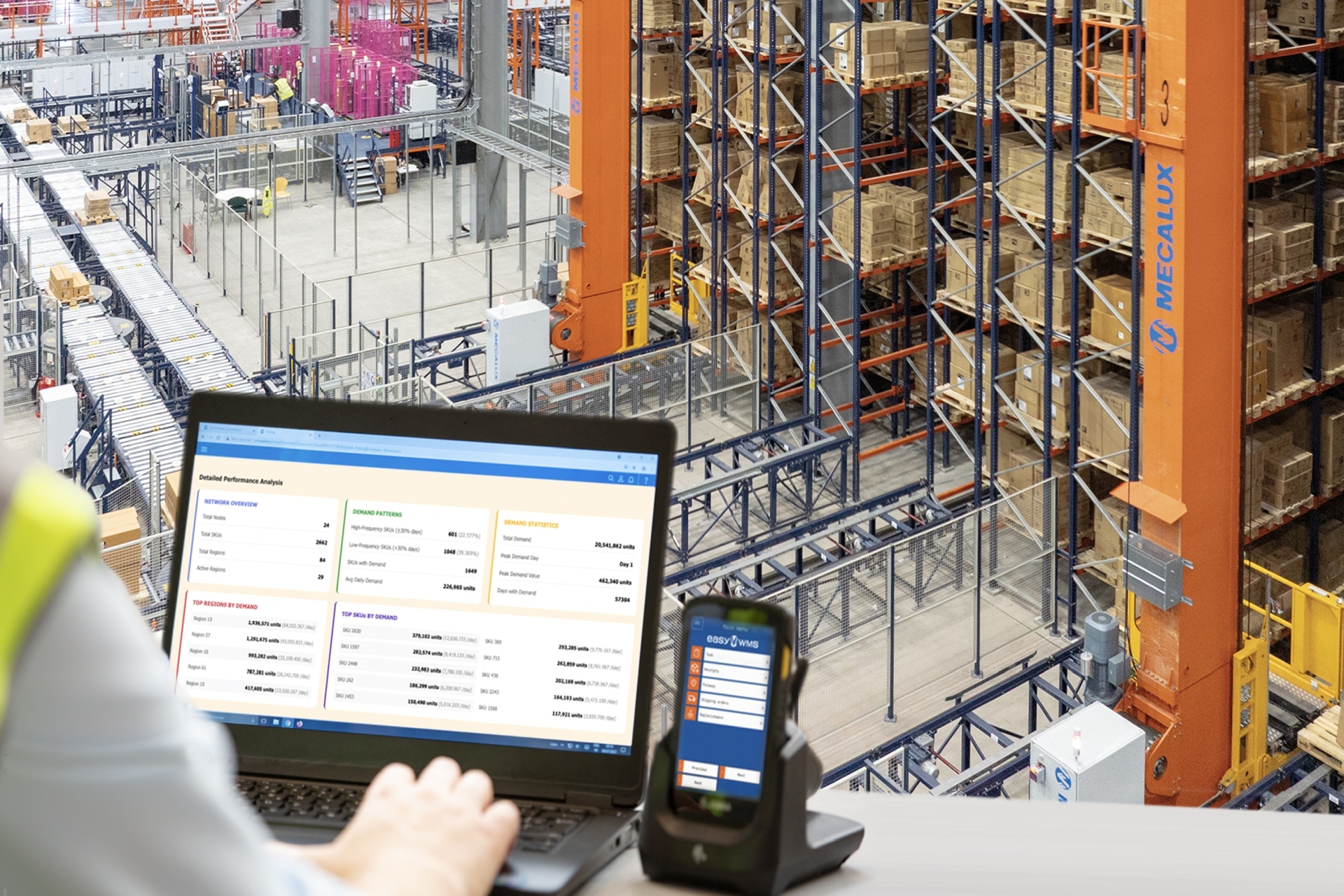
The Massachusetts Institute of Technology (MIT) Center for Transportation & Logistics, together with Mecalux, has developed an artificial intelligence-based simulator that optimizes inventory distribution between different warehouses within a single logistics network. The platform, called Genetic Evaluation & Simulation for Inventory Strategy (GENESIS), uses advanced machine learning models to analyze thousands of possible scenarios and simulate optimal inventory levels and replenishment timing for each warehouse.
The AI simulator takes into account variables such as forecasted demand in specific regions, transportation costs, and the operational capacity of each warehouse to test various replenishment strategies without impacting current operations. “The genetic algorithm allows for numerous simulations with different parameters, which helps determine the most effective logistics strategy. Companies can compare scenarios and choose the one that best suits their operational model,” explains Dr. Matthias Winkenbach, Director of Research at the MIT Center for Transportation & Logistics and the Intelligent Logistics Systems Lab.
After entering data and variables into the system, GENESIS generates an optimal solution along with advanced statistical dashboards. Users can analyze metrics such as consumption patterns, regions with high demand volatility, products with the highest risk of stockouts, and warehouses with supply issues.
Redistribution instead of purchasing
One of the key features of the system is the ability to balance inventory between warehouses. Instead of automatically placing orders with suppliers, the tool analyzes whether it is more beneficial to move products from another center in the network that has excess stock. This allows companies to reduce costs and make better use of available resources. The simulator also presents recommendations for organizing transport, suggesting, for example, grouping shipments to optimize truck utilization or fulfilling individual orders from a specific warehouse to reduce operational costs and shorten delivery times.
The real challenge was not finding the right algorithm, but making it run fast enough to be practical. We developed GENESIS from scratch to be able to evaluate thousands of scenarios simultaneously rather than sequentially. What used to take days can now be solved in minutes, allowing companies to use the system for real tactical planning, not just theoretical analysis.
– confirms Rodrigo Hermosilla, a researcher at the MIT Intelligent Logistics Systems Lab.
Unlike analytical solutions intended solely for specialists, GENESIS has been designed so that it can be used not only by those with a technical profile but also by business managers. “The goal is to help companies minimize total logistics network costs and ensure the highest level of service.
– emphasizes Javier Carrillo, CEO of Mecalux.
Upcoming artificial intelligence applications
The simulator is one of the first results of the collaboration between Mecalux and MIT CTL that can be used in practice. The project is now entering a new phase, focusing on expanding the application of artificial intelligence in other logistics processes, such as internal inventory replenishment, the use of digital twins in high-density automated storage systems, and the optimization of product locations in warehouses.
Source: MIT CTL / Mecalux