









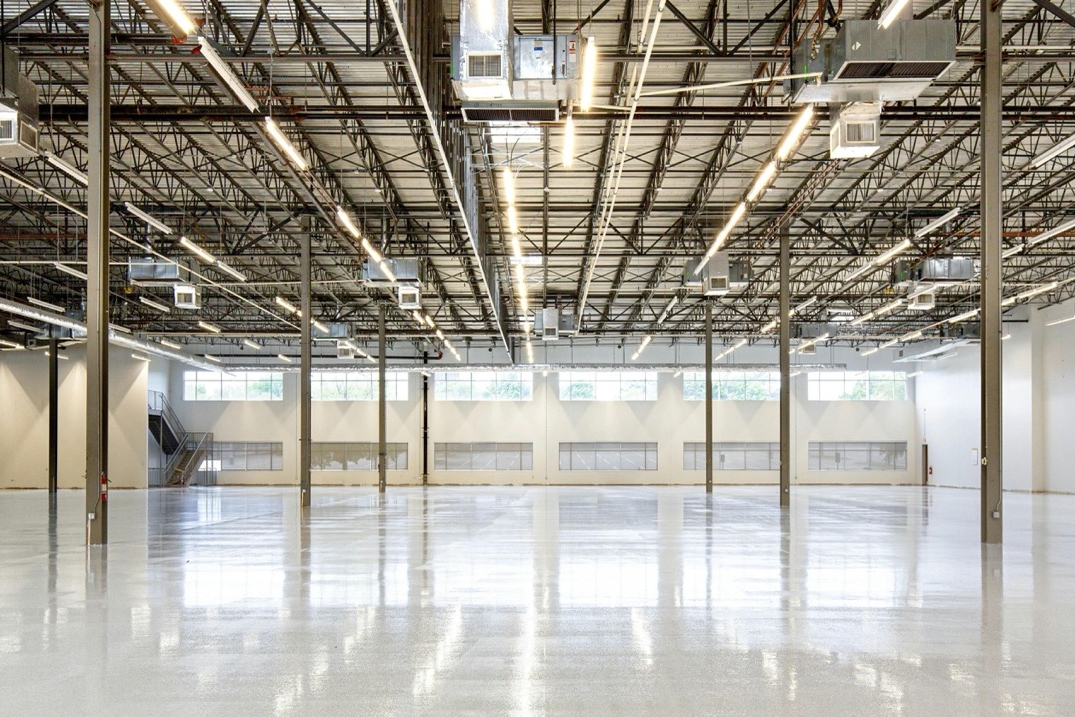
By the end of 2026, Poland may have as much as 39 million m² of modern warehouse space, according to the Polish Warehouse Market Forecast for 2026 developed by Logster. However, for many companies, the real challenge is no longer space, but managing increasing operational complexity. More and more enterprises are simplifying their warehouse procurement structure, moving away from multiple specialized suppliers in favor of a single partner. Consolidation is no longer just an optimization – it is becoming a condition for maintaining control over costs and operational time.
Market scale is growing faster than operational capabilities
The dynamic growth of warehouse space in Poland is changing not only the scale but, above all, the way logistics operations function. Larger distribution centers today handle wholesale, retail, and e-commerce simultaneously, which means more stock-keeping units (SKUs), higher inventory turnover, and shorter order batches. The warehouse is no longer just a place for storage; it is becoming an environment of continuous flow, where every inefficiency immediately translates into order fulfillment time and operational costs. At the same time, many companies operate with similar staffing levels as they did a few years ago, even though the volume of operations has increased significantly. In practice, this means that the ability to maintain process consistency – from workstation equipment to the availability of consumables – is becoming one of the key factors determining the efficiency of the entire supply chain.
This change is being accelerated by Poland’s growing role as a regional logistics hub and the dynamic development of e-commerce. Distribution centers located in Poland are increasingly serving multiple markets simultaneously, which increases the scale and complexity of operations. Mordor Intelligence forecasts that the value of the Polish logistics market will reach nearly 60 billion USD by 2031. In this model, the biggest challenge is no longer the infrastructure itself, but the ability to ensure its smooth and predictable operation every day. This is why companies are increasingly moving away from a fragmented procurement model and multiple suppliers in favor of a single partner capable of comprehensively securing the warehouse’s needs. This change stems from operational practice – the larger the scale of operations, the greater the importance of their standardization, availability, and the ability to react quickly to changes.
Consolidation as a market response
Today, logistics operators must be prepared for situations where the number of orders can increase several times over within a few days – for example, during promotional periods, before holidays, or as a result of a sudden surge in e-commerce sales. In such conditions, the ability to quickly adapt work organization – from the availability of packaging materials to the reorganization of picking stations – becomes crucial. This is why companies are increasingly moving away from rigidly designed operations toward models that allow for rapid process scaling without the need to expand infrastructure. As shown by the decisions of the largest e-commerce players, who are reorganizing their distribution networks, closing selected centers, and moving operations to fewer, more efficient locations, the industry is entering a new phase.
In practice, this also means a change in the approach to warehouse supply. Instead of ordering packaging materials, workstation equipment, and infrastructure components from different suppliers, companies increasingly expect access to a comprehensive offer that allows them to secure the entire operation in a single cooperation model. At the same time, the importance of tools that enable direct integration of procurement systems with warehouse operations is growing. Order automation, access to a standardized product catalog, and the ability to check availability in real-time help reduce the risk of downtime and decrease the operational burden on teams.
At a large scale of operations, manual management of orders from multiple suppliers is no longer effective. This is why the importance of integrated cooperation models is growing, allowing companies to ensure supply continuity and react faster to operational changes. That is why in our group, we focus on the development of tools such as e-procurement, which is no longer a solution of the future, but an operational standard in logistics. At RAJA, we have been implementing and developing these solutions for years, drawing on the experience of the entire Group. Today, customers can manage their purchases at various levels of advancement – from an account in our procurement platform that provides access to negotiated prices, product availability control, user management, or order tracking, to full integration of product catalogs with procurement and ERP systems. We clearly see that at the current scale of operations, manual order management is no longer effective – companies expect automation, process transparency, and the ability to place orders directly from their own systems.
– says Jarosław Kamiński, Managing Director of Rajapack Poland.
Digital procurement as the new B2B standard
Digitalization of procurement is becoming a natural element of large logistics operations today. Across the industry, the share of orders placed through integrated procurement platforms and e-procurement systems is growing, allowing for reduced manual handling and ensuring control over costs and product availability in real-time. The scale of this phenomenon is also visible in the RAJA Group’s data – digital channels, including e-commerce and e-procurement solutions, already account for 67% of sales, generating over 4.51 billion PLN annually in 2024. An increasing number of customers are integrating product catalogs directly into their procurement systems, which shows that digital procurement management is becoming an operational standard, not an optional extra.
Source: RAJA Group