










On March 17, 2026, regulations extending the scope of the Electronic Transport Supervision System (SENT) to clothing and footwear will come into force. These changes will be particularly felt by entities in the clothing industry, e-commerce, retail chains, and the transport and logistics sector. Failure to submit a notification or errors in doing so may result in severe financial penalties – up to 46% of the gross value of the goods, and no less than PLN 20,000. The scale of these changes and the potential consequences mean that this is the last moment to safely prepare an organization for the new obligations. For many entities, this will be their first encounter with the goods transport monitoring system and, at the same time, a new element of daily operational activity.
New category of goods in the SENT system
The SENT system, which has been in operation since 2017 and is used to monitor the road and rail transport of specific goods whose trade, from the legislator’s perspective, is associated with an increased risk of tax abuse, is being expanded to include another group of goods. From March 17, 2026, selected categories of clothing and footwear will be subject to notification requirements.
Until now, the system primarily covered fuels, alcohol, selected waste, and specific agricultural products. The expansion of the list of goods means that a large segment of the textile and footwear market will now be under supervision. In practice, a significant portion of standard warehouse deliveries (both domestic and import) in the retail and e-commerce industry may be subject to the notification requirement. The goal of these changes is to limit VAT abuse and increase the transparency of supply chains.
Although the regulations formally enter into force on March 17, 2026, in practice, entrepreneurs should be operationally ready well in advance. The process of analysis, implementation, and team training requires time. Putting off actions until the last moment before the regulations come into force significantly increases the risk of errors, which in the case of SENT can be very costly. Implementing SENT in an organization is not limited to technical registration in the PUESC system – in practice, it means a comprehensive review of supply chains, identification of transports subject to notification, and verification of the CN classification of goods and the scope of responsibility for reporting. It is also necessary to develop procedures for updating and checking the accuracy of data – including weight, quantity, and place of delivery – to prepare contingency scenarios in case of system unavailability, and to train logistics, accounting, and tax teams.
– says Tomasz Bełdyga, Partner in the Indirect Tax Team, Head of the Customs and International Trade Team at KPMG in Poland.
Obligations not only for carriers
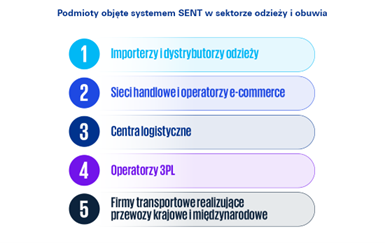
The new regulations do not only apply to transport companies. The scope of responsibility depends on the type of movement – in the case of transport starting in Poland (the obligation lies with the sending entity), in the case of transport from another EU country or a third country to Poland (the obligation lies with the receiving entity), and in the case of transit through Poland (the notification is made by the carrier).
In the SENT system, assigning the primary notification obligation to one of the transaction participants does not exempt other entities from fulfilling their own independent obligations. At the same time, the obligation to notify arises only when the transport is directly related to an activity subject to VAT, which in practice means the necessity of correctly identifying the economic transaction associated with a given transport.
– says Maciej Przybył, Manager in the Indirect Tax Team at KPMG in Poland.
Severe sanctions and operational risk
The SENT Act provides for a financial penalty of 46% of the gross value of the goods, no less than PLN 20,000, for failure to notify or for providing incorrect data. Additionally, entrepreneurs must take into account operational risks, i.e., the detention of the means of transport, suspension of delivery, delays in contract execution, or reputational consequences.
In the clothing industry, where seasonality and timeliness of deliveries are of key importance, this means that the operational effects may be more severe than the administrative penalty itself. The SENT regulation also provides for specific exclusions and exceptions, e.g., for postal operators regarding shipments meeting the definition of a postal parcel, but in practice, most entities in the retail industry do not meet the criteria to benefit from these exclusions.
– says Maciej Przybył, Manager in the Indirect Tax Team at KPMG in Poland.
Additional burdens for the TSL industry
Transport companies should pay particular attention to the need to verify the reference number before starting the transport. This number is valid for 10 days, and its absence may result in the immediate suspension of transport.
In practice, this will require the integration of processes with clients, updating instructions for drivers, and the introduction of formal control systems for transport documentation. The lack of appropriate procedures could lead to disputes between the carrier and the transport principal regarding liability for sanctions.
Source: KPMG