









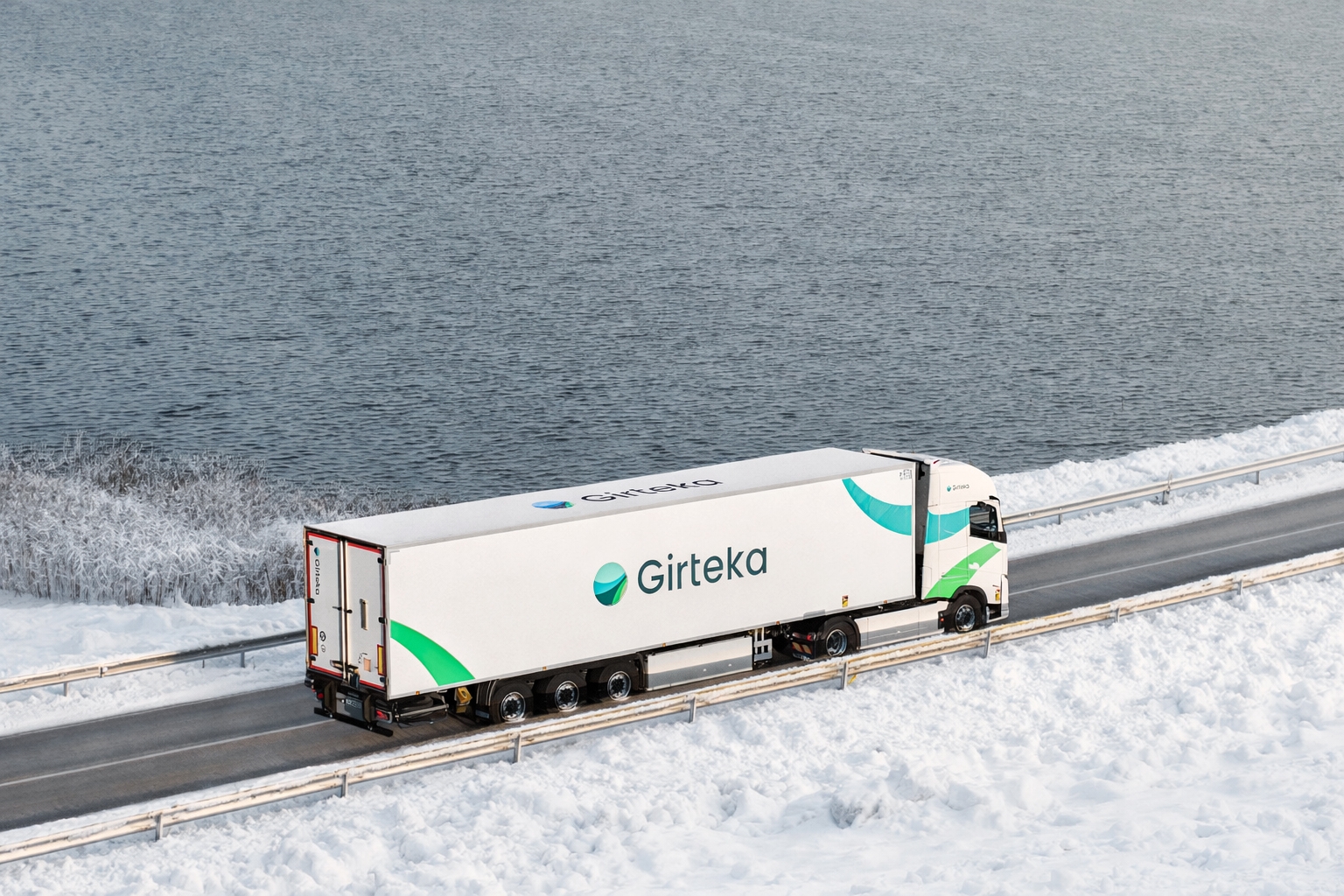
Successive cold waves that have swept across Europe in recent weeks, with record-low temperatures in Scandinavia, the Baltic states, and Poland, among others, have proven to be a major test for the continuity of supply chains. The disruptions extended beyond the local level, triggering a domino effect of delays and disturbances in the execution of transport on international routes.
Although, as emphasized by experts at Girteka, Europe’s largest asset-based transport company, extreme conditions are ceasing to be an exception, they clearly demonstrate the importance of resilience and the preparation of transport networks for extreme weather scenarios.
Losses can be counted in the billions
Extreme weather events are becoming an increasingly tangible cost for European transport. Estimates from the EU-funded EWENT project indicate that the European transport sector incurs losses of at least 15 billion euros annually due to these events. Road transport is the most vulnerable due to delays, accidents, and limited resource availability.
This is confirmed by data from the European Environment Agency (EEA): between 1980 and 2024, losses related to extreme weather events in Europe reached approximately 822 billion euros, of which climate hazards, including heatwaves, forest fires, droughts, and cold waves, accounted for about 8% of all economic losses in the EU.
A challenge for supply chains
In January of this year, some of the lowest temperatures in over a decade were recorded in Europe. Snowstorms and icing hit air, sea, and road transport, demonstrating the vulnerability of the entire system and limiting the capacity of key transport routes.
In air transport, temporary closures and capacity restrictions at major airports translated into delays in the delivery of time-critical shipments and the creation of bottlenecks in international supply chains due to the accumulation of volumes. An example is Amsterdam-Schiphol, where over 2,400 flights were canceled within one week. Storms, severe frost, and icing also slowed down container operations in key North Sea ports—Rotterdam, Hamburg, and Antwerp—extending container storage and handling times. This, in turn, increased pressure on road transport, especially in transit corridors connecting Western Europe with the Baltic states and Scandinavia.
However, the largest scale of disruption affected road transport. The introduction of temporary speed limits and the closure of highway sections to vehicles over 7.5 tons, along with restrictions and difficult conditions paralyzing road traffic, caused delivery delays ranging from a few hours to several days.
Risk in cargo transport
As Girteka experts point out, difficult weather conditions affected more than just delivery delays. An equally important challenge was the increased risk of damage to temperature-sensitive cargo that requires special transport conditions.
This group includes fresh food, which irreversibly loses quality even with short exposure to low temperatures, as well as liquid and semi-liquid products such as beverages, cosmetics, or detergents, which are susceptible to changes in consistency and damage or seal failure in packaging. This risk also had to be taken into account when organizing electronics deliveries, where rapid temperature changes promote moisture condensation, leading to component damage and corrosion. Pharmaceutical products transported under controlled temperatures (usually +2°C to +8°C or +15°C to +25°C) also required special supervision. Even short-term drops below specified parameters could compromise their effectiveness and violate regulatory compliance requirements.
In winter, it is not only about maintaining the right temperature but also monitoring it in real-time throughout the entire delivery route. Early detection of deviations is crucial for the quality and safety of transport. This was particularly important during extreme cold, when low temperatures could affect the operation of refrigeration units and road delays could extend transit times.
– says Andrius Juknevičius, Head of Maintenance, Girteka Transport.
A test for fleets and teams
From the perspective of road transport operations, extreme cold has a completely different impact than heatwaves. The drop in efficiency associated with high temperatures is gradual, which allows for adaptation. In the case of low temperatures, technical problems in vehicles, both passenger cars and trucks, appear suddenly and mainly concern electrical, fuel, and braking systems, as well as tire grip. At -20°C, the battery capacity of tractor units can drop by as much as 40–50 percent, which directly increases the risk of breakdowns and downtime.
This sensitivity and failure rate of systems have shown that the technical condition and age of the fleet are becoming increasingly important for maintaining supply continuity. Newer vehicles are generally more technically reliable, better integrated with monitoring and management systems, and provide greater operational stability even in difficult conditions.
This is one of the key conditions behind our decision at Girteka to use only the latest trucks and trailers. In addition to the benefits of using modern digital tools in vehicles, driver safety and comfort, the safety of other road users, and a lower environmental impact, a modern fleet has greater resistance to extreme weather conditions.
– says Andrius Juknevičius.
Difficult weather conditions proved to be a test not only for fleets but also for operational teams and drivers. Sudden deviations from the plan required a quick response, and in such situations, experience and the ability to adapt are crucial.
Winter conditions are not a surprise to us; they are a predictable risk for which we prepare in advance: we assess the technical condition of the fleet, plan routes and processes, and train teams and drivers in safe driving as part of the Girteka Driver Academy. This year’s winter and the extreme conditions, due to their scale, very well demonstrated the importance of the role and approach of a logistics partner in maintaining the continuity and safety of supply chains. And their preparation for crisis management, thanks to resources, processes, and modern transport management systems.
– says Andrius Juknevičius.
This year’s January cold wave showed that extreme winter conditions are not an anomaly, but a recurring factor straining European supply chains. When temperatures drop sharply and remain low for an extended period, operational reliability is determined not by individual events, but by how transport systems handle pressure in terms of resources, networks, and cargo flow.
In this context, the role of a logistics operator goes beyond just service execution. It includes supporting shippers in terms of transport reliability, additional capacity, operational continuity, and the flexibility necessary to maintain smooth cargo flow within interconnected supply chains, even in difficult winter conditions.
Source: Girteka Group