









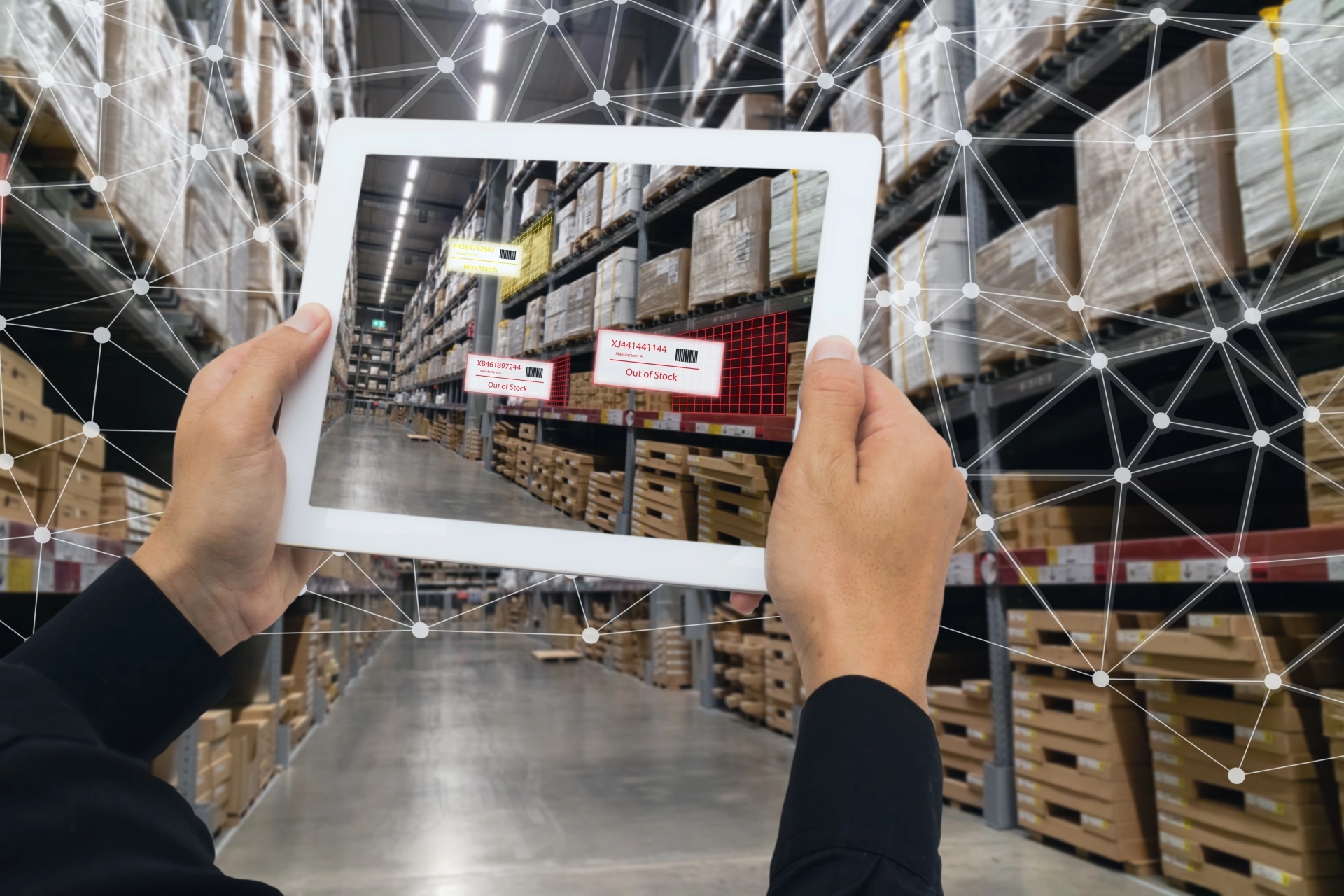
Logistics and modern commerce are sectors where the situation changes by the minute. Traditional and static IT systems that require manual entry for every change are becoming a bottleneck for companies. The solution is artificial intelligence, which is ceasing to be just a technical novelty and becoming a real assistant that suggests solutions and shortens decision-making time on the floor, which translates into an increase in warehouse efficiency of up to 300%.
In today’s logistics, the biggest challenge is time pressure and the need to constantly adapt to new conditions. Traditional WMS systems often require the user to tediously click through options or contact the IT department for every process change. The use of modern AI in logistics changes this relationship – the system begins to understand the context of operations and actively supports employees where the action happens, e.g., at ramps and racks.
Fast integration instead of months of waiting
One of the most difficult tasks in logistics is the integration process with a new client’s or courier’s system. This usually involves months spent exchanging emails between programmers and studying extensive documentation. Thanks to the use of advanced AI, this process is simplified, and the system begins to act as a “programmer’s advisor” that “talks” to partners’ technical teams, suggests ready-made code snippets, and explains the complexities of the documentation. As a result, the company can scale its business and handle more orders without the need to proportionally expand the IT department.
A virtual mentor on the warehouse floor
AI is also revolutionizing the way new employees are onboarded. The onboarding time for a new employee is reduced from weeks to as little as 3 hours, and instead of long theoretical training, the new warehouse worker receives support in a “here and now” model. The system sees what the employee is doing on the terminal screen, and if they encounter a problem (e.g., when picking an unusual order), the AI assistant provides immediate guidance. The employee does not have to look for a manager, which reduces downtime and the number of errors.
Warehouse management from your pocket
The use of cognitive assistants also allows the “command center” to be moved to mobile devices. A manager who spends most of their time on the floor no longer has to return to the desk to resolve an emergency situation. From their phone, they can issue a command to the system to create an account for a temporary worker or change shipping priorities. AI verifies permissions and performs the task in the background, allowing management to focus on maintaining operational fluidity.
Managers as architects of logistics processes
The evolution of warehouse systems towards AI is, for many companies, primarily a moment of transition from reactive execution of system commands to active creation of processes. As emphasized by Wojciech Nowak, Managing Partner at Sente S.A. and architect of the Teneum WMS system, the benefits of this change go far beyond simple automation:
In practice, this change means regaining agency. Thanks to AI, managers are no longer hostages to previously defined schemes and the availability and “free capacity” of IT departments. The era of rigid reports and the need to export data to Excel to get answers to specific business questions is coming to an end. Instead of waiting for changes to be implemented by the provider, users can become architects of their own processes: defining replenishment logic or storage strategies and testing them in the system. In crisis situations, they act mobile, solving problems directly on the warehouse floor with the support of an AI assistant, without wasting time returning to the office. Integration with new sales channels ceases to be an “obstacle course” and becomes a fast, orderly business process.
Thanks to this approach, logistics becomes more agile. Companies using AI-supported systems report that their teams are more independent, and managers can manage processes based on current data, not just intuition.
Source: Sente S.A.