









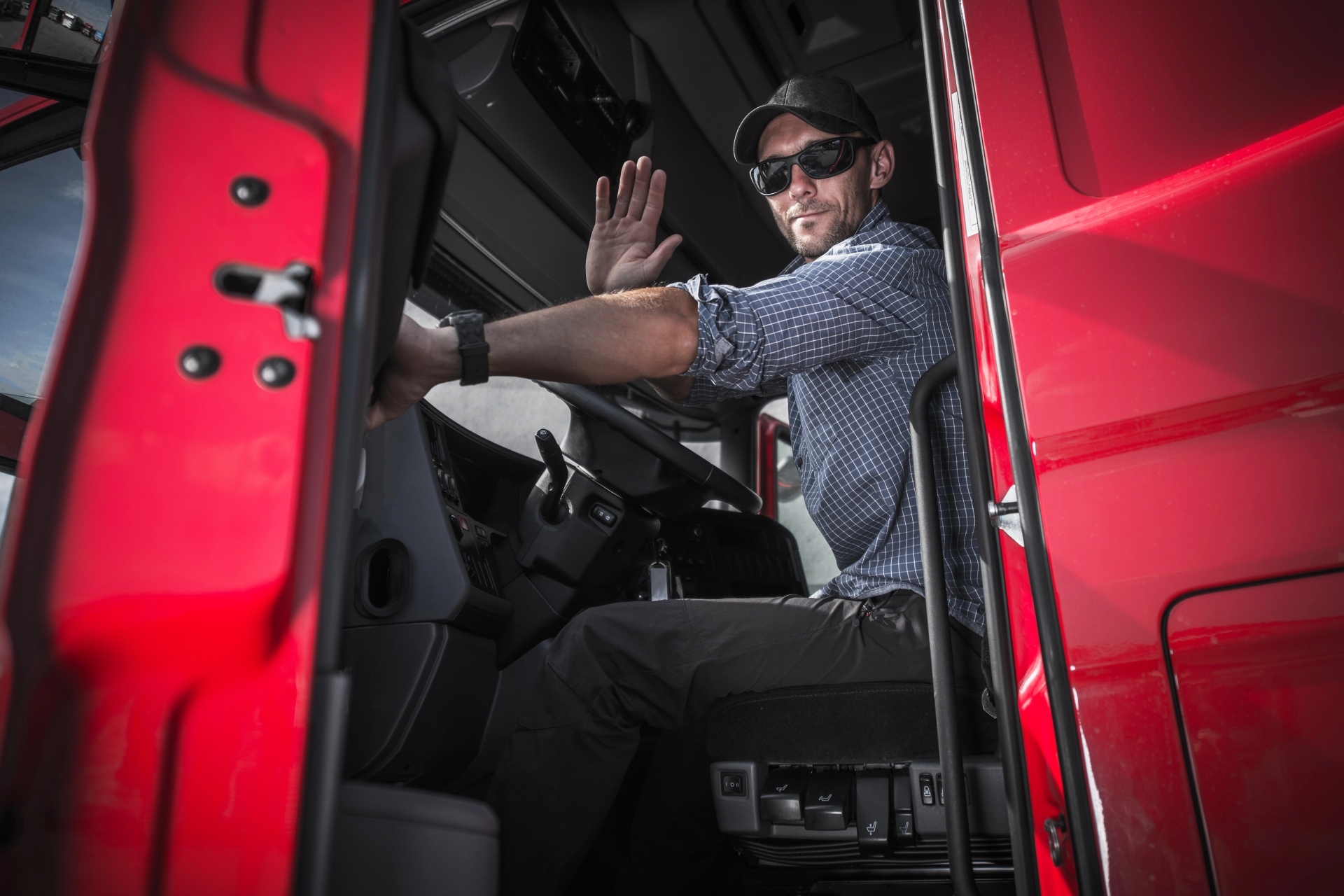
The shortage of professional drivers is still felt across the industry. In some regions, it is even more visible, as some employees have left to work abroad or have retrained. The latest Eurowag market report on road transport shows how companies from Poland, the Czech Republic, Slovakia, Hungary, Romania, Spain, and Portugal are dealing with the lack of drivers.
In-house recruitment and training paths
Some transport companies have developed clearly defined procedures. They hire younger or less experienced drivers, entrusting them with lighter tasks at the beginning and then gradually preparing them for work on larger vehicles. This process takes longer, but it fosters loyalty and long-term employee retention.
An example is the Polish freight forwarding company Elmex, which has been actively responding to the driver shortage for years. Initially, it focused on recruiting employees from Ukraine, and later also from Asian countries. Over time, it launched an international program based on its own recruitment agency and a network of training centers around the world. This program prepares future drivers for work in Poland, not only for the company’s own needs but also for other carriers. The Slovak company TOPNAD is moving in a similar direction, also planning to hire drivers from third countries.
A different approach is presented by the Czech transport company Diplo, which believes that there is no shortage of qualified drivers on the market – however, they stay where they are provided with appropriate working conditions.
We do not conduct intensive recruitment. People who join us usually stay for a long time. We try to create fair and predictable conditions without constantly surprising employees with further changes. From the beginning, we have had clearly defined rules regarding our approach to employees, and thanks to this, we feel the problems with the lack of drivers to a lesser extent. – emphasizes co-owner of the company Michal Bubeník.
Bubeník himself previously worked as a driver, so he knows the realities of this profession and its requirements well.
Another Czech carrier, Multitrans CZ, focuses on an individual approach to employees and teamwork, where everyone understands the reasons behind the company’s decisions. The company does not operate solely based on current orders but builds long-term relationships with the team. Multitrans CZ also emphasizes that professional driver salaries significantly exceeding the market average, which were once treated as an advantage in the industry, are now an insufficient argument for attracting employees. Therefore, it focuses on improving working conditions and modernizing the fleet.
The Spanish company Barquín y Otxoa believes that the driver work system is one of the key challenges in this profession. Employees increasingly do not want to spend entire days on the road, away from their loved ones. In response, the company changed its work organization so that 90 percent of the routes allow the driver to sleep at home. Although the food sector, in which the company specializes, involves working on weekends and holidays, the company strives to maintain clear and predictable schedules. In turn, the Romanian company Bipmobile focuses on a flexible benefit package aimed at drivers.
The Hungarian carrier Domino Trans decided to face the difficult situation in the labor market by launching its own talent development program, supported by the National Employment Fund (OFA). The initiative is aimed at young people with a category B driving license who have not yet made a final decision regarding their career path. The program enables a gradual entry into the world of professional transport — participants, while still studying, carry out tasks related to driving delivery vans and prepare to obtain category C and E licenses. After completing the program, Domino Trans offers a two-year employment contract with the possibility of further cooperation in the long term.
Telematics as a tool for improving efficiency
At the same time, the way driver performance is evaluated is changing. Not only is the vehicle’s location monitored, but also driving style, use of cruise control, brake operation, and fuel consumption. Monthly evaluations are created based on this data. In the case of weaker results, drivers undergo targeted training aimed at reducing fuel consumption and vehicle wear. An example is the company LOGIUS, which uses telematics to support drivers in improving their driving style and better meeting customer expectations. Analyses conducted in cooperation with ESG experts are used both to improve internal processes and to ensure transparent communication with business partners.
The Polish carrier RP-TRANS uses GBox telematics from Eurowag for transport planning and arrival time forecasting. The system informs drivers about delays and updates the remaining distance in real-time, taking into account, among other things, road conditions and driver working hours. This facilitates route optimization and the selection of the most economical and shortest journeys. In turn, the Polish company Elmex has been using the Eurowag Marcos TMS system for 15 years, which supports payment monitoring, assessment of transport order profitability, and operational processes, translating into lower costs and higher efficiency.
In the Portuguese transport company TRANSMARSIL, telematics for fleet monitoring and digital tachographs are the foundation of operational activities. The company is also preparing to implement solutions based on artificial intelligence, which are intended to support route planning and cost analysis. A solid basis for building these models is provided by data on expenses from Eurowag fuel cards. Meanwhile, the Slovak company TOPNAD has developed its own transport management software and uses artificial intelligence to plan the most efficient routes, also in terms of vehicle utilization when returning to the base.
Digital tools provide TOPNAD with detailed insight into the activity of individual drivers. The system evaluates their performance without the need for manual handling, and also records data on fuel consumption and monitors engine idling time. Monthly reports are generated automatically and can be analyzed by vehicle, route, or customer.
Business point of view
A more stable and experienced team means fewer delays and fewer damages. It also gives the opportunity to show customers that the company operates safely and consistently reduces fuel consumption. In some countries, such criteria are already beginning to appear in tender procedures. At the same time, the shortage of drivers and dispatchers is increasingly affecting the results of transport companies. In Poland, the vacancy rate in the transport, forwarding, and logistics sector reached its highest level in history last year – it was 44 percent higher than the average for all industries[1].
This is a clear signal that staffing shortages in this sector are becoming an increasingly serious challenge. Companies must ensure that they are perceived as attractive employers. This means not only offering benefits, but above all competitive salaries, safe working and rest conditions, and convenient tools for communication and reporting – comments Radosław Tatarski, Country Manager of Eurowag in Poland.
At the end of 2024, there was a shortage of almost half a million drivers across the European Union, and the Czech transport sector felt this problem to an equally large extent. An aging workforce and declining interest from younger generations mean that the shortage of qualified drivers persists. To counteract this, transport companies are increasingly implementing digital solutions – transport management systems (TMS) automate route and journey planning, and telematics tools allow for monitoring driver behavior, reducing fatigue, and improving work safety. Combined with fleet modernization and broader digitalization, these actions gradually increase the attractiveness of the profession for new candidates – assesses Miroslav Novák, Country Manager CZ&SK.
The driver shortage remains the most serious operational challenge in freight transport. It is estimated that Europe may struggle with a shortage of as many as 400,000 drivers[2]. This situation drives wage pressure, increases operating costs, and limits the ability to develop transport capacity. For this reason, creating job offers better suited to the expectations of the younger generation, who are more willing to embrace automation and new technologies, is becoming increasingly important.
What do we know thanks to the Eurowag Market Report?
The 2026 report shows that regardless of whether we are talking about Poland, Central Europe, or the south of the continent, the direction of action is similar. Transport companies are combining investments in people with the implementation of technology. This is not a one-off response to current problems, but a long-term approach that allows both keeping drivers in companies and conducting business in a more cost-effective way. This is exactly what the transport sector should focus on, because price pressure and expectations regarding high efficiency will not disappear anytime soon.
If you want to learn about examples of transport companies that are effectively responding to these challenges, check out the Eurowag Market Report “Transforming Transportation in 2026” and benefit from the experience of experts from all over Europe. The report is available for free download at the link.
[1] Road transport in Poland 2024/2025, TLP
[2] IRU.org, European road freight rates converge, 2025
Source: Eurowag