









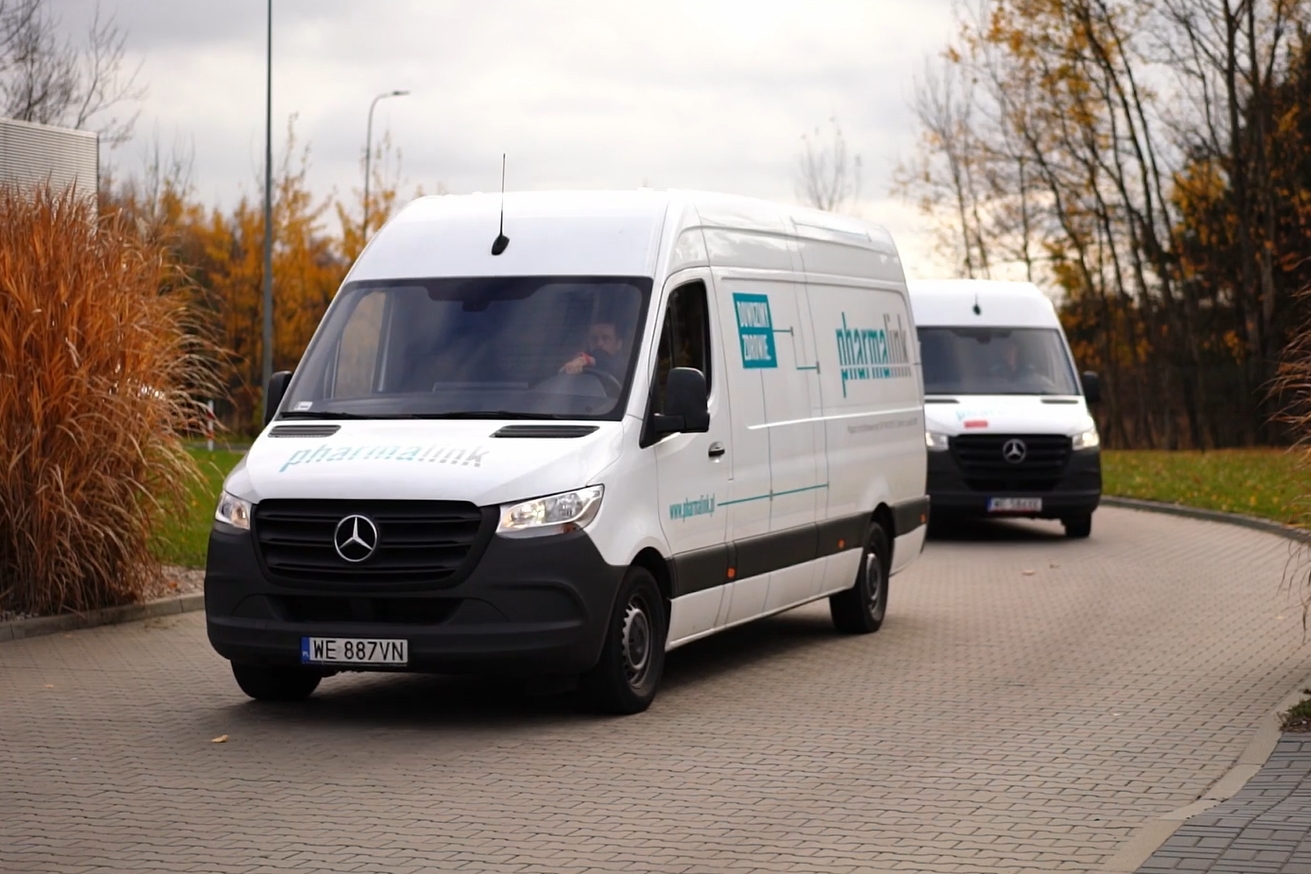
Behind every delivery of medicines to a pharmacy lies a precisely planned and strictly controlled logistics process. In Poland, public and hospital pharmacies are supplied primarily by professional, specialized pharmaceutical logistics entities that meet rigorous legal requirements and understand the specifics of medicinal products.
Medicines are a specific type of commodity. To maintain their quality, efficacy, and safety, many of them require storage under strictly defined temperature conditions, protection from light, humidity, or shocks. Therefore, their distribution takes place within the framework of so-called Good Distribution Practice, which regulates every stage of the product’s journey – from the pharmaceutical wholesaler’s warehouse to the moment of receipt at the pharmacy. Such procedures, combined with strict monitoring and traceability of conditions at every logistics stage, are a guarantee of safety, but also protection against theft or potential counterfeits.
In practice, this means that the vast majority of deliveries to pharmacies are carried out by specialized transport companies that have a fleet adapted for the transport of medicinal products and appropriately trained personnel. Deliveries carried out on the wholesaler/pharmacy – customer line look a bit different. In that case, the buyer is usually responsible for choosing the delivery method – indicating whether they want a specialized entity to be responsible for delivering the medicines or for the delivery to be handled by a courier company working in standard mode.
– emphasizes Daniel Charucki from Pharmalink, a company that has been carrying out pharmaceutical transport across the country for over 15 years.
One logistics, different needs
Although the basic principles of medicine distribution are common, in practice, deliveries to public pharmacies and hospital pharmacies differ significantly. Hospital pharmacies often order life-saving medicines, products used in oncological therapies, or specialized nutritional preparations. These require not only precise temperature monitoring but also “just in time” deliveries, synchronized with patient treatment plans.
In turn, public pharmacies serve the daily needs of thousands of patients and expect regular, frequent deliveries that ensure continuity of sales and minimize stock shortages.
Regardless of the type of pharmacy to which the transport is carried out – one thing remains key: the safety and quality of the medicine cannot be compromised at any stage of transport. To ensure this, we focus on several key aspects: primarily vehicles that meet strictly defined requirements, including those that allow for temperature control during transport, as well as humidity or cleanliness. Another important aspect is an accurate vehicle and shipment monitoring system, as well as – equally important – specialized drivers.
– notes Maciej Orczykowski, Temperature Department Manager at Pharmalink.
When we order for ourselves
The situation is slightly different when deliveries are made to individual customers. Most often, over-the-counter medicines, dietary supplements, or pharmacy cosmetics are ordered online, which do not have to be transported under strictly defined conditions. In such cases, however, we should be aware that these preparations, if stored in conditions that are too cold, too warm, or too humid, could have undergone certain changes, e.g., in their consistency, which may affect their efficacy, as well as their smell and color.
More and more pharmacies fulfilling orders with delivery offer their customers the option of using the services of specialized pharmaceutical logistics companies. This is a safe option that guarantees that the product will be transported under stable, strictly defined, and identifiable conditions.
Technology and control instead of improvisation
Professional pharmaceutical transport today is much more than just moving medicines. It is a complex system involving continuous temperature monitoring, clearly defined procedures for responding to any deviations, validated transport packaging, and full traceability of every shipment. Every delivery must be documented in detail, and the conditions of its execution must be reproducible even after many months.
Such rigorous requirements mean that pharmaceutical logistics operates according to completely different principles than standard goods transport. This is precisely why medicines in Poland do not reach pharmacies through solutions known from everyday e-commerce shopping. Specialized pharmaceutical logistics is one of the pillars of the safety of the healthcare system and – along with the development of the market and the growing requirements regarding the pharmaceutical safety of Poles – is gaining increasing importance.
– concludes Daniel Charucki, Pharmalink.
For the patient, pharmaceutical logistics remains an invisible element of the process. For the pharmaceutical market, however, it is a key mechanism that determines whether a medicine will retain its quality and efficacy until the moment of administration.
Source: Pharmalink