









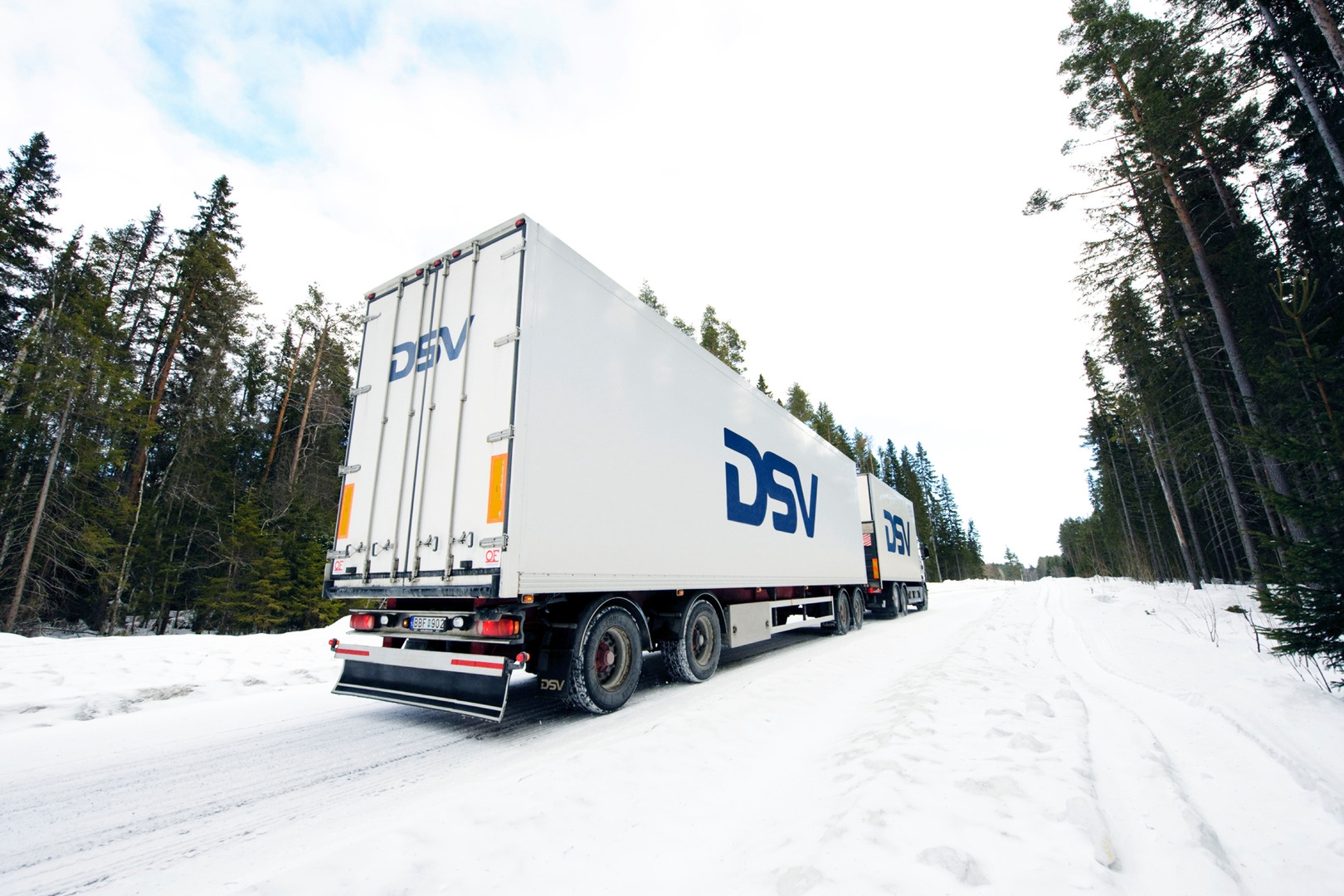
Data from DSV — Global Transport and Logistics suggest that 2025 brought a significant revival in Polish exports to the main Scandinavian markets — Sweden, Denmark, and Norway. The total volume of shipments carried out on these routes by the world’s largest logistics operator increased by 25 percent year-on-year. In the opinion of DSV analysts, changes in goods flows may indicate that the North is becoming an economic alternative for Polish companies, helping to balance the uncertain situation in other markets.
The revival in the largest Scandinavian economies has translated into increased demand for almost all of Poland’s key export products. Among the sectors that have particularly benefited from this revival, according to DSV data, are industrial automation, paints, varnishes and derivative substances, lighting, and cosmetics.
In August of this year, turmoil in US-EU trade policy prompted many European companies to look for alternative markets. We already pointed out then that Northern Europe could play such a role from the perspective of Polish companies. Denmark, Sweden, and Norway are open, wealthy markets where reliable partners and high-quality products are valued. I am pleased that many entrepreneurs not only trusted our analysts’ recommendations but also entrusted us with their cargo. I am convinced that this year’s 25% growth is just the beginning and that 2026 will be at least as successful.
– says Łukasz Witowski, Senior Manager, Road International Transport, Nordics & Baltics at DSV.
According to World Bank data, the combined GDP of Denmark, Sweden, and Norway grew by approximately 20% between 2020 and 2024, which shows the region’s strong momentum. The OECD also expects continued economic growth in the region in the new year. This situation provides positive prospects for the development of Polish exports to the Nordic direction.
Challenges: driver shortages and rising transport costs
Impressive macroeconomic indicators can, however, easily overshadow the difficult reality. To fully exploit the trade potential inherent in Scandinavia, proper preparation of supply chains is necessary.
Recent months in particular have shown what a significant barrier to export growth the issue of transport capacity availability is. Deliveries to Denmark, Sweden, and Norway are carried out mainly using road transport, which is currently facing significant structural challenges. In Europe, according to the International Road Transport Union (IRU), there is a shortage of 230,000 professional drivers, including 29,000 in Poland.
The situation in the labor market is currently a key challenge facing the TSL industry. The shortage of employees with appropriate qualifications affects the constant increase in transport rates. This is particularly noticeable in the context of Scandinavia, which is not without reason associated with harsh winters – snowy, full of icy roads. Driving a semi-trailer truck in such difficult conditions requires appropriate experience and skills, which are beginning to be in short supply. It is worth keeping this in mind when planning expansion into Nordic markets so as not to be surprised by sudden cost increases, such as those we could observe in October 2025. The ability to ensure supply continuity is one of the key factors of competitiveness.
– points out Witowski.
To minimize the risk associated with transport rate volatility, DSV has been developing its contract fleet and partner cooperation with transport companies for years. Today, on the Scandinavian route, it has the largest number of vehicles and a base of drivers with appropriate experience and skills. Looking to the future, to guarantee the maintenance of service quality, the operator is already taking a number of actions today.
Relationships with drivers and carriers are the best investment today
One of the main problems that drivers face is issues related to work comfort. In response to these challenges, social infrastructure is being developed at DSV transshipment terminals, including kitchens and showers. The Danish company also ensures an adequate number of parking spaces at its logistics centers. A significant challenge also remains the long waiting time for unloading and loading, which in some locations can exceed 24 hours. Support in this area is provided by digitalization and the implementation of a time slot management system, which enables better work organization.
In the face of market trends — the aging of drivers, the lack of interest among young people in this career path, and consequently the growing deficit of employees — building good relationships and a positive reputation among drivers is one of the best investments in the logistics area that can be made. At DSV, we work closely with our fleet partners to best understand and respond to the needs reported by drivers.
– summarizes Łukasz Witowski, Senior Manager, Road International Transport, Nordics & Baltics at DSV.
Another type of action taken by DSV is preventing the creation of payment bottlenecks. A study by Bibby Financial Services shows that as many as 90% of transport companies receive payments after the deadline. To minimize this type of risk, the operator conducts in-depth verification of potential contractors, including in the National Debt Register, and sets individual credit limits that are covered by insurance. In the event of non-payment by a client, the policy secures the possibility of timely payment to carriers.
In the face of customs turmoil and stagnation in key Western European markets, more and more Polish companies are considering geographical diversification of their operations. However, it is worth remembering that the success of expansion into new markets depends not only on product quality or price attractiveness. Equally important is building stable and predictable supply chains — especially in relations with demanding clients from Nordic countries. Therefore, the process of preparing to enter a new market is always worth starting with an analysis and careful planning of logistics. Support in this process can be provided by a logistics operator that has knowledge and experience in handling cargo in a given target market.
Source: DSV – Global Transport and Logistics