









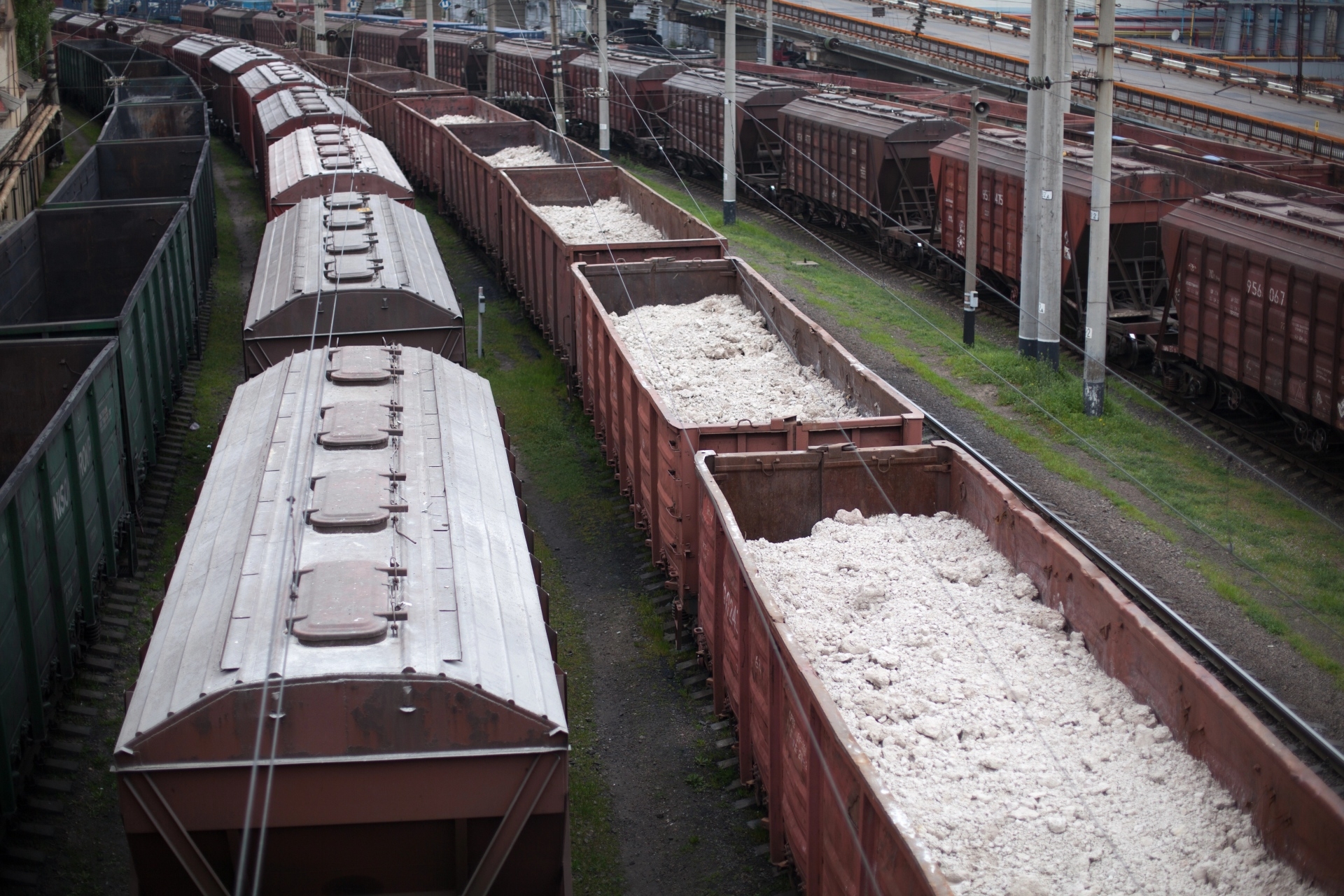
In the third quarter of 2025, the mass of transported coal increased, while the mass of aggregates decreased. Despite these changes, goods from the group of metal ores and other mining and quarrying products, which also includes aggregates, accounted for the largest share in the structure of transported cargo – both in terms of mass and transport performance.
The mass of goods transported by rail in Poland in the third quarter of 2025 amounted to 55.6 million tonnes. Compared to the same period in 2024, this is a decrease of less than 0.5% (less than 0.26 million tonnes). Transport performance also fell – by 1.7% (by 0.24 billion tonne-kilometres). However, these declines are significantly lower than those in the second or first quarter of 2025.
The key to bridging the gap in transport, which follows the decreasing demand for energy raw materials, is to utilize the potential of other groups. The growth in the transport of construction materials and aggregates is the result of infrastructure investments, including the expansion of railway lines. Rail can also be successfully used by other industries. The highest result since the beginning of the quarterly statistics we have been keeping was achieved by the transport of secondary raw materials and municipal waste. This is a market that can largely be taken over by rail – as indicated by examples from other countries.
– notes Dr. Eng. Ignacy Góra, President of the Office of Rail Transport.
Among the commodity groups with the highest share in mass and transport performance in Q3 2025 are, among others:
- hard coal, lignite, crude oil and natural gas: 28.2% share in mass, 16.2% in transport performance (15.7 million tonnes and 2.4 billion tonne-kilometres);
- metal ores and other mining and quarrying products – 28.4% by mass and 28.9% by transport performance (15.8 million tonnes and 4.2 billion tonne-kilometres);
- coke, briquettes, refined petroleum products, gases produced by industrial methods – 14.1% in mass and 20.9% in transport performance (7.9 million tonnes and 3 billion tonne-kilometres);
- chemicals, chemical products, man-made fibres, rubber and plastic products, nuclear fuel – 4.7% by mass and 5.8% by transport performance (2.6 million tonnes and 0.8 billion tonne-kilometres);
- metals, finished metal products (excluding machinery and equipment) – 4.7% in mass and 4.4% in transport performance (2.6 million tonnes and 0.6 billion tonne-kilometres).
Compared to the third quarter of 2024, an increase in transport exceeding 0.1 million tonnes occurred in the following groups:
- hard coal, lignite, crude oil and natural gas – an increase of 0.26 million tonnes, while simultaneously recording a decrease in transport performance of 0.2 billion tonne-kilometres;
- products of other non-metallic minerals – an increase of 0.15 million tonnes, with an increase in transport performance of 0.06 billion tonne-kilometres;
- metals, finished metal products (excluding machinery and equipment) – an increase of 0.24 million tonnes, with an increase in transport performance of 0.08 billion tonne-kilometres;
- secondary raw materials, municipal waste – 0.23 million tonnes and an increase in transport performance of 0.08 billion tonne-kilometres.
Declines of more than 0.1 million tonnes occurred in the following groups:
- metal ores and other mining and quarrying products – a decrease of 0.4 million tonnes and 0.2 billion tonne-kilometres;
- products of agriculture, hunting, forestry, fishing and aquaculture – a decrease of 0.3 million tonnes and 0.2 billion tonne-kilometres;
- food products, beverages and tobacco products – a decrease of 0.1 million tonnes and 0.04 billion tonne-kilometres;
- chemicals, chemical products, man-made fibres, rubber and plastic products, nuclear fuel – 0.1 million tonnes and 0.006 billion tonne-kilometres.
Aggregate data for the three quarters of 2025
From January to September, freight trains in Poland transported 160.6 million tonnes of goods and performed transport work amounting to 41.5 billion tonne-kilometres. This is 3.5% less in terms of mass and 5.4% less in transport performance compared to the three quarters of 2024.
Despite the declines in absolute values of transported coal mass by less than 0.6 million tonnes (-1.2%) compared to the same period in 2024, its share in total rail transport increased by 0.7%. At the same time, the value of transport performance fell by 0.8%. Shares of other main groups:
- metal ores, mining and quarrying products – 27.9% by mass, 28.5% by transport performance (a decrease of 0.04 percentage points in mass and an increase of 0.47 percentage points in performance);
- coke, briquettes, refined petroleum products – 13.7% by mass, 20.3% by transport performance (a decrease of 0.49 percentage points by mass and an increase of 0.57 percentage points by transport performance);
- chemicals, chemical products – 5% by mass and 6.2% by transport performance (an increase of 0.04 points by mass and 0.35 percentage points by transport performance);
- metals, finished metal products – 4.9% by mass and 4.6% by transport performance (an increase of 0.45 percentage points).
The largest decline in absolute values and share occurred in the group of products of agriculture, hunting, forestry, fishing and aquaculture – the mass of transport fell by almost half, from 4.7 million tonnes in the three-quarter period of 2024 to 2.9 million tonnes in the three quarters of 2025. Transport performance fell from 1.9 billion tonne-kilometres to 0.98 billion tonne-kilometres. The decline in the 3 quarters of 2025 compared to the 3 quarters of 2024 amounted to 38.4%, which translated into 1.8 million tonnes less. The share of this group after three quarters in mass is 1.8%, while last year in the same period it was 2.8%. In transport performance, the share was 2.4%, while in the same period of 2024 it was 4.3%. This result was particularly influenced by grain transport.
The second decline in terms of mass in absolute values for the same period was the group of metal ores and other mining and quarrying products – a decrease of 1.7 million tonnes. The third is the group of coke, briquettes, refined petroleum products, gases produced by industrial methods – a decrease of 1.6 million tonnes. Declines compared to last year were also visible in other groups – in the group of food products by over 0.5 million tonnes or unidentifiable goods by 0.6 million tonnes.
2.7 million tonnes were transported in the January–September period in the group of secondary raw materials, municipal waste. This is the highest result since the beginning of the presentation of quarterly statistics by the Office of Rail Transport (since 2016).
Increases were most visible in four groups:
- products of other non-metallic minerals – an increase of 0.5 million tonnes;
- metals, finished metal products (excluding machinery and equipment) – an increase of 0.5 million tonnes;
- secondary raw materials, municipal waste – an increase of 0.3 million tonnes;
- wood, wood and cork products (excluding furniture), straw products, paper and paper products, printing products and sound recordings – an increase of 0.2 million tonnes.
Detailed information along with the full range of statistics is available on the Railway Data website in the Freight transport tab, Commodity groups.
Source: UTK