








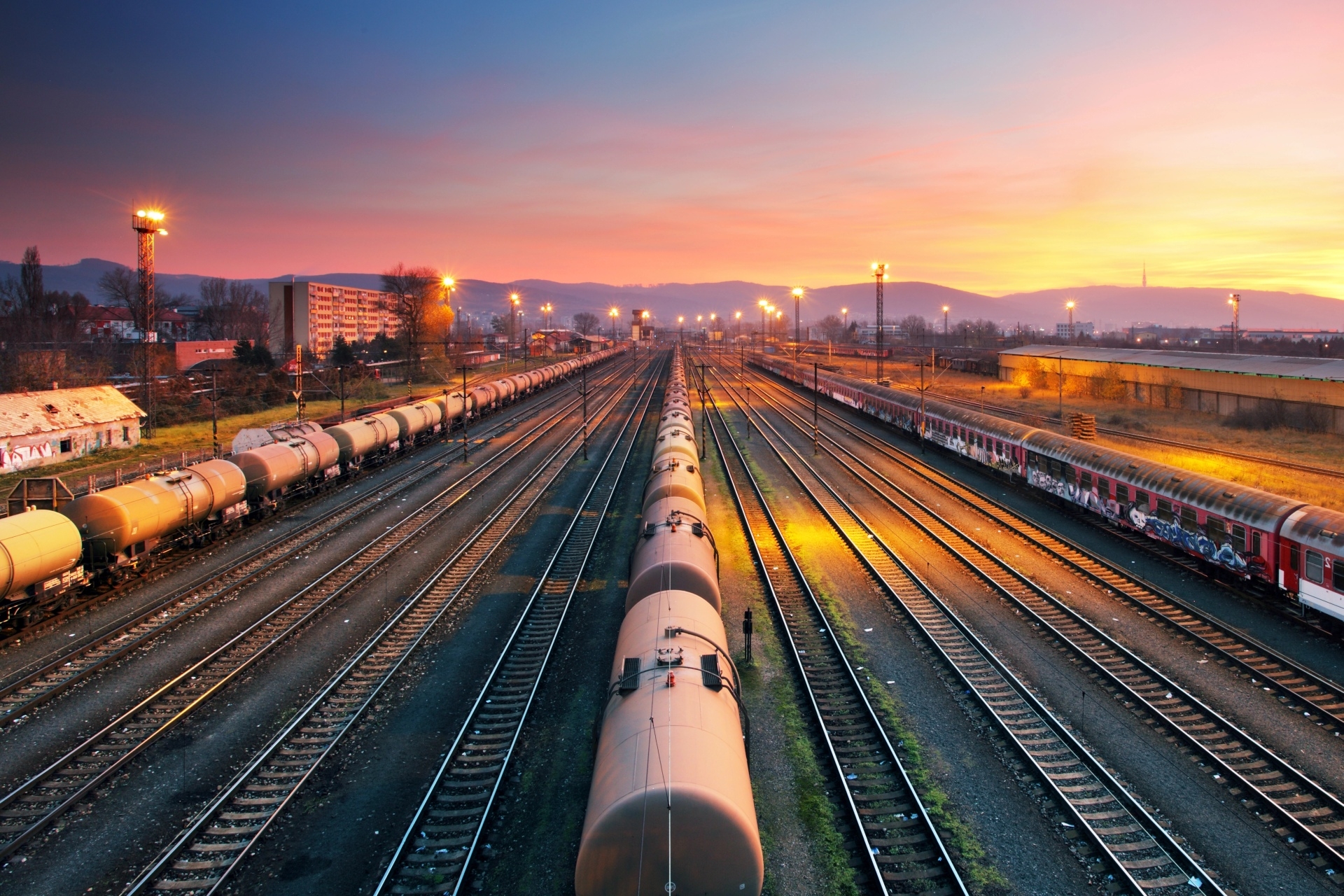
Rail freight transport has been gradually losing market share for many years. Due to factors such as high infrastructure access fees and energy costs, it is not competitive compared to road transport. However, in the face of the mega-investments awaiting Poland, the development of rail transport is crucial for securing the logistics of materials and equipment. A similar situation applies to military supplies – emphasize industry organizations, which have jointly proposed the “Five for Rail Freight Transport.”
Signed during the 15th Railway Congress, the “Five” is an initiative of companies operating in the area of rail freight transport and rolling stock. In addition to the IGTL, it includes the “Private Wagons” Association, the Prokolej Foundation, the Union of Independent Railway Carriers, and the Railway Business Forum.
This is a set of five demands, but also ready-made solutions intended to help develop rail freight transport in Poland, which has been in a massive decline for many years. We are calling for the Ministry of Infrastructure, along with other ministries, to take this problem very seriously, because we are investing huge amounts of money in infrastructure, but this is not being followed by the development of freight transport. At this moment, rail freight transport is not competitive against roads. We have been observing for many years that all volume increases on Polish infrastructure are being captured by roads. We are losing very badly here.
– says Maciej Gładyga, Managing Director of the Chamber of Land Transport (IGTL), to the Newseria agency.
The first proposed solution is the development of point-based rail infrastructure – intermodal terminals, loading points, and sidings – with state support. In the opinion of experts, decisions on the location of logistics centers today often do not take into account the potential of rail. Therefore, on one hand, there should be an obligation to plan such projects within reach of the railway and ensure their access to tracks, and on the other hand, a system of economic and marketing incentives is needed to incorporate these facilities into the rail network.
The second demand concerns lowering the costs of infrastructure access and traction energy, which account for 25–35 percent of transport costs. Due to these burdens, rail is gradually losing its share in the freight transport market.
Rail should be considered a highly energy-intensive sector, and appropriate legislative and organizational solutions should be introduced here.
– assesses the IGTL expert.
This includes, among other things, abolishing the obligation to pay the capacity fee and the RES fee on energy used for traction purposes. The authors of the “Five” also propose preparing a multi-year PKP PLK price list with a significant reduction in fees for freight carriers (30–50 percent) and stable discounts for intermodal transport.
We are also talking about the fact that there should be a whole spectrum of actions regarding the development of high technologies, but also the replacement of the fleet with modern ones.
– points out the third demand, Maciej Gładyga.
As he emphasizes, the modernization of rolling stock and technological development are a condition for increasing the share of rail in freight transport. In this area, it is crucial to include an R&D component in each of the development programs, finance the purchase of innovative wagons and locomotives, and implement technologies that reduce energy consumption and noise emissions.
This should also be followed by a comprehensive program of changes in capacity management on the railway lines that we are modernizing. We have great infrastructure, but rail freight has no priority on the network. Actions ensuring very good utilization of this capacity are also needed here. Our last demand, as always, is also to take into account the needs of rail freight transport when it comes to investments, but also maintenance and traffic organization.
– says the Managing Director of IGTL.
Today, a serious problem for the efficiency of freight transport is point-based speed and capacity restrictions. Implementing a rapid response program for infrastructure degradation and removing “bottlenecks,” as well as adopting a multi-year and guaranteed financing system for maintenance investments, could help solve this.
According to industry organizations, the development of rail freight transport is crucial for many different reasons. One of them is the need to secure military logistics and supplies, which is significant for military and strategic security. For the economy, this development means efficient and effective supply chains.
The logistics of materials and equipment is a very important element of major investment programs, such as the railway program, the road program, the CPK, or the nuclear power plant. Let us not delude ourselves that we can secure all the needs related to the implementation of these investments through road transport. If rail is to be an important element of them and carry a large part of these loads, we must talk seriously about how to organize it. This would be to the benefit of the entire society. We are talking about less congestion and greater safety on the roads.
– says Maciej Gładyga.
As he emphasizes, comprehensive and systemic actions in all areas can bring noticeable results in rail freight transport.
What is important is that five organizations have signed this initiative. It is not the case that only carriers, or only wagon owners, or only freight forwarding companies are behind these solutions, but this is our cross-organizational agreement. We are appealing to the ministry to sit down at the table and talk about it. This is not a program against anyone; it is a program with proposals for ready-made solutions. Not all of them are to be implemented immediately, but it is certainly high time to take freight transport seriously after the successes of passenger transport.
– says the IGTL expert.
Source: Newseria