








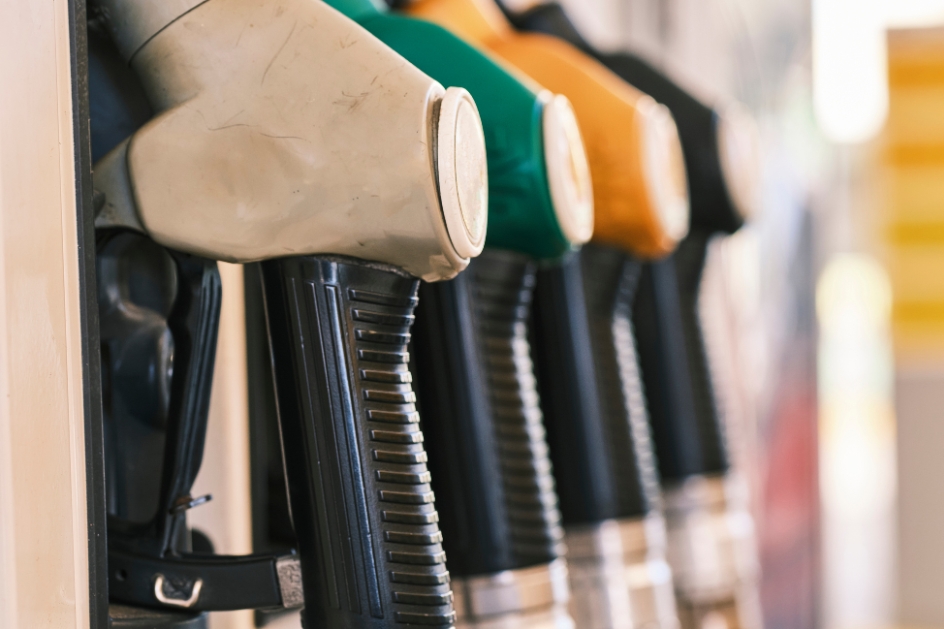
Fuel is the primary cost for transport companies. Data from TLP (Transport and Logistics Poland) shows that it accounts for over 40 percent of all transport sector expenditures. It exceeds the cost of wages by as much as 1/3[1]. Price hikes, market dynamics, and competitive pressure require carriers to change their approach to refueling. Experts emphasize that the key to fuel savings is effective cooperation between companies in the Transport, Forwarding, and Logistics industry and drivers regarding economical driving, as well as a well-thought-out fuel strategy, which currently cannot be created without technological support.
Fuel price stabilization and carrier costs
Fuel prices have stabilized recently, but the TSL industry has not felt much relief. Why? Because market calm has not led to a reduction in fuel spending. For many transport companies, it remains the largest cost item – even greater than expenses for vehicles, parts, and employee salaries.
Fuel prices are influenced by two key factors. The first is exchange rates, and the second is geopolitics in oil-producing regions. Despite the strong position of the Polish currency against the dollar and the euro, and consequently a stable and secure market situation, fuel expenses still represent the largest operating cost for transport companies – about 40 percent of all expenditures. Carriers looking for real fuel savings today should focus on optimal planning of refueling locations and frequency, which in turn requires implementing new standards in the company based on innovative technologies for fleets.
– comments Tomasz Czyż, Chief Expert for Technological Solutions at the Eurowag Group.
Implement refueling standards in your company
The first step toward reducing fuel expenses is changing refueling standards. In transport companies, responsibility for planning and controlling this process is increasingly shifting from drivers to dispatchers or forwarders, who use transport solutions to determine appropriate locations.
Eliminating spontaneous decisions by drivers helps counteract inefficient practices and optimize diesel consumption in the fleet. Therefore, carriers are increasingly keen for the transport company’s “office” to make the most important refueling decisions in advance and provide clear guidelines to the driver on the road. Thanks to access to technology, forwarders or distributors can better manage this process and be aware of which stations are along the route and which one is most advantageous to choose, and then send the trucker a message via telematics or a mobile app about how much fuel to add, when, and where. If such planning is missing, the cost differences between planned and random purchases can reach several hundred euros per month.
– comments Tomasz Czyż, Eurowag Group.
Thanks to this, those managing transport receive the most important data on all fuel operations in real-time – even before they receive official transaction confirmation from the selected fuel card provider. It is enough for the driver to confirm the option to refill the truck’s tank on telematics, such as GBox Assist, and such information can go directly to Marcos TMS, which improves the forwarding department’s control over consumption and can limit expenses by faster detection of anomalies, e.g., refueling off-route or unnaturally high fuel consumption.
– Expert Tomasz Czyż adds that transport companies are also increasingly encouraging drivers to digitally report station visits.
Forwarders also use Transport Management Systems (TMS). Thanks to their integration with fuel cards, base tanks, or telematics, carriers gain selected data on diesel consumption in the fleet and all fuel payments. This information can be sorted, analyzed, and compared, and easy access to it can contribute to improving the fuel policy in a transport company, which can precisely calculate the costs of executing orders assigned to individual vehicles or drivers.
Control fuel prices and stations
Fuel prices at individual stations – even within the same region – can differ significantly, so the choice of point should not be random. Modern technologies provide simple control over fuel prices in real-time, supporting transport companies in choosing the most advantageous station on the route. However, not only fuel prices matter in the selection process.
Ongoing control of fuel prices at stations along the route is enabled by TMS systems or mobile applications. However, it is good to select purchase locations not only based on price conditions but also location and infrastructure. It is hard to talk about savings here when a driver, to refuel a bit cheaper, has to exit the main route, losing time, fuel, and risking a delivery delay. In the case of Eurowag solutions, carriers have access to a live preview of fuel prices both in the customer portal and in the mobile app. Prices can be automatically sorted to always find the cheapest station in a given region without the need for time-consuming checks of many points.
– notes Tomasz Czyż.
Implement eco-driving and plan routes carefully
More and more transport companies are investing in training for drivers that teaches how to drive to consume less fuel, reduce exhaust emissions, and increase road safety. Applying eco-driving principles, e.g., avoiding long stops with the engine running, smooth driving, or active cruise control, significantly reduces fuel consumption in the fleet.
For real fuel savings, it is also essential to plan routes effectively using telematics systems so as to avoid traffic jams or roadworks, choose toll-free road sections, or exclude unnecessary stops, as well as minimize the number of empty runs. Drivers get a clearly defined route, also taking into account the personal preferences and driving style of a given driver, while forwarders can control the situation on an ongoing basis. The route promising the lowest fuel consumption and fastest arrival at the destination is chosen. According to Eurowag group analyses, the differences in fuel costs between an optimized route and a poorly planned one can amount to as much as 5–7% of total fleet expenses.
Regularly service the fleet with the help of technology
The amount of fuel consumed is also directly related to the technical condition of the vehicle. A faulty clutch, damaged thermostat, defective sensors, low tire pressure, contaminated filters and spark plugs, or oil that has not been changed for a long time – such irregularities can cause increased fuel consumption. Therefore, regular inspections of the transport fleet and the replacement of worn or faulty truck parts can not only contribute to large fuel savings but also prevent unplanned downtime due to breakdowns.
Taking care of the good technical condition of the fleet is not only a matter of optimal diesel consumption but, above all, long-term vehicle reliability. Taking a faulty truck out of service makes it impossible to carry out orders during that time, which can cost the company the loss of potential turnover. This amount is increased by the costs of leasing, insurance, transport tax, and repairs.
– emphasizes Tomasz Czyż and adds that the integration of telematics with TMS systems allows for setting automatic reminders about inspections and services so as not to miss any deadline in the rush of duties.
[1] Transport and Logistics Poland, Road transport in Poland 2024/2025
Source: EUROWAG / INELO