
The logistics industry is facing exceptionally difficult challenges today. Growing customer expectations, global supply chain disruptions, pressure to shorten delivery times, and cost optimization make existing operating models insufficient. Transport, forwarding, and warehousing companies must additionally meet requirements related to cybersecurity, legal regulations, and CO₂ emission reductions as part of corporate ESG strategies. In this context, digital transformation is no longer an option, but a condition for maintaining competitiveness.
For many years, digitalization in logistics was selective – companies implemented individual tools, such as warehouse management systems or shipment tracking applications. Such actions allowed for the improvement of parts of the business, but did not solve organizational problems comprehensively. A holistic approach assumes that transformation covers all key areas of the company. This means simultaneous investments in reliable ICT infrastructure, business processes, employees’ digital competencies, as well as system and data security.
In practice, this approach enables the company to be treated as a coherent ecosystem in which all elements work together. High-speed fiber-optic internet and cloud solutions ensure uninterrupted access to data, integrated ERP and CRM systems support customer relationship management and operational processes, and electronic document flow accelerates information exchange and reduces costs. Developing employees’ digital competencies and changing organizational culture allow for fully utilizing the potential of new technologies, while advanced security measures minimize the risk of cyberattacks and data loss.
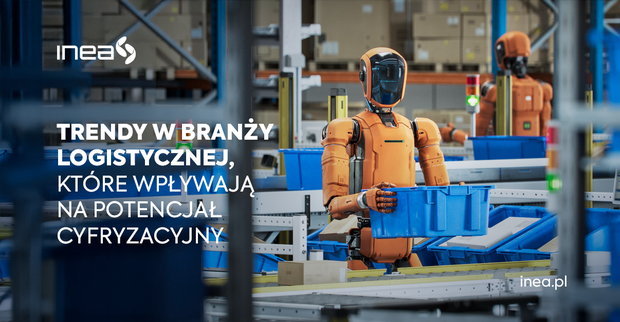
According to the latest analyses by Cushman & Wakefield published online, the logistics market in 2025–2026 will be driven by several key trends that directly affect the pace and direction of digitalization. The dynamic development of e-commerce and the growing importance of fast customer service will force further automation of warehouse processes and the implementation of artificial intelligence-based solutions. Green technologies will become increasingly important – from intelligent energy management in logistics centers to transport decarbonization – which will translate into increased investment in emission monitoring systems and ESG analytics. Experts also point to the growing role of predictive technologies, which will enable precise demand forecasting and flexible supply chain management in volatile market conditions. Digitalization will also be an answer to staff shortages – thanks to robotization and IoT, logistics companies will be able to increase efficiency with fewer employees. All these elements make investments in modern digital infrastructure no longer an option, but a condition for maintaining competitiveness in the coming years.
In this context, it is worth noting the holistic approach to digital transformation proposed by INEA. The company does not limit itself to providing technology, but supports enterprises at every stage – from diagnosing digital maturity, through preparing a personalized transformation roadmap, to implementing and maintaining systems. An important element is also digital education for employees and assistance in obtaining funds, for example, EU grants. Such comprehensive support allows logistics companies to effectively go through the modernization process and maximize the potential of new solutions, thereby accelerating their development and increasing resilience to dynamic market changes.
The level of digital technology usage in Poland, especially among small and medium-sized enterprises, remains at the tail end of Europe. Many organizations still have not realized the benefits of the effort required by digital transformation. Daily operational problems and the huge number of solutions to choose from can block the transition to action. We recommend that our clients take a few steps to find the right path for development. We focus on goals, diagnose the current digital state, and select appropriate solutions. This is how technology helps in business. – says Maciej Hojszyk, Commercial B2B Director at INEA, an expert in the field of digital transformation, smart city, cybersecurity, and AI.
Thanks to this, the logistics market is gaining a completely new quality. Data analysis and artificial intelligence enable precise demand forecasting and transport route optimization, which allows for cost reduction and increased delivery punctuality. Intelligent warehouses, where management systems connect with IoT solutions and automation, allow for reducing errors and accelerating order picking. Customers gain access to up-to-date information on shipment locations in real-time, and digital documentation, such as e-CMR or electronic invoices, eliminates paper flow and significantly improves operational efficiency. Secure data storage in specialized processing centers and the ability to use cloud backups, which guarantees business continuity even in the face of failure, are also becoming important elements.
A key stage of the entire process is diagnosing the organization’s digital maturity. Only this allows for determining which areas require modernization first and which solutions will bring the greatest benefits. Based on this, an individual transformation roadmap can be created, which takes into account not only technology but also employee education, obtaining financial resources for investments, or subsequent system maintenance and development.
We must remember that digital transformation is primarily about the involvement of people in rebuilding processes using technology. Transformation cannot be ordered. Business teams, IT, and trusted partners must work together to achieve lasting change and planned benefits. – adds Hojszyk.
Logistics companies that decide on such a comprehensive approach have a chance not only to improve their efficiency but also to build a lasting competitive advantage in an industry increasingly dependent on data and technology. Digital transformation is therefore becoming not so much a sign of innovation as a necessity, and a holistic approach to it is the best way to increase an organization’s resilience to dynamic market changes and meet growing customer expectations.