








Inefficient transport means broken supply chains, commuting difficulties, and problems for trade and tourism. Poles are well aware of how sensitive this sector of the economy is to weather conditions. In what direction should it be developed as the weather becomes increasingly unpredictable? And is it possible to do so without exacerbating the climate change problem?
The 2024 floods in Poland damaged approximately 3,633 km of roads, 127 km of bicycle paths, 229 bridges, and 1,823 culverts, with losses estimated at over PLN 7.6 billion.
– researchers calculate in this year’s Climate Coalition report.
In their view, this is just one example of how climate change is already affecting transport issues in Poland. Recent flash floods in many towns (including Elbląg) show that the problem can take on various forms.
Efficient transport is one of many essential elements for the proper functioning of a state. In a broader context, it is part of a much larger puzzle called “national security.” It is precisely this broad perspective on contemporary climate challenges that the Climate Coalition report serves.
Transport and Poland’s security
From an economic point of view, inefficient transport infrastructure means, among other things, halted or slowed production, broken supply chains, trade restrictions (including international), commuting difficulties, problems in the tourism sector, or higher insurance costs and rising investment risk. As a result, we face a decline in the competitiveness of the Polish economy, higher prices for goods and services, less interest from investors, and in an extreme scenario – the marginalization of Poland on the economic map of Europe.
– explains Dr. hab. Stefan Jarecki, a professor at the Warsaw University of Technology and co-author of the chapter on transport security, to “Nauka o klimacie”.
Jarecki emphasizes that adapting the transport sector to climate change involves significant costs and requires political, institutional, and mental shifts. Nevertheless, it is worth moving in this direction, as it is an investment in the country’s security, stability, and competitiveness that will pay off many times over in time.
The truth is that today, a country’s strength and position are determined not only by tax levels or working conditions, but also by the modernity of its infrastructure, including transport. Its quality and resilience. Modern infrastructure today is infrastructure that is eco-friendly, resilient to climate change, and adapted to new weather conditions.
– the scientist emphasizes.
Three levels of action
But what would this look like in practice? According to the scientists who co-authored the report, a transport policy that takes climate issues into account should consist of three levels.
The first is reducing transport intensity, i.e., the general use of transport. The second – when giving up travel is not possible – is using the transport least harmful to the climate and the environment. Only at the final stage should tools for reducing emissions in individual transport branches be used, such as market regulation and investments in new technological solutions.
From the development of railways…
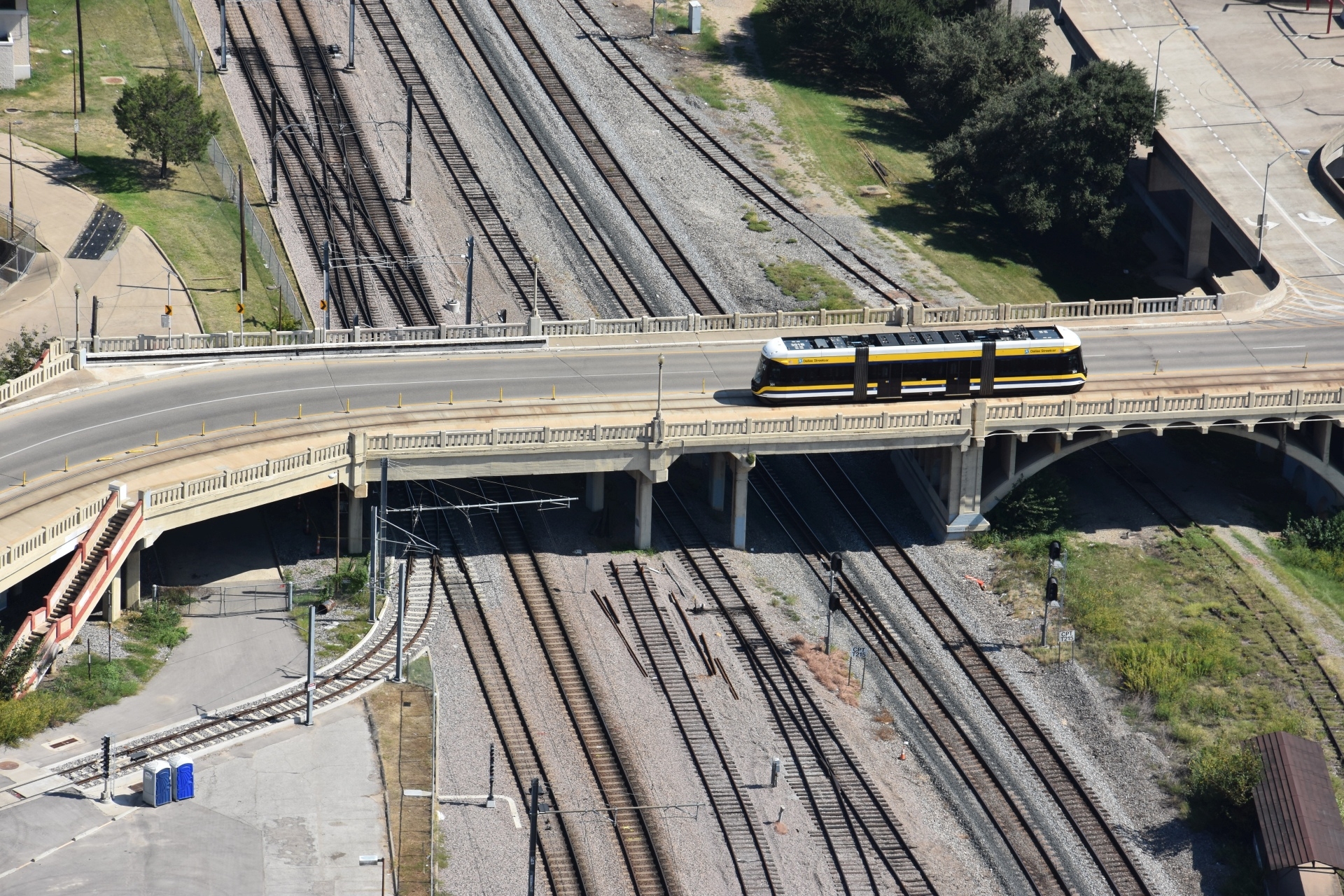
A radical change in transport policy is needed, including a shift from cars to public collective transport, and from roads to rail. At the same time, the development of remote work and changes in spatial planning can reduce the demand for transport.
– write Dr. Jarecki and Dr. Jakub Majewski from the Centre for European Regional and Local Studies at the University of Warsaw in the report.
It is very important to shift both passengers and cargo from roads to rail – because this solution is exceptionally beneficial from the point of view of climate protection. Railways are already largely electrified and ecological, and at the same time better prepared for the effects of climate change than other means of transport. They are simply less susceptible to extreme weather conditions – Jarecki explains to “Nauka o klimacie”.
The scientist emphasizes, however, that if we were to move the optimal number of passengers and cargo from roads to tracks today, “we would have paralysis, not success.” The reason is simple: the railway system, including railway infrastructure, is not prepared for it. – There is a lack of capacity, a lack of rolling stock, a lack of loading points – Jarecki lists.
…to fast public transport
According to the Climate Coalition report, the most effective instrument of eco-friendly transport policy at the municipal level should be spatial planning.
Most problems resulting from the negative impact of transport – starting from issues related to noise exposure, through space occupation, to the generation of excessive travel – have their source in spatial development.
– write Jarecki and Majewski. Therefore, in their opinion, local governments should, among other things, block development in areas without access to public transport and industrial investments without access to rail.
To create a real alternative to passenger cars, it is necessary to build an attractive public collective transport system. It must guarantee access to fast, frequent, and affordable services. Therefore, scientists recommend creating guaranteed minimum communication standards that will refer not only to the level of emissions, but above all to the availability and frequency of connections.
And what about limiting car traffic in cities, e.g., through parking fees, 30 km/h zones, and clean transport zones? Scientists point out that discussions on these topics are often “affected” by disinformation. “Introducing such solutions requires taking appropriate educational and informational actions and a broad dialogue with residents. This should allow for tailoring solutions to their expectations and needs, as well as presenting them with the benefits of implementing solutions in the field of sustainable mobility” – they write in the report.
Less fuel, less import
Data in the report shows that between 1990 and 2017, CO2 emissions from transport in Poland increased by over 200%. This is a problem not only from the perspective of climate protection, but also of the growing demand for oil, and consequently – the growing dependence on the import of this raw material.
Transport, especially road, air, and sea, is one of the largest sources of CO₂ emissions and is largely based on crude oil and its derivatives. Dependence on fossil fuels lowers transport security – especially in the face of armed conflicts and geopolitical crises. These raw materials come largely from politically unstable regions, which threatens their supply chains, for example.
– Jarecki explains.
According to him, it is therefore all the more worth emphasizing the development of railways and public transport.
Promoting rail and public transport will lead to a reduction in pressure on the import of emission-intensive fossil fuels and will limit the effects of their price fluctuations and geopolitical turmoil. It is therefore very important for our sovereignty. Promoting rail and public transport is therefore not only a matter of ecology and climate, but also a real strengthening of the country’s security and sovereignty.
– the scientist concludes.
Source: naukaoklimacie.pl