








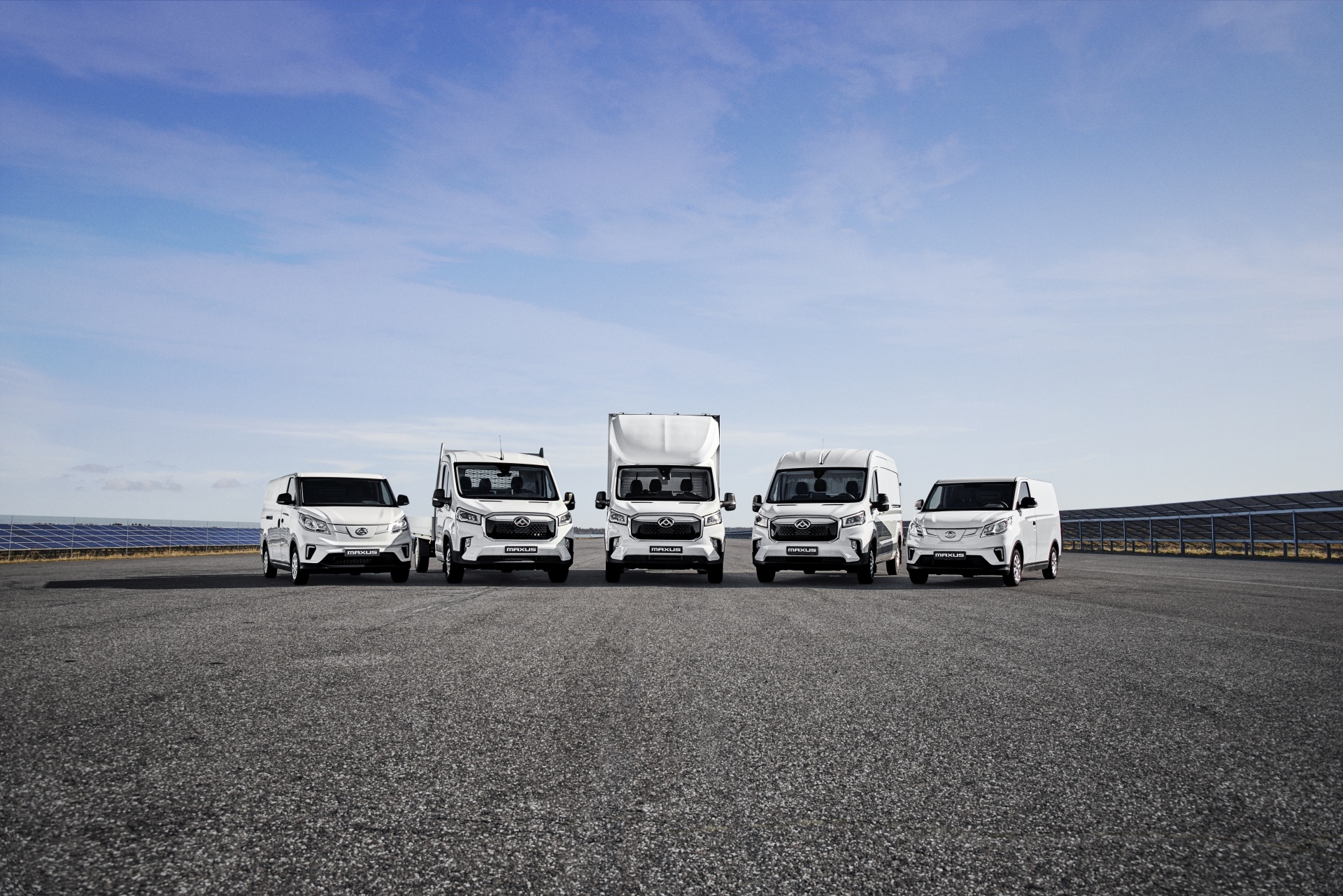
A few years ago, electric delivery vans were treated more as a curiosity than a real work tool. Today, the situation is different: all over the world, including Poland, electric-powered vans and pick-ups are appearing on the roads more and more frequently. They not only fit into corporate social responsibility trends but also offer tangible advantages over their conventional counterparts in daily operation. Many customers are held back from fully utilizing their potential by unfair myths.
Myth no. 1: An electric delivery van cannot carry as much as a combustion-engine one
Some electric models available on the market offer a payload in the range of 700–900 kg. These are values that are sufficient for urban couriers or service companies. For more demanding entrepreneurs, models like the Maxus e-Deliver 7 come to the rescue, which, depending on the version, provides up to 1,200 kg of payload and up to 8.7 m³ of space. This is a result that places it at the forefront of the segment and shows that an electric delivery van does not have to mean a compromise in terms of utility.
Myth no. 2: The range of electric delivery vans is too small
In practice, most delivery routes in Poland are trips within a radius of several dozen kilometers from the base, carried out on a fixed, repeatable route, after which the entire fleet returns to one place for the night. This is an ideal scenario for using an electric vehicle, which allows it to be used in the most efficient way, including charging on one’s own premises. However, electric delivery vans will work well not only in such conditions. More and more models also offer real ranges in the range of 250–350 km in a mixed cycle. Maxus, which specializes in innovative drive systems, sets trends in this area as well: the brand’s models go beyond the standard needs of urban fleets and show that the uncertainty of “too short a range” is a thing of the past. According to WLTP standards, the e-Deliver 7 model can travel up to 542 km on a single charge in the urban cycle.
Myth no. 3: An electric delivery van takes a long time to charge
Charging time depends on many factors: in practice, mainly on the infrastructure. When using household sockets, you actually have to count on a longer stop. However, at DC fast charging stations, many models allow you to replenish energy from 20 to 80% (the optimal level on the road) in less than an hour. In the case of Maxus models, this process can be shortened to about 40–43 minutes (depending on the model and battery version). In practice: during one lunch break, both the car and the driver will be recharged!
Myth no. 4: Electric vehicles are only good for urban couriers
Although cities are the natural environment for e-delivery vans, their role is gradually growing outside of metropolitan areas as well. Increasing ranges, the ability to tow trailers, and a variety of body types mean that electric vans are also starting to appear in regional logistics and industries requiring greater flexibility. A good example of such applications in Polish conditions is the Maxus e-Deliver 9. With a cargo space reaching 13 m³ and a range of over 471 km (according to the independent WLTP standard), it will easily work both in daily deliveries in the city and on longer routes between branches or warehouses.
An electric delivery van in your fleet: time for facts
Choosing a delivery van with an electric drive is not just a matter of ecology or fitting into a zero-emission policy. It is also a real, daily convenience for entrepreneurs. Electric commercial vehicles mean lower operating costs – service and component wear are generally cheaper than in the case of combustion-engine vehicles. In accordance with the consistently applicable Act on Electromobility, in many Polish cities, drivers of electric delivery vans can also count on a number of privileges: free parking and the use of bus lanes, which significantly shortens travel time through the city center during rush hours.
The benefits of choosing an electric drive are long-term: they will only grow every year due to the development of Clean Transport Zones, which already have a real impact on the costs and comfort of operating cars in the centers of Polish cities.
Reducing emissions in transport is part of the agenda of pan-European policy, but it is also increasingly appearing voluntarily in the corporate social responsibility strategies of Polish companies. In this context, electric delivery vans have ceased to be a curiosity and have become a real choice in business operations. You can already use them to gain an advantage over your competitors: both in terms of image and purely economic terms.
As can be seen from the above analysis of Maxus, many myths about electric delivery vans – from low payload to too short a range – are not confirmed by data. Especially in the case of leading manufacturers specializing in such solutions.
Present on the Polish market since 2022 and belonging to the SAIC group, the Maxus brand has the largest range of electric delivery vans on the Polish market: it includes as many as five models, covering a complete cross-section of van sizes to the first electric pick-up with 4×4 drive on the European market.
Source: RSA Polska