








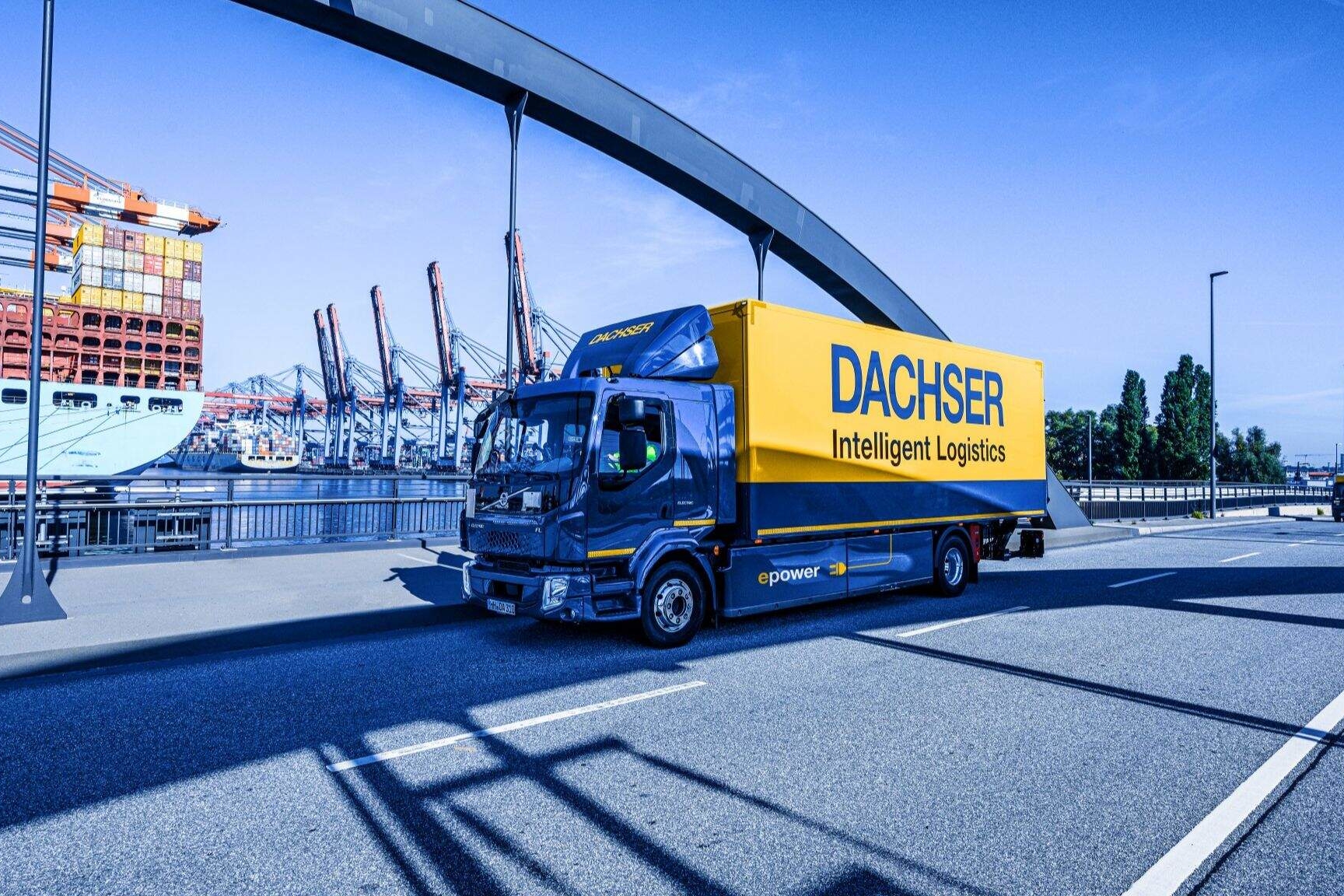
Europe imports the majority of its key chemical raw materials from outside its own borders. This is due to lower production costs and the availability of components in Asia and North America. However, the process of delivering these to European manufacturers is extremely complex – fraught with regulations, the risk of delays, and environmental challenges.
DACHSER connects global chemical suppliers with the European production chain. In the face of dynamic geopolitical changes, tightening safety and environmental regulations, and intensifying global competition, the European chemical industry is facing increasingly difficult challenges. Today, the question is no longer just: “where to source raw materials from?” but also: “how to ensure their stable supply?” and “under what conditions?”. Answers to these questions are provided by both the analysis of trade data and the daily practice of logistics companies like DACHSER, which connect global chemical suppliers with the European production chain every day.
Key players and import destinations
In 2023, the import of chemical raw materials into the European Union from outside the continent was concentrated around three main trading partners. In first place was China, which supplied chemicals with a total value of 35 billion euros – mainly semi-finished products and organic compounds used in the production of pharmaceuticals and plastics. The second largest supplier was the United States (31 billion euros), from which mainly polymers and specialized synthetic resins were imported. Third place went to South Korea, whose chemical exports to the EU reached a value of 13 billion euros.
Europe has relied on suppliers from Asia and America for years because some substances are not produced locally – whether for cost reasons or due to a lack of appropriate raw materials.
– explains Ewelina Staszewska-Kobiela, Business Development Manager at DACHSER Chem Logistics.
According to the CEFIC report – The European Chemical Industry: Facts and Figures 2024, the largest shares in the import structure were: petrochemicals (39%), specialty chemicals (25%), and polymers (16%). Inorganic chemicals accounted for 14%, and consumer chemicals for 6%. These data confirm the strong dependence of the European industry on supplies from outside the continent, especially in terms of semi-finished products and raw materials used in processing.
Changing import destinations for fertilizers to the EU after the introduction of tariffs.
Fertilizer tariffs – a new geography of supply
The introduction of tariffs on fertilizers from Russia and Belarus in May 2024 significantly changed the supply map. Although Russia remains the largest exporter (4.93 million tons), the importance of suppliers from Egypt, Morocco, Canada, and Algeria is growing. The EU also imports fertilizers from the UK, Israel, and less obvious destinations such as the USA, Trinidad and Tobago, Oman, or Turkey. The total volume of fertilizer imports to the EU in 2024 amounted to 18.01 million tons, which proves the sustained demand despite geopolitical tensions.
Sea transport – logistics under strict control
In 2023, as much as 74% of chemicals imported from outside Europe reached the European Union by sea. Although this is the channel preferred by the industry, it is also one of the most demanding. “IMDG regulations impose strict requirements – from certified packaging and proper container labeling to detailed documentation and cargo segregation. A mistake at any of these stages can hold up a delivery for weeks,” explains Ewelina Staszewska-Kobiela.
The most common challenges include: proper stowage of incompatible substances (e.g., flammable and oxidizing), variable weather conditions, and the risk of leaks. Delays can result in high demurrage charges, and incomplete documentation can lead to the refusal of cargo at the port.
Importing chemicals from outside Europe is an undertaking with high organizational and legal requirements, where safety, compliance, and punctuality are priorities.
Air “chemical expresses”
Although air transport accounts for only a small part of the volume of transported chemicals, its role in imports is crucial. It is used primarily for the transport of urgent and highly specialized cargo. “In chemical logistics, it is not only speed that counts, but above all, absolute compliance with IATA DGR regulations. One mistake in the declaration is enough for the shipment to be denied transport. Every stage of the process – from certified packaging to the Shipper’s Declaration – must be carried out flawlessly. Regular staff training is also essential, as IATA DGR certifications must be renewed every two years,” emphasizes the DACHSER expert.
Global network, local precision
DACHSER, which has 433 branches in 43 countries, carries out chemical deliveries by sea and air from Asia, the USA, and the Middle East to Europe. In Poland, the branch in Bremen and the port in Gdańsk, which handles, among others, direct connections with China, are of key importance in this chain. As Ewelina Staszewska-Kobiela emphasizes, chemical logistics is a precise and responsible operation that requires appropriate infrastructure and regulatory knowledge. Importing chemicals from outside Europe is an undertaking with high organizational and legal requirements, where safety, compliance, and punctuality are priorities. DACHSER Chem Logistics provides not only transport but also full control in a dynamically changing global environment.
Source: Dachser