








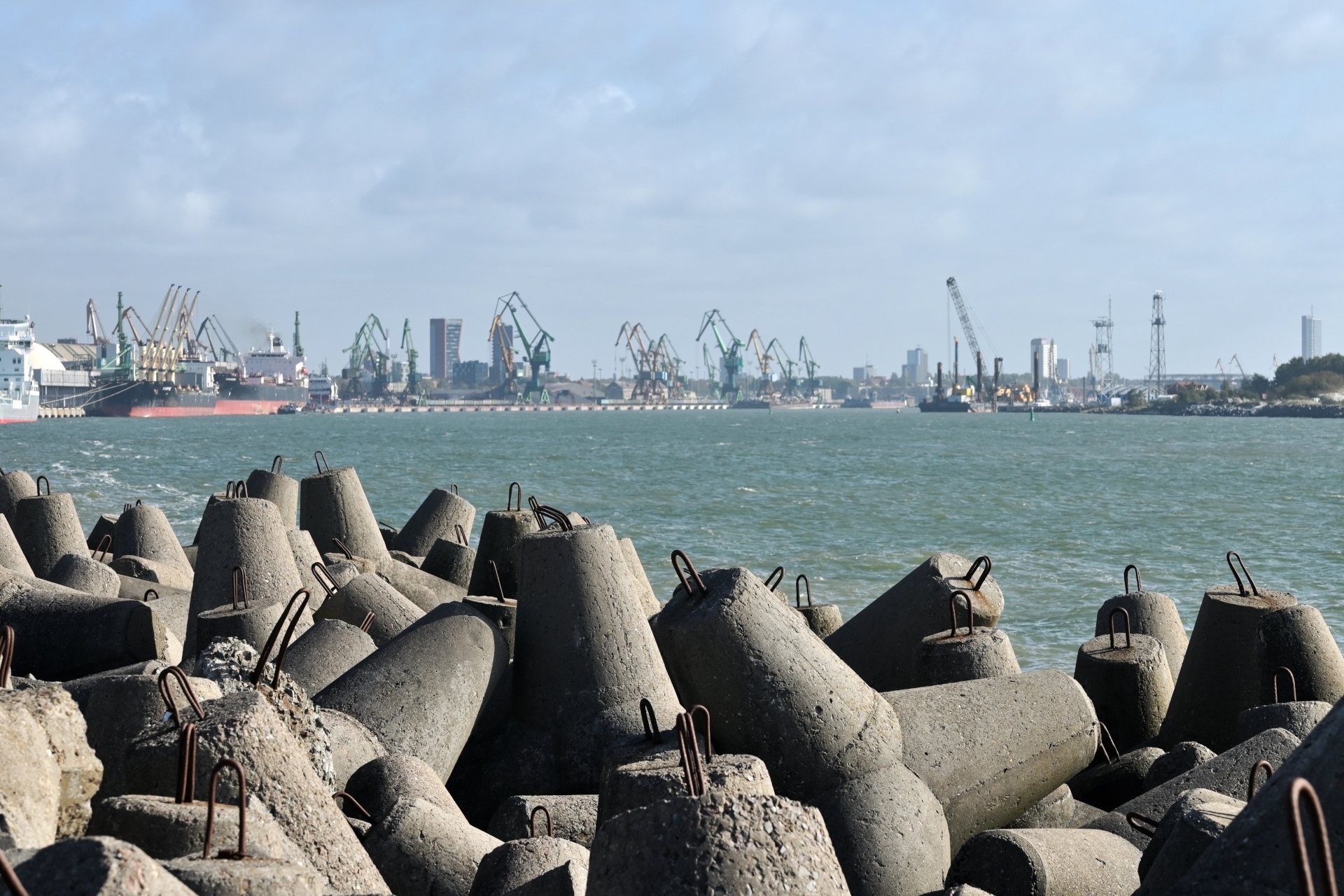
The Port of Constanta, Romania’s largest maritime terminal and one of the most important ports in the Black Sea region, accounted for over 96% of the total volume handled by Romanian seaports in 2024. Its position is strengthened by parallel infrastructure investments exceeding 250 million euros, including the expansion of quays, RO-RO and project cargo terminals, and the modernization of rail and road access. The port’s importance grew further after the suspension of operations in the Ukrainian port of Odesa, which—as the largest terminal on the Black Sea—played a key role in the export and import of goods for Eastern Europe before the outbreak of the war. In the current geopolitical context, Constanta remains the only port on the Black Sea maintaining regular connections with China—the European Union’s most important import partner. Although these are indirect (requiring transshipment in other ports), they are significant from the perspective of the entire region. In 2024 alone, Chinese exports to the EU exceeded 500 billion euros, and goods worth approximately 7.9 billion euros reached Romania itself, making China one of the country’s main import partners—right alongside Germany and Italy.
The importance of this direction may increase even further in the coming years. The trade policy of the Donald Trump administration has limited the access of Chinese exporters to the US market, which increases the likelihood that China will redirect its attention to Europe—both as an export market and as a location for new production and assembly plants. Central and Eastern Europe, thanks to the availability of labor, growing consumption, and improving logistics infrastructure, constitutes a natural area of interest. Poland, the Czech Republic, Hungary, and Romania are currently recognized by global business as the most attractive markets in the region for nearshoring strategies. In this context, seaports such as Constanta are gaining strategic importance as reliable entry points for supply chains from Asia.
Constanta as a regional trade gateway
Today, the port serves a dual function—which we at SUUS clearly perceive while managing our clients’ supply chains handled through this terminal. On one hand, Constanta is considered a gateway to global trade for the domestic market of Romania—a country that has become one of the fastest-growing EU economies over the last two decades, attracting significant foreign investment, especially in the automotive and industrial sectors. Companies such as Dacia, Ford, Continental, and Bosch have significantly expanded their production operations, creating a solid industrial base and developing modern supply chains. In 2024, the automotive sector accounted for approximately 14% of Romania’s total exports, making it one of the pillars of the local economy.
However, that is not all—the Port of Constanta also acts as a logistics hub for the entire Central and Eastern European and Balkan region, with increasingly better access to countries such as the Czech Republic, Slovakia, Hungary, and Serbia. The port’s importance was further strengthened by Romania’s accession to the Schengen Area, which simplified and accelerated the flow of goods into the EU. Furthermore, the port’s location on the Danube enables the effective use of inland transport—particularly useful in project and industrial logistics involving large-scale cargo. We have extensive experience in handling such shipments—both for the local market and, for example, to Hungary.
The European-Chinese supply chain through Constanta
Recognizing the growing potential of Constanta, SUUS has launched a new, regular less-than-container load (LCL) service from Shanghai to Constanta, offering comprehensive handling of shipments from all of mainland China with final delivery in Romania. The service includes weekly departures from Shanghai, consolidation in Chinese ports, sea transport to Romania, deconsolidation in Bucharest, and domestic distribution. A key operational advantage is SUUS’s own LCL console in Romania, which enables full control over the flow of goods within an integrated logistics ecosystem.
Our service is not just transport, however—it also includes full customs handling, carried out locally by a team in Romania. In conditions of geopolitical instability and trade uncertainty—when tariffs, quotas, and procedures can determine the profitability of the entire operation—such a holistic approach is essential. Clients receive not only reliable transport from Shanghai but also customs support: clearance, consulting, VAT settlements, and document completion. It is this component that ensures the fluidity and efficiency of global supply chains.
Centralizing these processes eliminates the need to engage multiple subcontractors and reduces the risk of delays resulting from customs procedures and, more importantly, allows clients to focus on running their business. In current realities, this is a competitive advantage that brings real savings and increases delivery reliability.
SUUS has been operating in Romania for five years, offering clients comprehensive logistics support on the local market. By expanding our LCL offer from China to Europe via Constanta, we are strengthening our presence both in Romania and throughout the entire South-Eastern European region. The new service not only supports companies in maintaining supply chain continuity but also enables them to operate in a more flexible and cost-effective model. For companies seeking predictability and local operational support in the face of changing geopolitical and economic conditions, this is a solution that allows them to effectively respond to challenges and build a competitive advantage.
Source: Rohlig SUUS Logistics