








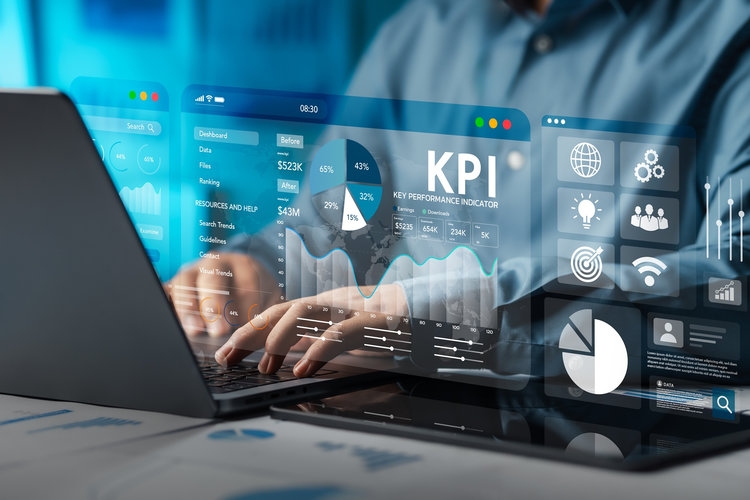
In the world of modern manufacturing, there is no room for guesswork – data, precision, and quick decisions are what count. That is why more and more companies are focusing on production monitoring through efficiency indicators, which allow not only for controlling machine performance but also for effectively influencing process optimization and cost reduction. In this article, we explain what the OEE indicator is, how to implement it effectively, and why it has become the foundation of modern production management. You will also learn how to gain full control over processes and build a lasting competitive advantage through data analysis and system integration.
In the era of Industry 4.0, production monitoring has ceased to be just an additional element of management – it has become a key pillar of every modern manufacturing company. Growing customer expectations, price pressure, and the need to maintain high product quality require not only insightful observation but also constant process optimization. In this context, the efficiency indicator, and especially Overall Equipment Effectiveness (OEE), plays an invaluable role.
What is an efficiency indicator and why is it worth measuring?
An efficiency indicator is a number that reflects the actual impact of machines and processes on overall production performance. The most commonly used tool for measuring it is OEE, or Overall Equipment Effectiveness. It takes into account three pillars: availability, performance, and quality, which allows for a comprehensive assessment of machine performance and entire production lines. This makes it possible to capture not only the technical condition of the equipment but also how it is used and the level of losses occurring in daily operation. Proper interpretation of OEE values can be an impetus for implementing actions that improve processes and increase the value added to production.
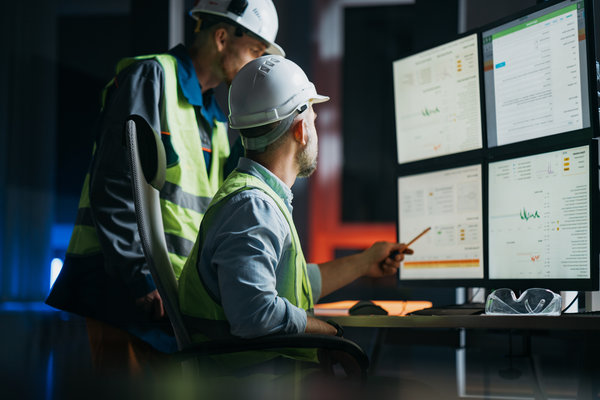
Proper monitoring of the production process enables early detection of deviations, failures, or quality drops, and consequently – quick response and the implementation of effective corrective actions. In practice, this means reducing production costs, improving product quality, and better resource management. Furthermore, companies gain an advantage in terms of operational flexibility – they can more easily adapt to market changes and customer demand. This, in turn, leads to increased business stability and better utilization of employee potential and infrastructure.
OEE – the foundation of production optimization
According to a publication by experts from SpyFactory.pl, OEE not only measures efficiency but is also a strategic tool. Thanks to it, automatic data collection from machines and devices is possible, which ensures access to reliable data in real time. This, in turn, allows for continuous production monitoring, loss detection, and informed decision-making.
As a result, managers can implement optimization actions not only reactively but also proactively – by predicting potential problems before they escalate. Such an approach fosters a culture of continuous improvement within the organization. You can read more about OEE indicator analysis in the article on the website: https://www.spyfactory.pl/dlaczego-oee-to-klucz-do-efektywnosci-produkcji/.

Introducing OEE monitoring in a manufacturing company enables the identification of areas requiring improvement, e.g., points generating the most downtime or places where the highest raw material consumption occurs. Moreover, thanks to OEE analysis, it becomes possible to optimize production planning and increase delivery timeliness, which translates into higher company competitiveness.
It is also a tool that supports communication between departments – OEE data can serve as a common language for the maintenance, production, and quality management departments. This facilitates the integration of internal activities and contributes to more effective management of the enterprise as a whole.
Real-time production monitoring – how does it work?
A key advantage of OEE-based systems is real-time monitoring. It is thanks to this that manufacturing companies can quickly identify problems, track inventory levels, analyze KPIs, and take immediate corrective actions when necessary. Such an approach eliminates reporting delays and supports data-driven decision-making.
In practice, this means the possibility of applying the Industrial Internet of Things (IIoT) – that is, a network of sensors and measuring devices connected to the production management system. Such solutions enable automatic data collection and analysis, which significantly speeds up operational activities and facilitates the identification of trends in production processes.
Practical application – industry knowledge
As reported by kierunekfarmacja.pl, the implementation of OEE indicators in pharmaceutical plants brings measurable benefits: better control over the state of production, review of work organization, and cost reduction through the elimination of bottlenecks. The article draws attention to the importance of so-called First Time Quality (FTQ) – one of the key efficiency indicators that assesses how many products passed through the entire process without the need for rework. More on this topic in the article on the website: https://www.kierunekfarmacja.pl/artykul,111645,wskaznik-oee-jak-zwiekszyc-wydajnosc-pracy.html.
This is an excellent example showing that KPIs are not just the domain of heavy industry – they also have applications in industries requiring the highest standards of quality and control. Their role in improving product quality and better time and personnel management is invaluable.
System integration and automation – the foundation of modern production
A modern manufacturing company cannot afford to operate in isolation from data. Integration of management systems with IT, MES, or ERP solutions allows for the centralization of information and better planning. Thanks to this, it becomes possible to continuously monitor processes, react quickly to disruptions, and maintain full control over the entire production chain.
In this context, companies such as SpyFactory.pl prove to be particularly valuable partners, as they specialize in expanding equipment and installations with necessary measurements and communication devices, as well as integrating systems that monitor efficiency indicators. It is precisely this approach that guarantees the rapid implementation of effective solutions and the achievement of a competitive advantage.
Which KPIs are worth implementing in your company?
Although OEE is one of the most comprehensive indicators, it is worth supplementing it with other key performance indicators, such as:
- Material Usage Index (MUI) – assesses the efficiency of material consumption.
- First Pass Yield (FPY) – determines the number of products passing through the process without rework.
- Mean Time Between Failures (MTBF) – indicates the average time between failures.
- Mean Time to Repair (MTTR) – assesses the speed of response and repair.
Thanks to them, accurate data analysis, identification of inefficiencies, and quick correction of actions are possible. Importantly, the set of KPIs should be tailored to the specifics of a given production and take into account both time-related aspects and quality parameters.
How to start implementing an efficiency monitoring system?
- Identify critical processes – focus on areas with the greatest impact on the final result.
- Choose the right KPIs – match them to the type of production and business goals.
- Invest in automatic data collection – you will avoid errors and delays.
- Integrate IT systems – you will facilitate analysis and reporting.
- Collaborate with experts – e.g., the SpyFactory team, which will help with the design and implementation of the system.
The key to success is not just collecting data, but interpreting and using it in practice. Only then will we achieve measurable benefits – lower costs, better quality, faster decision-making, and increased company competitiveness.
Summary – efficiency as a development strategy
Production monitoring through efficiency indicators is not just a control tool, but above all strategic support for company development. Thanks to KPIs such as OEE, FTQ, or MUI, an enterprise gains full control over production, as well as the ability to better plan, react quickly, and optimize activities in real time.
Companies that decide to implement a comprehensive efficiency monitoring system – preferably with a partner with experience in data integration and analysis, such as SpyFactory.pl – can count on real reductions in production costs, improvements in product quality, and an increase in customer loyalty.
Production efficiency ceases to be a goal – it becomes a daily practice, the effects of which are visible in financial results, operational stability, and brand strength on the market.