








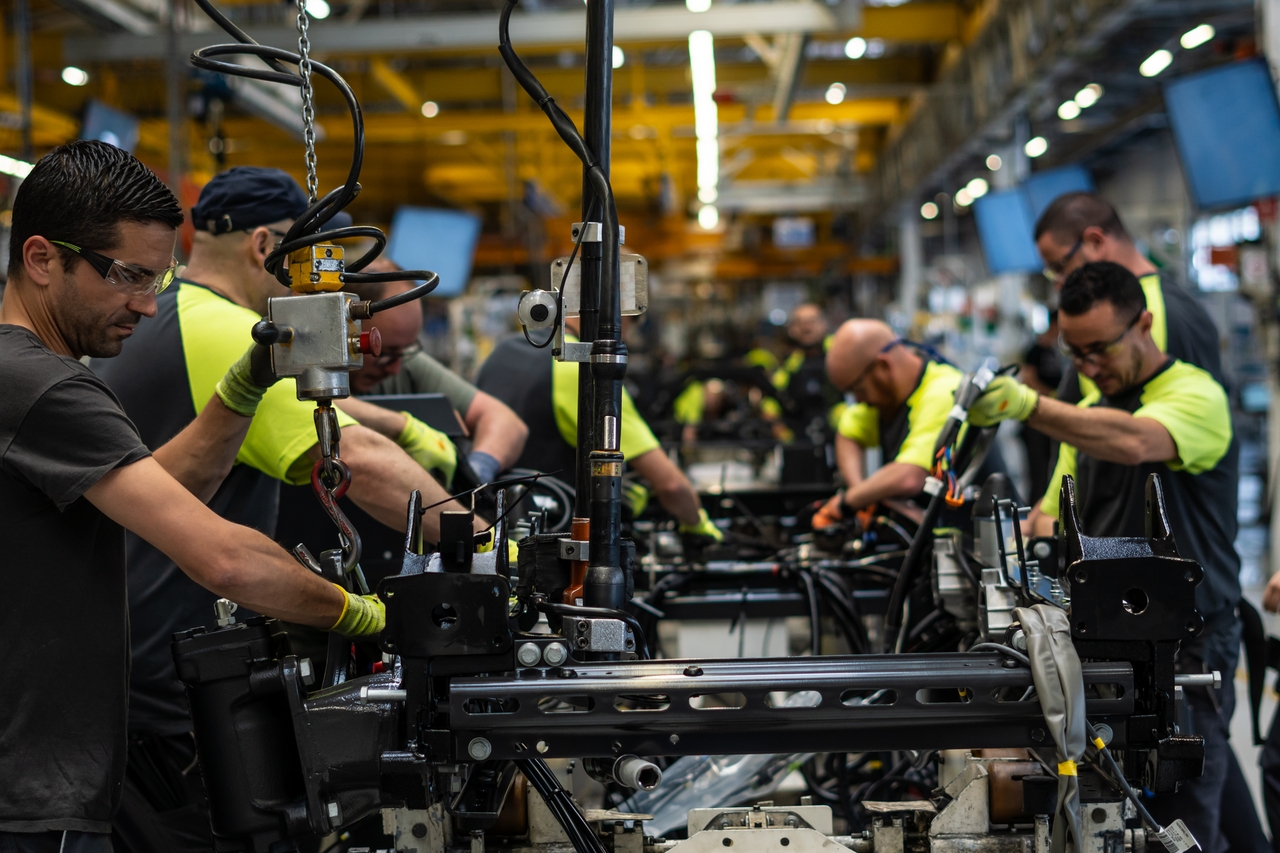
In its latest sustainability report, published in June 2025, Renault Trucks details the energy efficiency and resource conservation strategy implemented at its facilities. Since 2019, greenhouse gas emissions have been reduced by 26%. The manufacturer’s goal is to achieve carbon neutrality across all its facilities by 2040.
In addition to its commitment to decarbonizing road transport, Renault Trucks is also taking action to reduce the environmental impact of its industrial facilities through a series of concrete initiatives.
Reducing greenhouse gas emissions
Renault Trucks has taken a number of steps to reduce the carbon footprint of its facilities, including upgrading heating systems, insulating buildings, developing a heating network that recovers waste heat from industrial processes, and reducing the number of engine tests. These measures, combined with targeted investments, have allowed us to reduce greenhouse gas emissions by 26% between 2019 and 2024.
- In Lyon, the X-Tech Arena building, where 1,300 engineers work, consumes 25% less energy than required by French regulations;
- in Blainville-sur-Orne, the renovation of 1,800 m² of buildings will save 265 MWh of natural gas per year;
- in Bourg-en-Bresse, better building insulation means annual savings of 100 MWh.
Developing self-generated renewable energy
Renault Trucks is working with external investors to develop renewable energy production facilities directly at its sites:
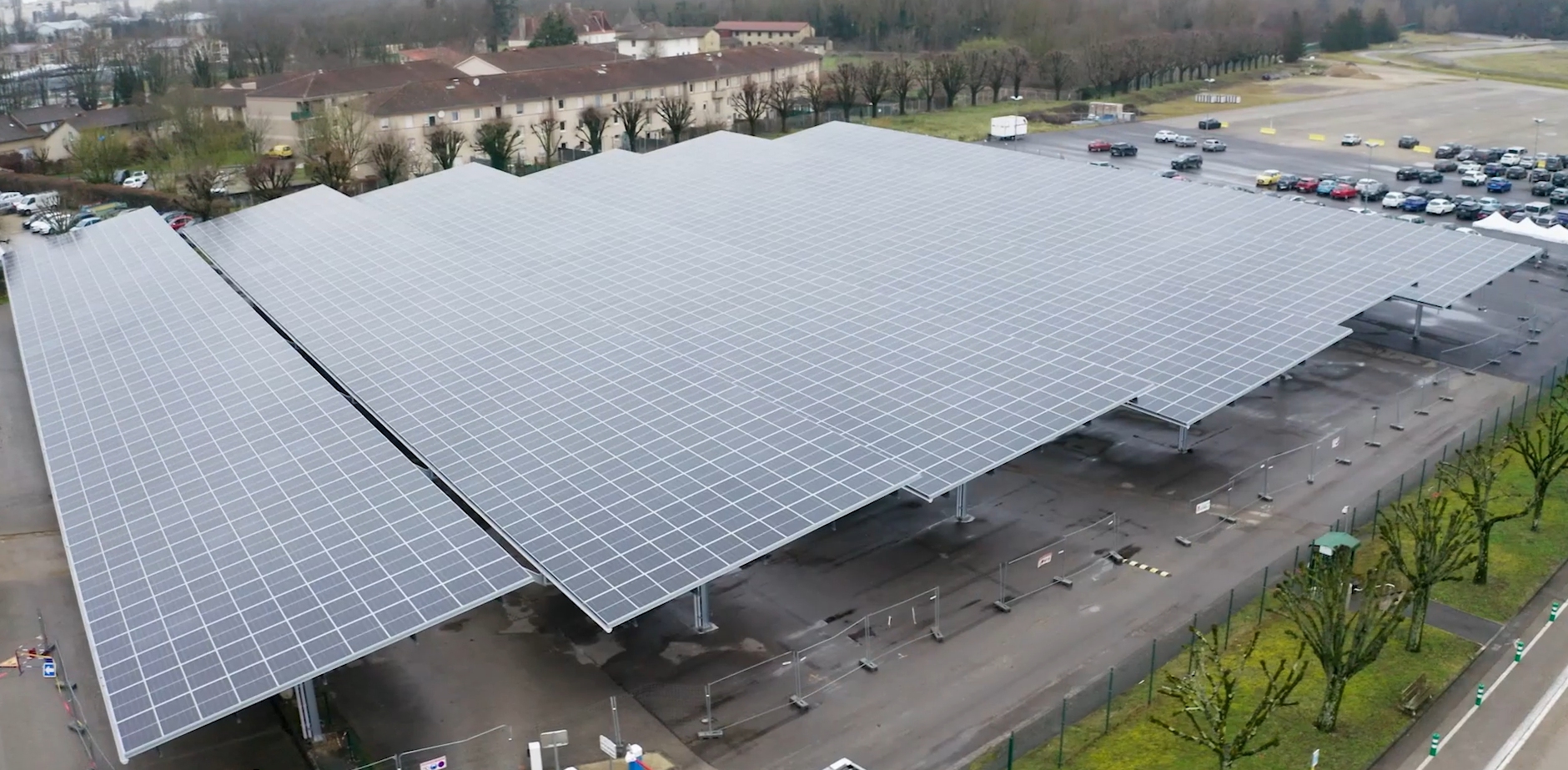
- in Bourg-en-Bresse, 17 hectares of parking lots are being gradually equipped with photovoltaic shading systems with an installed capacity of 22 MW, which corresponds to the annual energy consumption of 17,500 residents. 30% of this generated electricity will be used directly by the plant. The installation will be completed in 2026.
- in Lyon, the roof of the future global spare parts distribution center will be equipped with photovoltaic panels that will provide enough electricity to meet its needs and those of neighboring buildings;
Other solutions complement this setup:
- in Lyon, geothermal installations heat 5,000 m² of office space, saving 360 MWh per year;
- a 2 km long heating network, powered by 75% thermal energy generated in industrial processes, will also be launched at the same site in 2025 (the remaining 25% will come from the municipal network). It will serve buildings with a total area of 150,000 m².
Reducing water consumption
Renault Trucks has reduced water consumption per truck produced by more than 60% since 2016, reaching 5.9 m³ in 2024:
- at the Lyon plant, water consumption has been reduced fivefold over twenty years, particularly thanks to the installation of acoustic sensors that quickly detect water leaks;
- in Blainville-sur-Orne, a physico-chemical station treats water before it is discharged;
- in Lyon, cooling towers have been replaced with closed-loop systems, which has significantly reduced water demand.
Eliminating landfill waste
Renault Trucks continues its pursuit of zero operational waste to landfill and aims to obtain certification for all its facilities by the end of 2025. The plants in Blainville-sur-Orne and Bourg-en-Bresse, as well as the engine production plant and spare parts warehouse in Lyon, already hold the “Landfill Free” certification[1].
At all of the manufacturer’s facilities, waste is sorted, reused, or transformed:
- metal scrap from production is remelted to create new parts;
- packaging and logistics solutions are integrated into internal recycling loops;
- recovery projects are being developed to optimize every waste stream.
Integrating biodiversity and protecting species
Renault Trucks has banned the use of plant protection products on its premises, opting for practices such as ecological mowing and the use of natural methods for green space maintenance. Apiaries have been established in Vénissieux and Saint-Priest.
In Bourg-en-Bresse, Renault Trucks is involved in a program to protect the Dévorah stream, which is home to a protected species of dragonfly. The partnership with the Reyssouze River Basin Union will continue until 2028.
Since 2023, more than 2,400 trees have been planted in Lyon to reduce the urban heat island effect and increase soil permeability. An experimental 3,000 m² zone has also been created, aimed at restoring soil fertility through soil engineering. This space was designed primarily to create a cool microclimate and support biodiversity by attracting birds, insects, and small mammals.
Adapting infrastructure to climate change
Renault Trucks anticipates the impact of climate change on its facilities and conducts climate risk analyses for 2050 and 2100, using the OCARA method developed by the consulting firm Carbone 4. These assessments allow for the identification of vulnerabilities to phenomena such as heatwaves, floods, rising groundwater levels, droughts, and strong winds, as well as strengthening the resilience of the facilities.
In Blainville-sur-Orne, in cooperation with local authorities, a roadmap has already been developed to address risks associated with rising sea levels and heavy rainfall. In Lyon and Bourg-en-Bresse, the focus is on heat prevention. The integration of climate issues is therefore becoming a structural criterion in the design of new buildings and industrial processes.
These actions demonstrate Renault Trucks’ commitment to reducing the environmental footprint of its industrial facilities and are part of an overall approach to decarbonizing transport and building a sustainable model. All of Renault Trucks’ sustainability initiatives can be found in the report published by the manufacturer. A link to the full report is available via the link.
[1] Landfill Free is an internal certification within the Volvo Group.
Source: Renault Trucks