








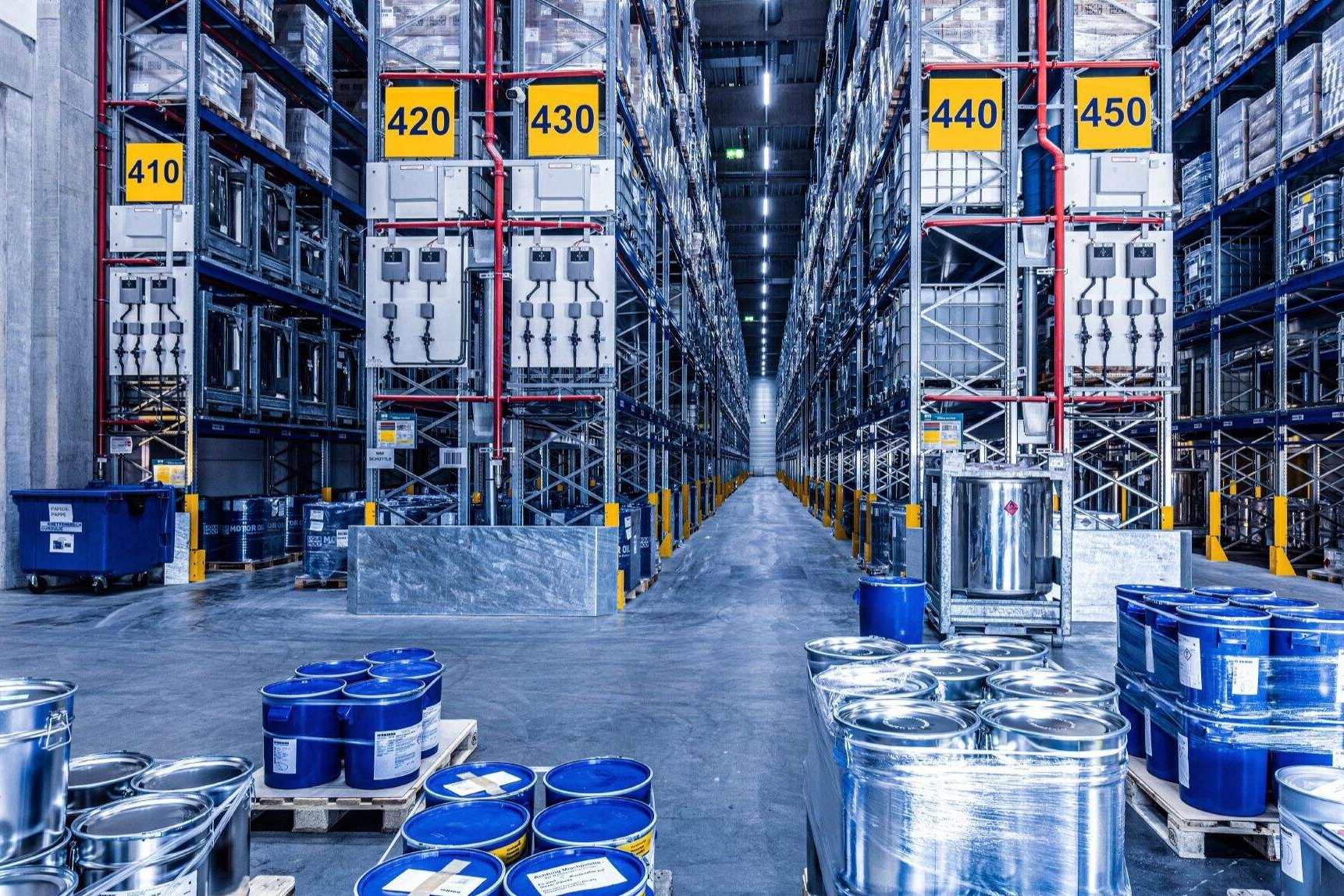
Goods classified in logistics as dangerous (ADR) are commonly present in our everyday lives—from industrial paints and adhesives to household chemicals or plant protection products. Although they do not cause much concern on a daily basis, their transport requires special precautions and specialized knowledge. So, how can ADR goods be transported responsibly and safely?
ADR – what exactly is it?
ADR is an abbreviation for the French name of the document “Accord européen relatif au transport international des marchandises Dangereuses par Route” – the Agreement concerning the International Carriage of Dangerous Goods by Road, drawn up in Geneva in 1957. ADR goods include a wide range of products – from industrial chemicals, technical gases, and fuels to fertilizers, pesticides, cosmetic aerosols, as well as resins and plastics. Proper handling is crucial – an example is ammonium nitrate, a popular fertilizer, which has already led to many serious explosions and disasters as a result of improper storage or transport.
Scale and risk
In Poland, approximately 150 million tons of dangerous goods are transported annually. Compared to the European Union, where these shipments account for 3.5% of all road transport, Poland ranks slightly lower – at the 2% level. Although the statistics may seem small, the risk is real. Fires, explosions, environmental contamination – these are just some of the consequences of potential accidents*.
Many threats result from specific negligence – improper packaging and labeling of cargo, poor technical condition of vehicles, lack of quality control in production plants, and a lack of transport route planning.
Moreover, in the face of a tense geopolitical situation, there is a growing concern that poorly secured chemical cargoes could be used for terrorist purposes.
Shared responsibility – state and business
The safety of chemical transport is not just a matter of responsibility for logistics companies. The state, as a party to the ADR agreement, sets the legal framework, organizes road checks, and can support the creation of appropriate infrastructure – such as emergency parking lots or buffer zones. An example of good practice is the exercises involving dangerous goods organized by the fire department.
At the same time, it is logistics operators who bear the greatest responsibility for the daily execution of ADR transports. Their task is to implement procedures, training, and technologies that effectively minimize risk.
Best practices in ADR transport
- Competence and training – safety starts with people. Regular training in the field of ADR, emergency procedures, and crisis response is an absolute foundation. Modern methods, such as VR simulations, are gaining popularity, allowing for realistic exercises without endangering people and property.
- Route planning – in Poland, there is a lack of precise regulations regarding ADR transport routes, so the responsibility for choosing a safe route rests with the companies. It is crucial to use GIS tools and dynamic planning systems that take into account factors such as population density, road conditions, or weather.
- Technology and prevention – the technical condition of vehicles has a direct impact on transport safety. In addition to regular inspections, it is worth implementing predictive maintenance systems that anticipate failures and allow them to be prevented before damage occurs.
- Cooperation with local services – effective response in an emergency situation is the result of good cooperation with local services – the fire department, ambulance service, and police. Joint exercises and the establishment of local emergency procedures significantly shorten response times in the event of a real threat.
- Modern technologies – telematic systems and solutions based on IoT (Internet of Things) enable continuous monitoring of the cargo – its location, temperature, pressure, or the technical condition of the vehicle. Combining them with geofencing technology, i.e., creating virtual safety zones, allows for the quick detection of any deviation from the planned route and an immediate response.
Safety as a strategy – the DACHSER Chem Logistics approach
DACHSER Chem Logistics implements various solutions to increase safety in ADR transport. The company uses advanced risk management systems, invests in specialized training, and uses modern technologies to monitor the entire supply chain. These actions are aimed not only at meeting formal requirements but, above all, at ensuring the maximum level of protection for people, the environment, and the reputation of clients.
An investment that pays off:
Safe transport of chemicals is not only a legal requirement but also the foundation of a responsible and modern business. Companies that treat it as an investment – in people, technology, and procedures – not only minimize risk but also gain a market advantage and customer trust. In times of growing regulatory and social expectations, it is worth taking care of safety as a key element of the development strategy.
Source: Dachser