








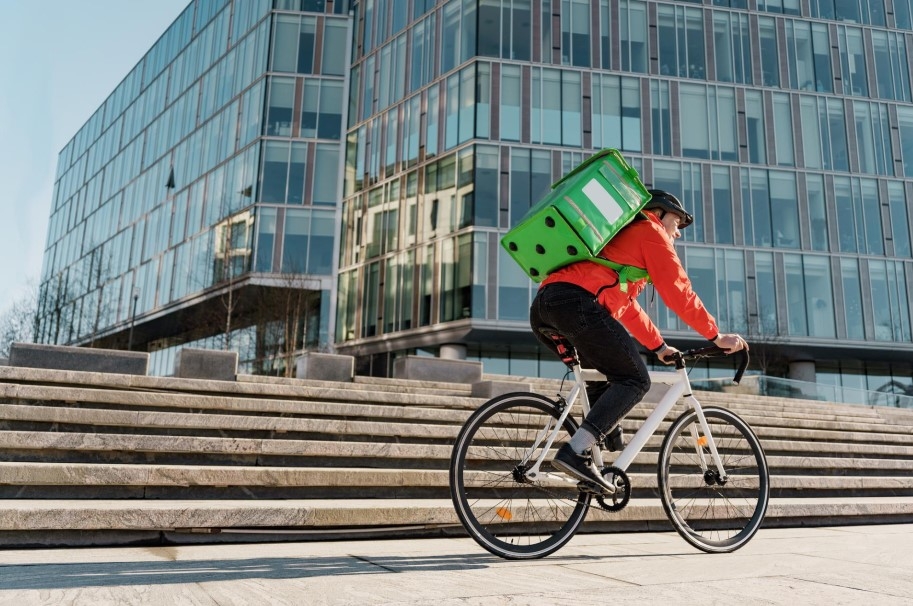
In the world of e-commerce, where customers expect delivery “for yesterday” and the competition never sleeps, the last mile is a true battlefield. This seemingly shortest leg of the route – delivering a package directly to the recipient’s door – can consume up to half of the total transport costs. But it is not just a matter of finances. It is precisely on this often underestimated ‘final stretch’ that customer satisfaction, loyalty, and return to the e-store are decided. How can freight forwarding companies, the architects of the entire supply chain, optimize the last mile delivery stage and turn a challenge into a competitive advantage?
Last mile with the highest priority
“Last mile delivery” is the final stage of a shipment’s journey from a distribution center or warehouse directly to the end recipient’s door. Although the name suggests a short distance, in reality, it can cover anywhere from a few to several dozen kilometers. The hallmark of last mile delivery is its complexity. Instead of transporting a large batch of cargo to a single point, we are dealing with many small shipments delivered to different addresses in a dispersed network of locations. For this reason, last mile delivery is a transport stage of key importance for the e-commerce and CEP (courier, express, and parcel services) market.
Why does transport at the finish line cost the most?
A customer shopping online expects a wide choice of delivery methods, speed of execution, and ongoing insight into the transport process. The coupling of these factors means that last mile delivery costs can be very high, ranging from approximately 30 to over 50% of total transport expenditures. This is due to the fact that with a large number of stop points, it is difficult to achieve high route efficiency and optimize fuel consumption. However, these outlays are necessary to meet customer expectations.
– explains Kamil Nowak, Sales Director at Transcash.eu.
According to the “E-commerce in Poland 2024” report, about 90% of respondents declare that a delivery time of up to 12 hours would encourage them to shop online more frequently. Equally important is the availability of out-of-home delivery, i.e., the ability to order goods to a nearby parcel locker. The same report clearly points to the overwhelming popularity of this form of delivery among all e-store customers, regardless of age or gender. Over 80 percent of all survey participants consider delivery to parcel lockers as their preferred option.
The war for the customer: what does the online shopper really expect?
A freight forwarder organizing last mile delivery must therefore ensure the selection of a courier company capable of meeting such stringent requirements, which also translates into costs. This is important not only from the point of view of sales efficiency but also the image of companies in the e-commerce market, the importance of which grows with increasing competition. According to Statista data, in 2024, the number of Polish e-stores exceeded 72,000, and 75% of Poles have used their services at least once. At the same time, the number of Polish customers of foreign e-stores is increasing – 36% of internet users declared shopping in them in the previously mentioned study. The effectiveness of last mile delivery can therefore determine whether a customer will repeat an order at the store.
Freight forwarding builds success on the last mile
The efficiency of transport at the last mile stage is a resultant of proper transport organization, which is why the actions of freight forwarders are crucial for the proper flow of delivery to the target customer.
Technologies and automation are no longer novelties, but basic work tools for a freight forwarder who wants to improve the transport flow at every stage. Advanced TMS systems allowing for effective route planning in real-time, the use of AI for forecasting demand and inventory levels, or sensors and software enabling ongoing monitoring of packages are just a few technological solutions that can help in the efficient execution of last mile deliveries.
– points out Kamil Nowak from Transcash.eu.
The organization of warehouse work, and in particular their location, is also of great importance. From the point of view of last mile delivery efficiency, a denser network of smaller warehouses works better than relying on large logistics centers located at a great distance from target customers. In the warehouses themselves, it is worth investing in the automation of the shipment preparation process, which shortens the time to reach the end recipient.
A fast courier is a guarantee of customer satisfaction
Another issue within the remit of freight forwarding is the proper selection of carriers capable of efficiently executing delivery at the final stage.
The choice of subcontractors should primarily be related to the type and size of goods and the distribution of target delivery locations, which is linked to delivery time. Fast delivery is also favored by the diversification of partners, which additionally allows offering individual customers varied options and delivery periods (door to door, collection points, parcel lockers, or same-day delivery).
– lists Kamil Nowak from Transcash.eu.
In the optimization process, one cannot forget about customer service. Providing the end recipient with comprehensive information about the shipment is a particularly important aspect in the e-commerce market. A customer with ongoing information about the delivery status, including difficulties or delays, is less prone to complaints or grievances, which reduces the costs of order fulfillment from a service perspective. In this regard, applications allowing for real-time tracking of package transport are helpful.
E-commerce is not slowing down, and freight forwarders must keep up
Analysis by PwC (“Prospects for the development of the e-commerce market in Poland 2018-2027”) shows that by 2027, the value of the Polish e-commerce market will grow to PLN 187 billion. This means a constant increase in the number of shipments to be handled at the “last mile” stage, and thus further challenges for freight forwarders cooperating with the CEP sector. To meet them, strategic planning, technological integration, conscious management of the flow of goods, and the selection of partners ready to meet the needs of increasingly demanding customers are necessary. The constant and stable growth of the e-commerce market in Poland leaves no doubt that it is worth investing effort and resources in developing cooperation with this sector, which is constantly evolving and modernizing. The trend of express deliveries is growing in strength, even within 15 minutes from the moment of ordering, and in the longer term, the start of deliveries using a new means of transport, i.e., drones, is in play. Deliveries of this type are gaining popularity in the USA and Asia, where they primarily support the gastronomy and small retail sectors. Right behind them is Africa, where the popularity of drones in the transport of medical products is linked to poorly developed road infrastructure. In Europe, drone deliveries are still in their infancy, which is largely due to the lack of appropriate regulations. Nevertheless, on the Polish market, companies such as Decathlon or Pyszne.pl have experimented with last-mile drone delivery.
Source: Transcash