








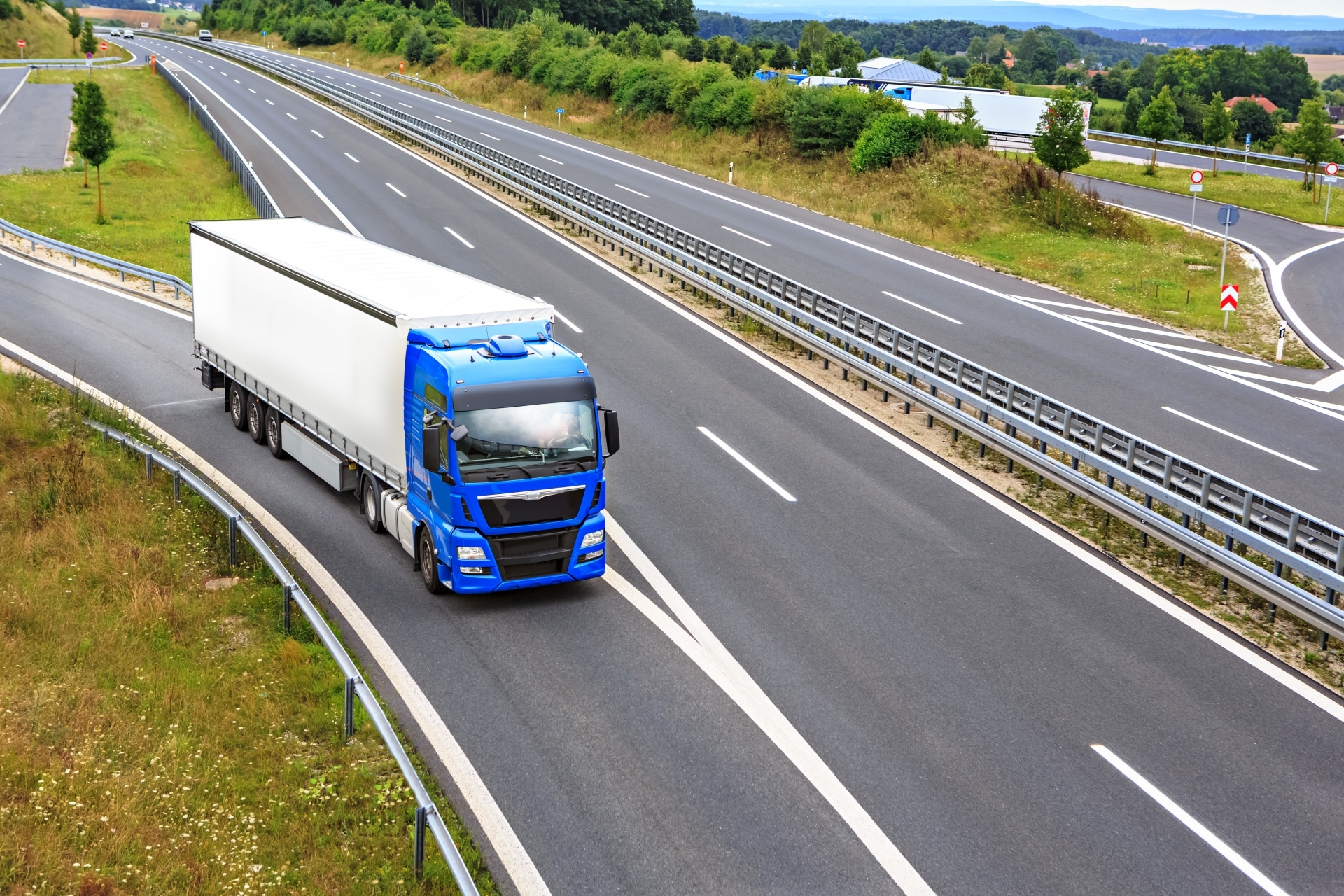
Holidays are a time of increased tourist traffic. For the TSL industry, this is an exceptionally demanding period. On one hand, a large portion of professional drivers plan their vacations, which can lead to staffing problems within the company and, consequently, even unplanned downtime in the supply chain. On the other hand, carriers specializing in the transport of seasonal goods may have even more orders than usual during this time, and route planning must take into account holiday traffic restrictions. A lack of proper preparation during this time can result in delays, fines, and financial losses. To avoid this, it is necessary to know not only the applicable regulations but also to react dynamically to the changing road situation. Where do summer driving bans occur in Europe? What are the consequences for non-compliance with the regulations?
Summer traps on the route – where and when do seasonal driving bans apply?
Although the rules for truck driving bans are known to most carriers, additional restrictions come into force in many countries during the summer. The most restrictive regulations apply in France and Germany. In France, bans during the holiday period cover all Saturdays in July and August. Restrictions there apply from Saturday morning until late evening hours. Carriers must also reckon with local restrictions. In Germany, however, bans are present throughout the year every Sunday, while in July and August – also on Saturdays on selected routes. In the Czech Republic, seasonal bans appear on Fridays, Saturdays, and Sundays, and in Poland – similarly – traffic exclusions cover three weekend days, though they differ in terms of hours and the weight of vehicles subject to the ban.
Summer traffic restrictions are very important. Ignoring them can mean not only financial losses but also necessary stops and disruptions to the delivery schedule, especially since during the holiday period, a route that normally takes two days can extend to three or four days. It is therefore important not to plan routes “by heart” and to continuously alert drivers to places where driving is prohibited. A trucker out of habit might accidentally make a mistake and drive where the route is currently closed to traffic, and this entails high costs for the company. That is why fast information exchange and smooth communication between the office and the driver are so crucial. Currently, we need up-to-date, integrated data and tools that can react to changes almost in real-time. Otherwise, even the best-organized company can lose a whole day of work due to a minor oversight.
– notes Tomasz Czyż, Chief Expert for Technological Solutions, Inelo from the Eurowag Group.
Fines do not take a vacation – what are the penalties for breaking holiday bans?
Failure to comply with the applicable summer traffic bans is associated with serious consequences. It not only means high fines for carriers but can also lead to the vehicle being detained and the further execution of the order being halted, and most importantly, violating the regulations carries the risk of losing the company’s good reputation. Its deterioration can mean more frequent company audits and difficulties in the process of obtaining new licenses and permits.
In most cases, sanctions for violating a driving ban are very severe for both the driver and the carrier, but they vary depending on the country. For example, in Germany, a driver can receive a fine of 120 euros, and the company up to 570 euros. In turn, the vehicle can be detained there until the restriction expires. In France, the penalty for ignoring the driving ban regulation is up to 1500 euros and can be doubled to 3000 euros if the carrier is caught violating the same act again. One must remember that everything depends on the circumstances of the given event – the cargo being transported or the vehicle being used.
– emphasizes Tomasz Czyż.
Tomasz Czyż, an Inelo expert, adds that one should stay up to date with changing regulations and constantly build awareness among employees.
We often encounter situations where a violation of the ban resulted from ignorance or misinterpretation of the regulations. Unfortunately, control authorities do not always take this into account, which is why our experts from OCRK can help in such situations, as they will first analyze the imposed penalty or fine, and if they decide it is worth appealing, they will take the necessary steps.
– comments the expert.
In Poland, the administrative penalty for not complying with holiday restrictions is up to 2000 PLN and involves additional penalty points for the driver, while in the Czech Republic, one can receive a fine of up to 1,700 PLN and there is a risk of the vehicle being detained and the violation being reported to the carrier’s register.
Technology versus traffic jams – how to effectively plan routes in the summer season?
During the holiday season, effective route planning becomes an absolute necessity. Traffic jams, detours, regional restrictions, and local holidays can completely disrupt the schedule if they are not taken into account at the order acceptance stage. What is worth checking in advance? First of all, public holidays, the applicability of weekend and seasonal bans, differences in the weight of vehicles subject to restrictions, and the availability of exceptions and permits.
There are several key issues that can facilitate route planning during the holiday period. First of all, it is good to use exceptions to the bans, which, for example, cover the transport of perishable or specialized goods. Moreover, flexibility in the delivery schedule and changing the order of tasks depending on needs can allow avoiding the most problematic moments on the route. Ongoing verification of the road situation is also important. Thanks to telematics, one can react dynamically to traffic jams, inspections, and breakdowns. It is known when a given vehicle is approaching a zone subject to a traffic ban, and it can easily be directed to another route. And we will get full control over the execution of orders when we integrate telematics with TMS-class systems, such as fireTMS or Marcos TMS. Combining these solutions ensures a free flow of data between them and provides a synergy effect. It allows for managing the fleet in real-time, facilitating communication between the driver and the office, and analyzing a lot of information regarding, among other things, the financial liquidity of the company or the status of orders. These are data necessary for making strategic decisions about the future of the company.
– says Tomasz Czyż.
The greatest benefits come from combining these solutions with toll management tools, such as EVA from Eurowag. This solution integrates planning, monitoring, and billing functions, giving companies real control over costs and punctuality.
Route planning today is much more than just finding the shortest path from point A to B. In the realities of international transport, there is a whole layer of road tolls, ban zones, and current difficulties in the form of traffic jams or accidents. EVA is exactly the tool that combines vehicle location data with information about tolls and applicable regulations. It gives the dispatcher the ability to compare alternative scenarios and choose a route that is not only the cheapest but also the most operationally effective. Thanks to the telematics functions available in the OBU solution, the fleet manager can react faster to changes and optimize costs without compromising on safety or compliance with regulations. As a result, the company builds a competitive advantage thanks to punctuality, precise reporting, and flexibility in operation, and these are the values that customers expect most today.
– points out Tomasz Góralewicz, National Sales Manager, Eurowag Group.
Knowledge about bans is, however, only the beginning. The most important thing is how to use it in practice. For carriers who want to avoid mistakes when planning routes, the new Inelo ebook titled “Truck driving bans in Europe in 2025” will be helpful. In this comprehensive guide, experts have collected the most important rules regarding traffic restrictions in individual countries in Europe, urban regulations before entering large agglomerations, the consequences of violating the regulations, as well as practical tips on how to effectively plan routes taking into account driving bans.
Source: INELO Polska Sp. z o.o.