








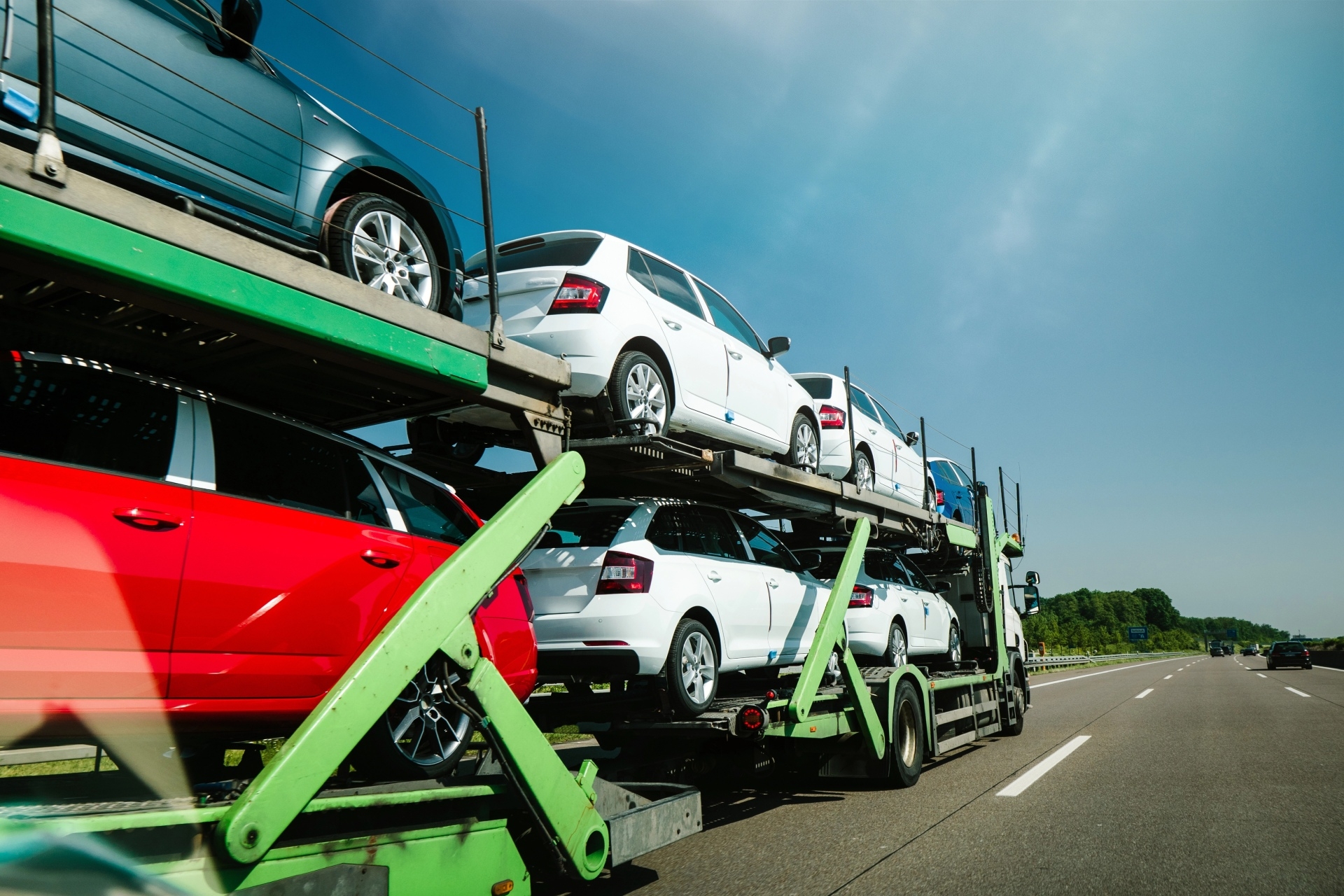
In the European market, the demand for car transporters is growing faster than their production, and there are many indications that this disparity will only increase in the coming years. Already, the waiting time for a new set can be as long as 36 months.[1] Several factors contribute to this deficit. One of them is the growing production of new cars within the EU. More and more cars are also being imported from China to Europe. Eurostat indicates that over the last 5 years, the number of passenger cars on the Old Continent has increased by 16 million, reaching a level of 256 million. Their number has increased in almost all EU countries.[2]
Shortages of car transporters in Europe
The demand for car transport services is closely linked to the total number of vehicles, of which there are currently over 250 million in Europe.[3] The scale of interest in car transport is illustrated by Eurostat data, according to which over 20 million cars were transported in a single year.[4]
Over the last few years, the highest number of new cars was recorded in Germany (49 million), Italy (nearly 41 million), and France (over 39 million). Poland ranked further down the list, with the number of registered cars increasing by nearly 2 million to almost 22 million.[5]
The European automotive market is constantly developing. A large car fleet and an increasing number of new cars only confirm this and are a clear, good signal that the demand for car transporters will likely continue to rise. We can already see that demand significantly exceeds supply, so this is a huge opportunity for our brand, Luggi. It is worth adding that the long waiting time for such specialized sets results from the complexity of the design itself and the many production stages and tests before a transporter can hit the market. Moreover, one cannot forget about the need to adapt such a vehicle to legal standards, which may vary depending on the country, the time needed to obtain type approval, and other challenges that engineers may encounter along the way. Shortages of appropriate automotive components are also a difficulty. All this makes the production of a car transporter very complicated and time-consuming. – explains Patryk Steidten, Vice President, Zabudowy365.pl.
Causes of the shortage of car transport sets
The car transporter market is characterized by a limited supply of these vehicles, which is why verifying the order fulfillment deadline is particularly important before signing a new contract. Unlike popular curtain-sided or refrigerated trailers, which are widely available, the car transporter segment requires ordering new vehicles well in advance. Furthermore, some manufacturers have stopped accepting orders. The appearance of a new manufacturer on the market, the Luggi brand, which recently debuted at the Silesian Stadium in Chorzów, will certainly increase the choice of modern transporters and contribute to filling market gaps.
Companies involved in international car transport face many logistical challenges. In recent years, the import of cars from China to Europe has increased significantly, which is due to the growing popularity of cars produced in the Middle Kingdom. Increased demand for vehicles from the East has led to congestion in seaports, which, combined with a deficit of transporters and an increasingly noticeable shortage of professional drivers, is a major challenge for efficient car distribution. For this reason, the ability to choose a modern and high-capacity car transporter, such as Luggi, can positively influence the current situation. Of course, we are aware that we will not fully satisfy the huge market needs, but to some extent, we can reduce the limited availability of these specialized vehicles. – comments Adrian Janusiak, Project Manager, Zabudowy365.pl
Car transporter based on innovation
Luggi is a Polish manufacturer of car transporters that use innovative technological solutions. One of them is the ability to drive solo, i.e., without a trailer. This is possible thanks to the use of a proprietary rear loading beam, which allows for easy separation of the tractor unit from the rest of the vehicle.
This solution is rarely found in the standard equipment of such vehicles, and it brings many benefits, e.g., in the form of easier maneuvering or the possibility of performing technical journeys with the tractor unit alone. Moreover, when designing the cargo space of Luggi vehicles, the challenges often faced by drivers transporting cars were taken into account. During the loading and unloading of vehicles, dangerous situations can occur, which can lead to operator injuries. To facilitate these operations in difficult weather conditions and after dark, Luggi vehicles have been equipped with a proprietary SLS (Safety Lights Solution) work lighting system, which consists of optimized LED lamps that efficiently illuminate all key areas of the cargo space. – emphasizes Mateusz Ciupa, Key Account Manager/Quality Manager, Zabudowy365.pl.
Another advantage of Luggi brand vehicles, besides safety, is driver comfort, which is ensured by cabs from Daimler Trucks – a project partner supplying Mercedes Actros tractor units in the Gigaspace version.
Large and comfortable cabs are still a rarity in car transporters, which drivers rather associate with limited space for work and rest. It is no secret that the shortage of professional drivers in the European transport market is growing every year, so providing them with appropriate conditions was one of the priorities accompanying the designers’ work. For customers choosing Luggi car transporters, the Gigaspace cab can be a strong asset during job interviews with new drivers. – concludes Adrian Janusiak.
[1] Superauto.pl, Market Analysis and Investment Potential: Demand for Car Transporters in Europe – Opportunity for Luggi.
[2] Eurostat, Passenger cars in the EU, 2024
[3] As above.
[4] Superauto.pl, Market Analysis and Investment Potential: Demand for Car Transporters in Europe – Opportunity for Luggi.
[5] Eurostat, Passenger cars in the EU, 2024
Source: Lightscape