








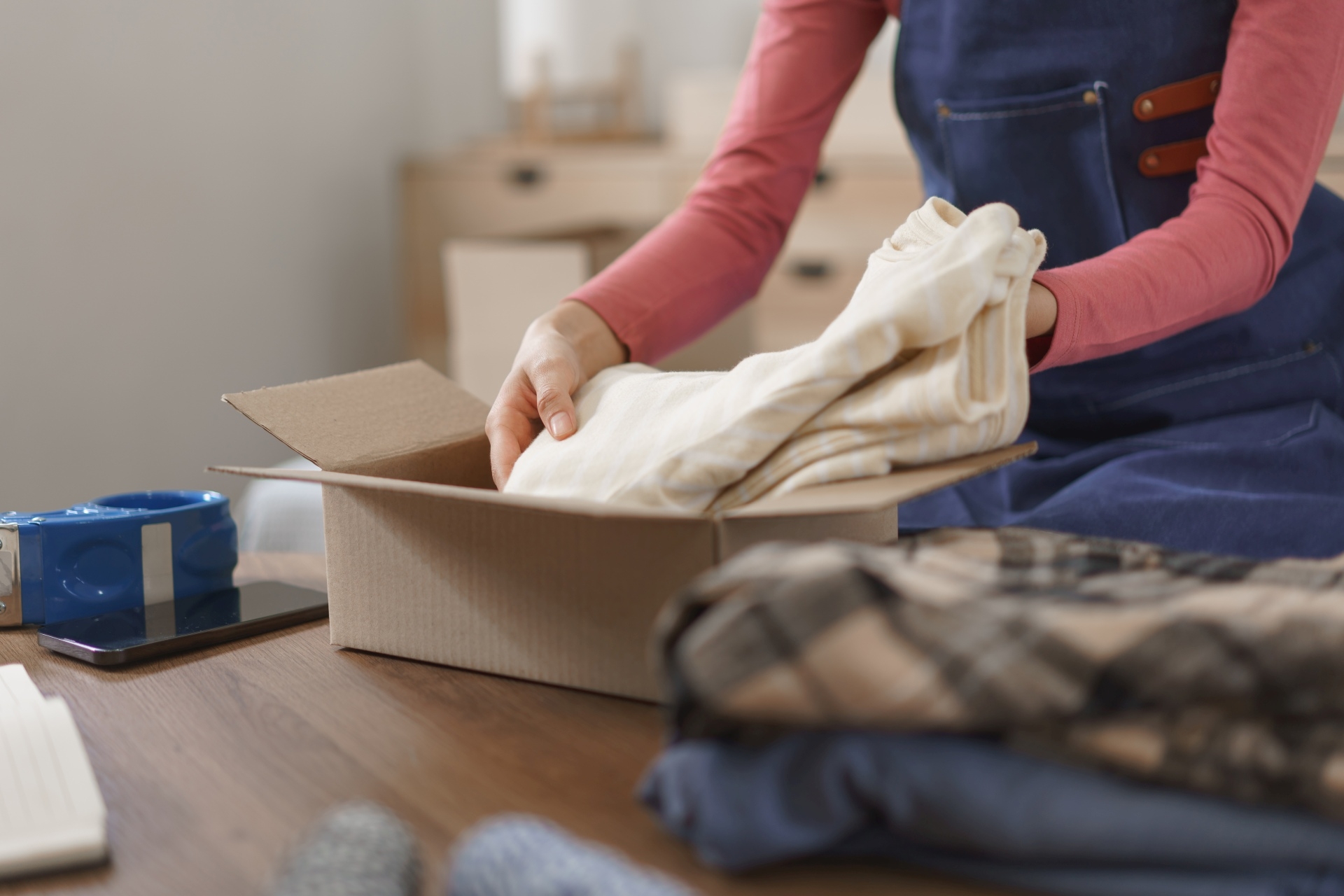
With the growth of the e-commerce channel in the fashion industry, the number of packages used is increasing, a significant portion of which still consists of plastic. By 2030, e-retailers in Poland will use 147 million plastic packages, according to a study commissioned by DS Smith. A growing trend can be observed among fashion brands, which are increasingly choosing packaging made of paper or recycled materials. This is significant because Polish consumers feel guilty about the amount of plastic in which their orders are delivered.
Although the UK is currently the largest individual market for plastic delivery bags in e-commerce (857 million), Poland is seeing the fastest growth in their use. Last year alone, online fashion retailers delivered 16 million plastic bags to Polish consumers, according to a Development Economics study commissioned by DS Smith.
Among the largest European economies, Poland is the leader in terms of the growth in plastic packaging consumption in fashion e-commerce. This is an infamous record. Spain came in second. The outlook for the coming years is also not optimistic. As the e-commerce channel itself grows, especially in fashion, the number of plastic bags used will increase and double by 2030. – says Michał Zawistowski, Managing Director of DS Smith Poland, to the Newseria agency.
By 2030, Polish e-retailers will use a total of approximately 147 million plastic packages, which amounts to about 32 million per year. During this time, 22 billion plastic packages will be used in deliveries in the UK, Germany, France, Italy, Spain, and Poland, which is about 10 million per day.
Only 6 percent of these plastic bags that reach customers in Poland with clothes purchased online will be recycled and could be reused. This means 94 percent will actually end up in a landfill or directly in an incinerator. – points out Michał Zawistowski.
Excess of plastic bags
According to calculations, 15 million bags ended up in the trash or were burned on the domestic market last year. With the estimated increase in the use of plastic packaging in fashion e-commerce by 2030, as many as 30 million plastic bags will end up that way. The introduction of recycling fees for plastic bags in brick-and-mortar stores in Poland led to a significant decrease in their consumption. According to Eurostat data cited by the expert, in 2022, Poles used an average of 6.6 lightweight plastic bags, compared to 300–400 before 2018. The lack of similar solutions in online retail means that the amount of plastic waste is growing rapidly.
Online retail, which is developing very dynamically, consumes, according to studies, more than four times as much packaging material to move goods from the store to the person. Here, the responsibility should not be placed on the shoulders of consumers, but primarily on the brands that provide certain options or not. Today, we have many stores that offer more responsible forms of shipping, e.g., cardboard packaging or a reduced amount of protection through bubble wrap, depending on the type of product. These are very nice steps, but we should primarily strive for reusable packaging. – argues Agnieszka Wąsowska-Telęga, board member of Fashion Revolution Poland.
Among the countries surveyed, Germany has the largest share of fashion deliveries in fiber-based packaging, such as paper and cardboard, with a rate of 10 percent. In Poland and Spain, this share is the smallest – at 2 percent. At the same time, more and more brands are already introducing changes.
The space for the growth of sustainable packaging is absolutely large. It is more than a fivefold possible growth to achieve if we wanted to get closer to countries like Germany. We are increasing our portfolio of products dedicated to the e-commerce channel, including the fashion industry. We have various solutions, ranging from paper envelopes to dedicated boxes with return tapes, which allow for the return and reuse of this packaging on the way back to the warehouse. – lists the Managing Director of DS Smith Poland.
Necessary changes in regulations
Changes are driven by EU regulations limiting the negative impact of human activity on the environment, which place a large emphasis on packaging producers, such as the PPWR regulation.
Entrepreneurs must submit reports to the Database on Products and Packaging and Waste Management. This database contains information, for example, on how many different types of packaging companies introduce into circulation. All positive changes start with knowledge – we must know the scale of the problem to be able to find appropriate solutions for it later. – points out Agnieszka Wąsowska-Telęga.
Changes in the packaging market are also accelerating due to consumer demands. Half of Europeans feel guilty about the amount of plastic their online clothing and accessory shipments are packed in. More than 70 percent of shoppers in the six countries surveyed believe that plastic bags should be gradually phased out of online shopping if substitutes such as paper or cardboard are available. Only slightly fewer say they prefer their online clothing and accessory deliveries to be packed in paper or cardboard rather than plastic.
Market research indicates an increasing demand for eco-friendly packaging in e-commerce. On one hand, this is a very big opportunity for sustainable development, and on the other, a big challenge facing online stores. – assesses Katarzyna Ciechanowska-Ciosk, manager of the Amazon.pl online store.
Recyclable materials
The transition to more easily recyclable materials is supported by the majority of Poles. They believe that the obligation to reduce plastic consumption lies with packaging companies (42 percent), retailers (34 percent), and the European Union (27 percent). More than half say they would be more likely to place an order at a clothing store that uses recyclable packaging.
Amazon’s research indicates that customers expect products to be shipped in appropriately sized packaging; they do not want to receive air. They also do not want packaging to be single-use plastic bags and for the filler to be plastic. That is why we have introduced several innovative moves. We have completely withdrawn single-use plastic bags across Europe, and we decided to use artificial intelligence and machine learning algorithms to minimize the size and weight of packaging per shipment. – lists Katarzyna Ciechanowska-Ciosk.
Amazon announced that between 2021 and 2025, it will invest over 700 million euros in the technological modernization of delivery stations across Europe, although it already does not use single-use plastic bags and envelopes. Amazon estimates that since 2019, it has avoided the use of over 1 billion single-use plastic delivery bags in its European distribution network. All packaging in this part of the world – boxes, bags, and envelopes used to ship products to customers directly from Amazon fulfillment centers – is recyclable. At the same time, since 2015, the company has reduced the average weight of packaging per shipment by 43 percent, which means a reduced consumption of packaging materials by over 3 million tons.
When a customer orders many products, we combine these orders so that the products are sent in one shipment, even if they come from several fulfillment centers. – adds the manager of the Amazon.pl store.
The company is also implementing advanced automatic packaging technology across its European network. Already half of Amazon shipments in Europe are delivered in reduced, recyclable packaging, such as paper bags or cardboard envelopes, and over a billion shipments since 2019 have reached customers without any additional packaging as part of the Amazon Ships in Product Packaging program.
Source: Newseria