








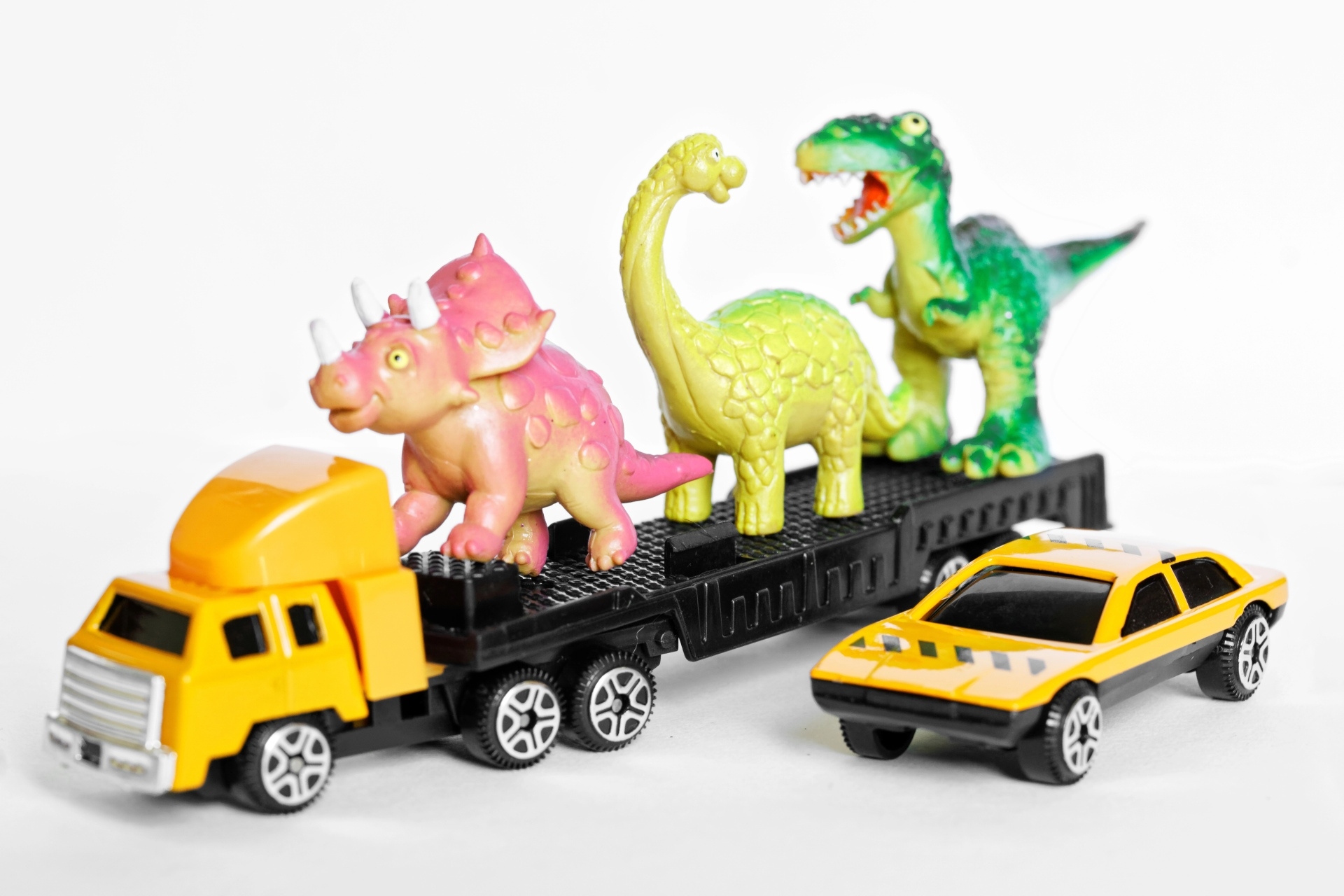
Children’s Day is an occasion for family celebration. Despite the demographic decline, the market for children’s products in Poland continues to grow dynamically. According to estimates by the Polish Economic Institute, between 75 and 100 million toys were sold in our country in 2023. However, before they reach store shelves and the hands of the youngest, they go on a multi-stage journey. This is a logistical challenge for which companies in the TSL industry prepare weeks in advance. Their transport and storage is a task requiring precision, detailed planning, and—due to their fragility or specific nature—also exceptional care.
According to Geis PL, the peak of toy distribution in Poland occurs in the second half of May, but the entire process begins much earlier. These products are imported mainly from China, which is their largest producer. Containers depart from ports in Shenzhen, Ningbo, or Shanghai to reach Europe after about 25–45 days of sea travel, most often to the ports of Rotterdam, Hamburg, or Gdańsk. From there, they are reloaded onto road transport and reach central warehouses in Poland. Then, within a few weeks, they are sorted, labeled, and sent to retail chains and online stores. On average, a toy travels between 8,000 and 12,000 kilometers and changes its mode of transport up to three times before it reaches a child’s hands.
Data[1] shows that the largest number of people—almost 75 percent—planned to spend between 51 and 300 PLN on a gift for a child last year. The vast majority of Poles choose toys for this occasion—according to the survey, more than three-quarters of respondents reach for them. Among the most frequently purchased products are creative, educational, and interactive sets, building blocks, and dolls. More expensive gifts, such as LEGO sets, board games, or electronic devices, are also gaining popularity. Average monthly spending on toys reaches about 100 PLN, which translates to over 1.2 billion PLN annually.
Children’s products belong to a particularly sensitive assortment. They differ in shapes, packaging, and resistance to external factors. Transporting many of them—especially electronic ones—requires special handling, e.g., due to the presence of lithium-ion batteries or elements requiring protection against moisture. Securing such cargo often requires non-standard packaging and special zones in the warehouse.
– says Rafał Augustyniak, Director of the Stryków Branch at Geis PL.
A problem that the industry is increasingly facing is toys that do not meet safety standards, especially those purchased by consumers directly on Chinese e-commerce platforms. Research by Toy Industries of Europe (TIE) shows that as many as 80 percent of toys purchased on websites such as Temu, Shein, or Wish do not meet basic EU standards regarding child safety. TIE tested over 100 toys purchased from third-party sellers on 10 online platforms—the test results were alarming.
This poses completely new challenges for importers and logistics operators. A thorough check of the origin of the goods, their certification, and compliance with European regulations is necessary. Responsibility for quality and safety begins at the delivery planning stage. In the case of children’s products, there is no margin for error. Importers must have complete customs and technical documentation, ensure compliance with the requirements of Directive 2009/48/EC, obtain an EU declaration of conformity, and the CE marking. Without meeting these conditions, the product cannot legally enter the market.
– comments Rafał Augustyniak.
Although Children’s Day is only one day, the scale of operations needed for its efficient handling begins long before June 1st. It is a huge operation involving many links—from manufacturers and freight forwarders, through warehouses and carriers, to shops and couriers. And all this so that the gift arrives on time, safely, and in accordance with expectations—because a child’s smile is worth every effort.
[1] https://news.empik.com/321056-dzien-dziecka-2024-jakie-prezenty-i-za-ile-wyniki-badania-empiku
Source: Geis Group