









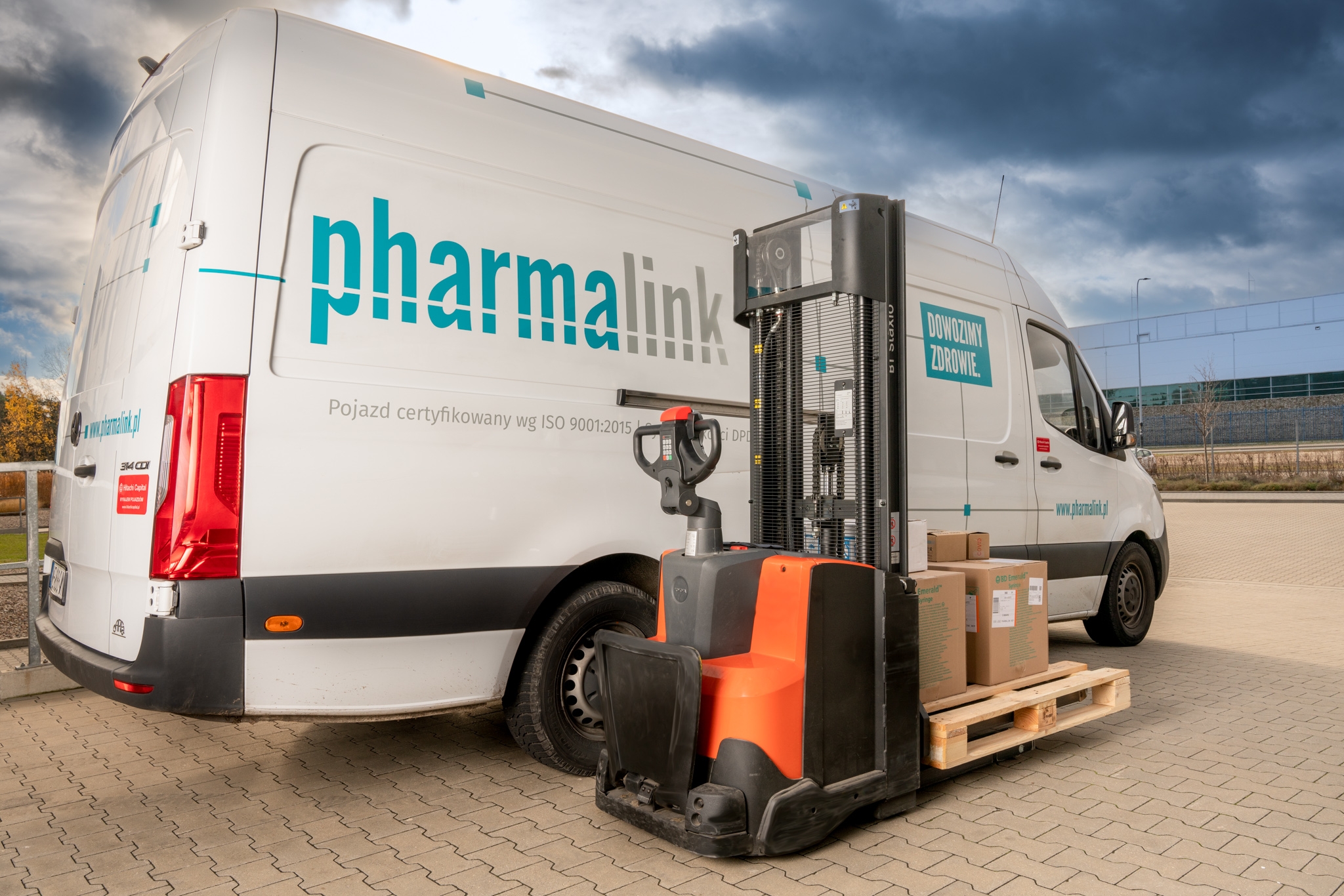
The flu season this year proved to be stronger than the previous one – Since the beginning of January, approximately 23,000 people have been hospitalized due to the flu and its complications alone, – reported the Chief Sanitary Inspectorate on February 18. In the first week of March, there were already 55,000 cases. The more patients there are, the greater the demand for medicines, which were in short supply in pharmacies. The efficient operation of companies in the pharmaceutical logistics industry was crucial.
FLU, COVID-19, RSV
The activity of the influenza virus is gradually decreasing; in the last week, a decrease of approximately 30% in the number of cases was recorded compared to the first week of March, reported the Chief Sanitary Inspectorate on March 18.
A month earlier, on the government website of the Chief Sanitary Inspectorate, we read: To the e-Health center, where approximately 50% of clinics report, about a million cases of flu have been reported since September. – these are data from February 18, 2025. The Chief Sanitary Inspectorate noted that this season there are at least three times as many cases as in previous years. Experts estimated at the time that since September of last year, as many as a thousand people had already died due to the flu and its complications alone. Data from the end of February flowing from doctors’ offices through the e-Health Center systems indicated at that time that 13,000 cases of RSV, approximately 4,000 of COVID-19, and approximately 400 cases of whooping cough had been recorded.
The situation related to such an intense flu season caused problems with the availability of certain medicines, which could have translated into disruptions in the continuity of supply chains. Companies in the pharmaceutical logistics industry, specializing in the delivery of medicines, clearly emphasize that these are not new situations.
We noticed that the demand for specific medicines was growing from week to week. As a professional supplier of medicines, we had to efficiently manage processes to deliver the necessary medical products to the indicated recipients and medical facilities in the shortest possible time.
– explains Daniel Charucki, transport manager at the logistics company Pharmalink.
In the period from September – when the flu season is usually at its peak, patients most urgently need, among other things, medicines for the flu and viral infections. However, this is not the only time of the year when medicine deliveries are slightly more intensive.
We are constantly observing the situation on the pharmaceutical market. As a specialized logistics company, we see a particularly increased demand for deliveries in the autumn-winter and early spring periods, mainly in the context of the flu and infections.
– comment the specialists at Pharmalink.
Despite this, carriers make every effort to deliver medicines in the shortest possible time. In a situation where the supply chain is heavily burdened, every stage of medicine transport matters. However, the essence does not lie only in efficient transport; proper warehousing is also crucial. Logistics in the pharmaceutical industry is not just about fleet management. How medicines are stored and the conditions in which they are kept matters for their properties. This is why warehouse spaces must be properly prepared. Appropriate infrastructure will enable the accumulation of larger quantities of medicines, thus making it possible to prepare for emergency situations or sudden increases in infections and the demand for medicines.
We maintain almost 100% on-time delivery, even during periods of increased demand. The more efficiently we operate, the better supplied the places where patients come for help will be.
– adds Daniel Charucki.
Warehousing as an important stage in the supply chain
Warehousing of medicines is a very important stage in the entire supply chain, having a direct impact on the effectiveness of distribution. Rigorous safety requirements and compliance with regulations are issues that every professional company emphasizes.
Warehouses must meet fire safety standards, be protected against external conditions, and have temperature and humidity monitoring. Our warehouses are protected against pests, which we monitor on an ongoing basis using dedicated systems, and they meet rigorous GDP standards. It is also important to take care of the state of the warehouse space supply. The staff optimizes the flow of goods in a way that ensures continuous access to storage areas for external clients.
– Michał Wiśniewski, warehouse manager at the pharmaceutical wholesaler Pharmalink, emphasizes how important it is to properly adapt the space.
Companies such as Pharmalink have extensive infrastructure. Thanks to this, clients can accumulate stocks of medicines depending on their needs. – We have nearly 10,000 pallet spaces at 15-25 degrees C and 400 spaces at 2-8 degrees C, but we are still optimizing surfaces and developing infrastructure facilities.
– adds Michał Wiśniewski from Pharmalink.
Warehousing in pharmaceutical logistics is crucial for ensuring the safety and quality of medicines, as well as for the efficiency of the entire supply chain. Proper warehouse management, compliance with regulations, control of storage conditions, and precise inventory monitoring allow for the effective distribution of medicines. Furthermore, this minimizes the risk of errors, which affects the health and safety of patients.
Source: Pharmalink