








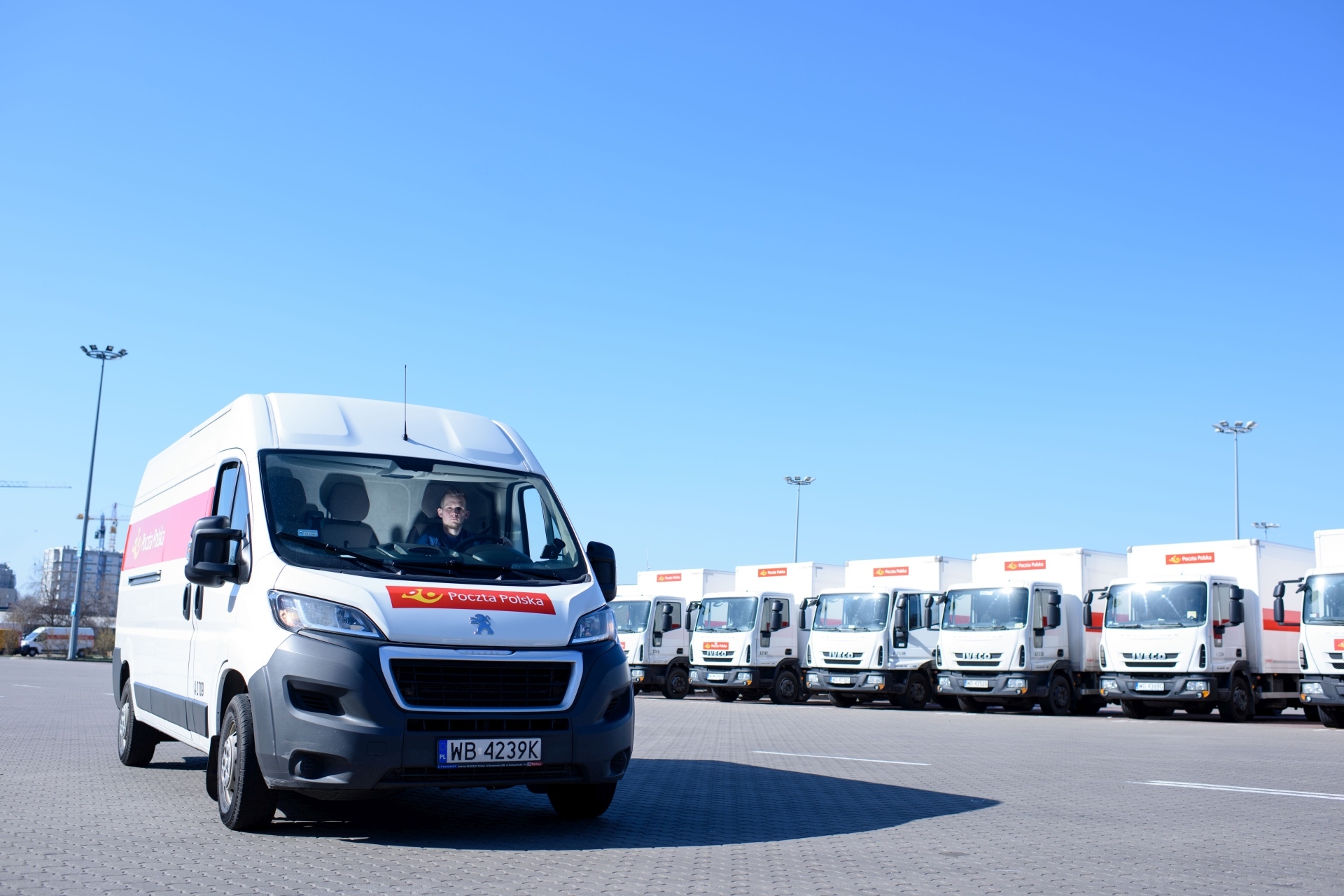
Poczta Polska has begun implementing a new transport and fleet management strategy. Its goals are: optimizing the use of existing resources, reducing operating costs, and improving flexibility. The first positive results are already visible: there has been a significant improvement in delivery timeliness. The changes introduced since the beginning of the year in the CEP (courier, express, and postal services) area are part of the implementation of the Poczta Polska Transformation Plan.
The company’s new strategy for 2025-2027 was prepared by the management board and assumes specific actions in key areas of the operator’s business, such as IT, e-services for businesses and citizens, as well as changes to the offer available at branches and logistics. The changes beginning in the CEP area are a key element of adapting the Post to the realities of a rapidly developing service sector.
Hard data shows that Poczta Polska is consistently working on improving the quality of its services. A significant improvement in delivery timeliness across various categories is proof that it is possible to combine operational efficiency with a high level of customer satisfaction, even under conditions of company transformation – assures Sławomir Żurawski, Vice President of Poczta Polska for Operations and Logistics.
Optimization of existing fleet resources
Poczta Polska possesses one of the largest logistics resources in the country: vehicles, sorting centers, distribution centers, and its own as well as partner branches. Based on the results of an analysis of the fleet utilization model used until recently, the new strategy proposes changes that will enable better use of current resources through, among other things: optimizing vehicle selection, fleet operating costs, including improving the monitoring system, and utilizing transport outsourcing.
Poczta Polska uses approximately 7,500 vehicles of various types. More than 5,000 of them are our own fleet, and the rest are vehicles of our partners – subcontractors. We have all types of cars, adapted to all tasks: from small ones used by postmen, through courier vans up to 3.5 tons, large vehicles up to 12 tons, to those in the largest category – over 12 tons. We also offer full truckload transport and pallet transport – says Tomasz Swat, Director of the Logistics Department at Poczta Polska, regarding the scale of the challenge.
Optimization of operational systems
At the same time, Poczta Polska is introducing a number of systemic changes aimed at improving its efficiency and operational effectiveness in transport. The most important changes to be introduced in the near future include:
- transitioning to a model based on Make or Buy analysis, where decisions about fleet ownership or outsourcing of transport services will be made based on an analysis of actual costs and operational efficiency;
- introducing a remuneration system for couriers focused on efficiency and the possibility of flexible B2B cooperation, which will increase the motivation and engagement of drivers, as well as allow for better adaptation to operational needs;
- implementing modern TMS (Transport Management System) and SMP (Vehicle Monitoring System) tools to optimize routes, effectively manage driver working time, and maintain full control over fuel costs.
The initiated changes in fleet and transport management will also include remodeling procurement processes and implementing advanced IT systems supporting transport management. – The implementation of the new transport management strategy will allow for achieving positive results in quality and cost optimization, thereby laying the foundation for a new quality of Poczta Polska’s operations in the CEP area – concludes Sławomir Żurawski.
First results
The implementation of the new strategy brought positive results as early as January 2025. Poczta Polska is recording a significant improvement in delivery timeliness. Importantly, this applies not only to letters but also to the competitive and profitable CEP (parcel) market. This can be seen in the example of the flagship and most popular Pocztex service. Using it, on average, every week this year, customers sent over a million parcels, and more than 95% of them reached the recipient the day after posting. This means maintaining the so-called D+1 standard, the most desired on the market.
The timeliness of postal economic and priority parcels was 98-99%, and the timeliness of priority letters (D+3) remains at the level of 94%.
Poczta Polska is the designated Polish operator. The logistics network is not just 7,500 vehicles traveling 165,000,000 km annually. It is also: 28 sorting centers across the country, 18,000 parcel collection points, over 7,500 post offices, and 4,000,000 parcels of all types delivered daily.
Source: Poczta Polska