









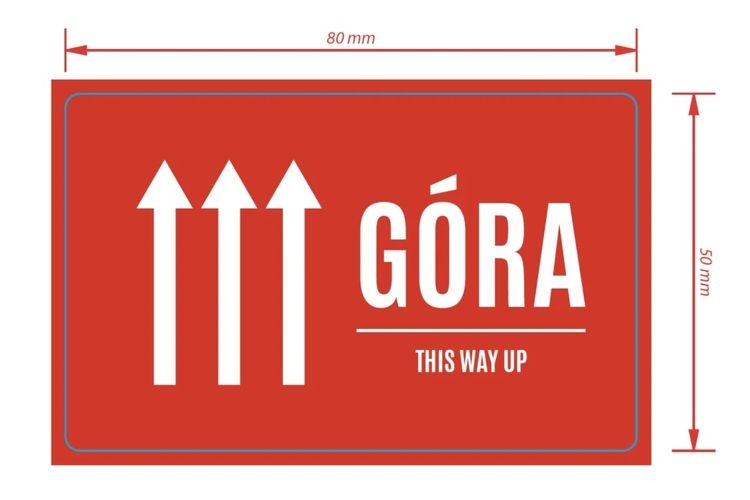
Warning labels are an indispensable element in the world of transport and logistics, playing a key role in ensuring the safety and protection of products. Thanks to precise markings, such as symbols, colors, and text, they enable the effective identification of hazards associated with transported materials. Learn how these labels increase safety during transport and play an important role in the entire supply chain.
What are warning labels?
Warning labels are special markings on various products and substances that signal potential hazards. Their main task is to increase user safety and minimize the risk of accidents and product damage. These labels contain symbols, colors, and text that attract attention while providing key safety information. In practice, they play an important role in communication, helping to understand the hazards associated with a given product, such as toxicity, flammability, or health risks.
Thanks to proper labeling, the risk of accidents can be significantly reduced, allowing for the safe use of products. An additional application of warning labels concerns the transport of packages requiring special care. They inform couriers and those handling shipments about delicate materials and the need for caution when moving them. In this way, they protect both people and transported goods from potential damage. They also perform an important function in terms of compliance with legal regulations regarding product safety. For manufacturers, they are a way to meet regulatory requirements by providing consumers with necessary information about potential hazards associated with using a given product.
How do warning labels minimize the risk of damage?
Warning labels play an important role in reducing the risk of damage by providing necessary information on the proper handling of products. Thanks to them, users are aware of potential hazards and can take appropriate steps to protect themselves. They include, among other things, recommendations regarding the use of personal protective equipment, which is extremely important when working with chemicals or other hazardous materials. In the context of transport, labels indicate special requirements related to packaging and storing packages. This is especially important for delicate shipments, where improper handling can result in damage. Clear markings inform those responsible for transport about the rules that must be followed to minimize the risk of damage during transit. Additionally, labels make it easier to identify products requiring special care, which is crucial for ensuring the safety of both people and the goods themselves. Thus, the use of warning labels not only protects against hazards but also helps meet applicable legal standards regarding product safety.
What information do warning labels contain?
Warning labels play an important role by providing key information that helps maintain safety when using various products. They contain symbols, such as icons indicating toxicity or flammability, which immediately draw attention and signal possible hazards. Furthermore, these labels offer tips on safe use and storage of products. For example, they may contain advice such as “Do not throw” or “Handle with care: glass,” which is invaluable for those involved in transport and warehousing.
Such labels often also inform about potential health effects resulting from improper use of products or contact with hazardous substances. They may also contain recommendations regarding the use of personal protective equipment, which is particularly important when working with chemicals. Thanks to this information, users can take appropriate actions to minimize health risks.
An additional function of warning labels is to ensure proper handling of delicate or potentially hazardous materials during transport. Messages such as “Documents inside” facilitate proper handling of shipments, reducing the risk of damage. All these elements together create a comprehensive protection system against hazards associated with both the use and transport of products and ensure compliance with applicable safety standards.
How do warning labels ensure durability and visibility?
Warning labels are characterized by durability and excellent visibility because they are made of materials resistant to moisture and temperature changes. High-quality raw materials guarantee their strong adhesion to various surfaces. A solid adhesive ensures that the labels remain in place even in difficult conditions. Vivid colors and precise printing make them easily noticeable. This makes it easier for those responsible for transport or warehousing to quickly spot important information. Thanks to this, labels effectively perform their function, minimizing the risk of damage by providing necessary instructions regarding caution.
Types of warning labels available on the market
There are various warning labels available on the market that can be adapted to the specific requirements of different industries. Among them, self-adhesive labels are very popular due to their ease of application and flexibility in modifying content. Their resistance to moisture and temperature changes makes them perform well in difficult conditions. Another type is thermal transfer labels, distinguished by excellent print quality and durability. This makes them an ideal solution for precise product labeling. Foil labels, on the other hand, offer additional protection thanks to their resistance to mechanical and chemical damage, which makes them suitable for more demanding industrial environments. In turn, cardboard labels are mainly used in logistics and warehousing, where the readability of markings and their easy replacement are important. Additionally, labels on a roll facilitate mass application in production processes. Each of these types has unique properties and applications, allowing companies to choose the best solution for their needs related to safety and goods identification.
How do self-adhesive labels differ from thermal transfer ones?
Self-adhesive and thermal transfer labels differ primarily in their application method and durability.
- self-adhesive labels are equipped with an adhesive layer, which allows them to be quickly attached to various surfaces without the need for additional tools,
- they are extremely practical, especially when time is of the essence.
In turn, thermal transfer labels require a special printer that uses heat to transfer the image onto the label. This process guarantees not only better print quality but also greater resistance to external factors – which is particularly important in industrial environments. Thanks to this, these labels are characterized by greater durability and abrasion resistance, which makes them an ideal solution for long-term labeling of products or materials exposed to harsh weather conditions.
What are the advantages of foil and cardboard labels?
Foil labels are characterized by extraordinary durability, which makes them handle moisture and mechanical damage perfectly. They are ideal for use in difficult industrial conditions where they may be exposed to contact with water or chemicals.
In turn, cardboard labels are more environmentally friendly, as they are easily recyclable, which supports nature conservation.
Both types of labels are used depending on the user’s expectations:
- foil labels are chosen mainly where their durability and resistance to external factors are a priority,
- labels made of cardboard are popular due to their eco-friendliness and the ease of quickly replacing markings.
Application of warning labels in various industries
Warning labels are of key importance in many sectors, including logistics, transport, and retail. Their main goal is the protection of delicate shipments during transport and storage. Thanks to them, it is possible to minimize the risk of damage to goods, which improves the quality of logistics services. In particular, in logistics, they are indispensable for marking packages requiring special treatment, which ensures the safe arrival of products to recipients. In the context of retail, these labels facilitate communication between sellers and customers by informing about potential hazards associated with product use. In industry, they protect goods from improper handling, which is crucial for maintaining their quality and safety. For example, labels can indicate chemical substances or delicate materials like glass. Thanks to the use of these markings, companies can also meet standards regarding safety and legal compliance, which is extremely important for protecting both consumers and employees. Labels streamline logistics processes and reduce risks associated with the transport of goods by providing clear operating instructions.
Why are warning labels necessary in logistics and warehousing?
Warning labels play a key role in logistics and warehousing, enabling easy identification of goods and informing about their properties and potential hazards. Thanks to them, personnel can react quickly in emergency situations, which significantly increases the level of work safety. They reduce the risk of product damage by providing necessary information on safe storage and transport.
Logistics labels facilitate communication regarding the protection of goods. This is crucial for maintaining the integrity of shipments. They often contain tips on using personal protective equipment when working with chemicals or other hazardous substances. Good identification of goods minimizes the risk of errors in warehousing and transport processes.
Investing in high-quality labels brings benefits both in terms of safety and compliance with legal regulations related to the transport and storage of products. Proper labeling of packages allows for avoiding financial losses resulting from damage and supports the efficiency of logistics processes, providing clear instructions for those involved in the supply chain.
What types of warning labels does Emerson offer?
The company Emerson presents a wide selection of warning labels, tailored to the individual needs of customers. The assortment includes:
- Labels on a roll:
– 50×50 mm: Available in 4 graphic variants in the Polish version.
– 50×80 mm: Offered in 22 different graphic variants.
– 100×100 mm: Available in 11 variants.
It is also possible to produce unique label designs, according to the individual pattern of the Client.
- A4 labels:
– Colorful A4 warning labels, available in “Up” and “Caution glass” variants. They ensure effective marking of shipments requiring special care.
These labels are easy to use, durable, and resistant to damage. Thanks to vivid colors and clear graphics, they are highly visible and understandable, which is crucial in the context of the global supply chain. The ability to adjust the size and pattern according to the customer’s needs allows for proper protection and identification of goods in various industries.