








The automotive industry in Poland, accounting for 8% of GDP[1], is one of the largest sectors of the economy, employing over 201,000 people in production and 125,000 in the trade of passenger vehicles[2]. In 2024, this sector faced many challenges, but there were also signs of growth and adaptation to changing market conditions.
According to a report by KPMG and the Polish Automotive Industry Association, nearly 552,000 new passenger cars were registered in Poland in 2024, which is an increase of 16% compared to the same period in 2023[3].
Challenges
Despite overall growth, the industry is struggling with certain challenges. Although the European market has strongly committed to electromobility, the current situation regarding existing EU tariffs on BEV vehicles produced in China and rising production costs are worsening the outlook for the automotive industry. In 2025, corporations will also face stricter CO2 emission standards resulting from the Fit for 55 package. As the industry points out, this goal will be very difficult to achieve, which will translate into financial penalties and potential price increases for new cars. And although there is a visible increase in the importance of vehicles with alternative drives in Poland – 280,000 were registered in 2024 (+27% y/y)[4], as well as the aforementioned increase in all registered new vehicles, our domestic market, like the European one, will struggle with the deteriorating situation of the automotive sector. According to the “MotoBarometr 2024. Automotive sentiment in Europe” report, only 32% of representatives of automotive plants in Poland forecast production growth over the next 12 months. This is the lowest percentage since 2016. Moreover, weakening sales and, consequently, car production in Europe are causing a decreasing number of orders for Polish factories producing parts and components.
Another important issue is the ongoing digital transformation. More and more cars are being equipped with electronic parts and components. Modern vehicles use up to 100 million lines of code, which create many technologically advanced systems, such as those used for detecting and preventing break-ins or algorithms that reveal irregularities[5]. This creates a threat to security and privacy, such as keyless car thefts and phishing attacks. Therefore, automotive companies should take appropriate steps to protect their systems, data, and customers[6]. The response to cybersecurity management in enterprises is the NIS2 Directive, which is expected to come into force in Poland in 2025. Its goal is, among other things, to introduce a uniform, minimum level of cybersecurity in those institutions and business organizations whose functioning is of key importance to the Polish economy and society.
Logistics
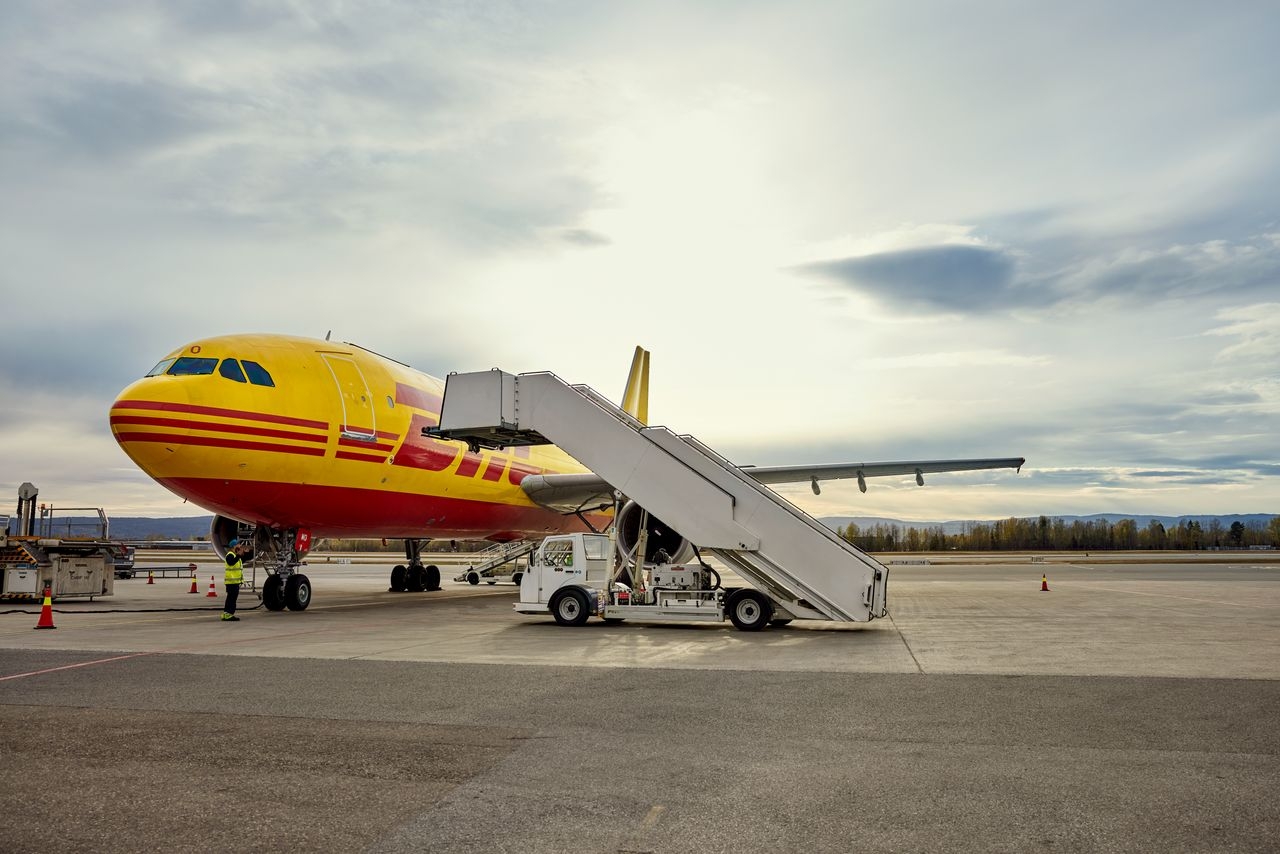
DHL Express Poland provides air transport services for a wide spectrum of clients in the automotive industry. In terms of the weight of transported shipments, automotive ranks 3rd among the sectors we serve, with an average of nearly 20kg[7]. This value remained at the same level y/y. We carry out the heaviest transports for companies involved in the production of automotive components and subassemblies (57%) and the production and distribution of parts for the aftermarket (27%). These same automotive subsectors also have the largest volume share, 44% and 40% respectively.
We also continue to see increased interest in our services in certain subsectors. The largest, as in the previous year, concern passenger vehicle manufacturers (+29% y/y) and tire manufacturers (+8% y/y). Among the largest export markets for goods from Poland, as in the same period last year, are Germany, France, and the Czech Republic.
In 2024, we observed increased demand for express transport services in the automotive industry in April and July. Interestingly, a year earlier, peaks were visible in March, June, July, and September. This year, the sector recorded the largest decline in August, which could have been caused by, among other things, summer breaks in car factories. With the beginning of September, the situation began to stabilize.
Logistics expectations
Our internal data proves that, despite the unstable situation in the automotive industry, there is still an increasing need to use the services of proven carriers whose domain is the express transport of goods on a global scale. As DHL Express, we provide such services and deliver our customers’ shipments to over 220 countries and territories around the world. We also support them in the customs process, which has recently undergone significant changes. The new version of the Automated Export System (AES PLUS), implemented on October 31, reduced the decision-making power of all customs agencies in Poland, including DHL Express. These agencies no longer have the ability to carry out clearance in the form of “customs self-service,” however, DHL Express is still responsible for completing and filling out all necessary customer documents. This year, a new version of the Automated Import System will also be implemented. In both cases, we are in constant contact with the Ministry of Finance and the Customs Office to develop the best form of cooperation, while simultaneously conducting educational activities aimed at our customers.
[1] Source: 2024 Summary: A very difficult year for sustainable transport – PSNM – Polish Alternative Fuels Association
[2] Source: Automotive industry. Summary of data for 2024 – KPMG Poland
[3] Ibidem
[4] Ibidem
[5] Source: https://kpmg.com/pl/pl/home/insights/2024/08/raport-kpmg-i-pzpm-branza-motoryzacyjna-podsumowanie-danych-za-h1-2024.html
[6] Ibidem
[7] DHL Express internal data, January – September 2024.
Source: DHL Express Poland