








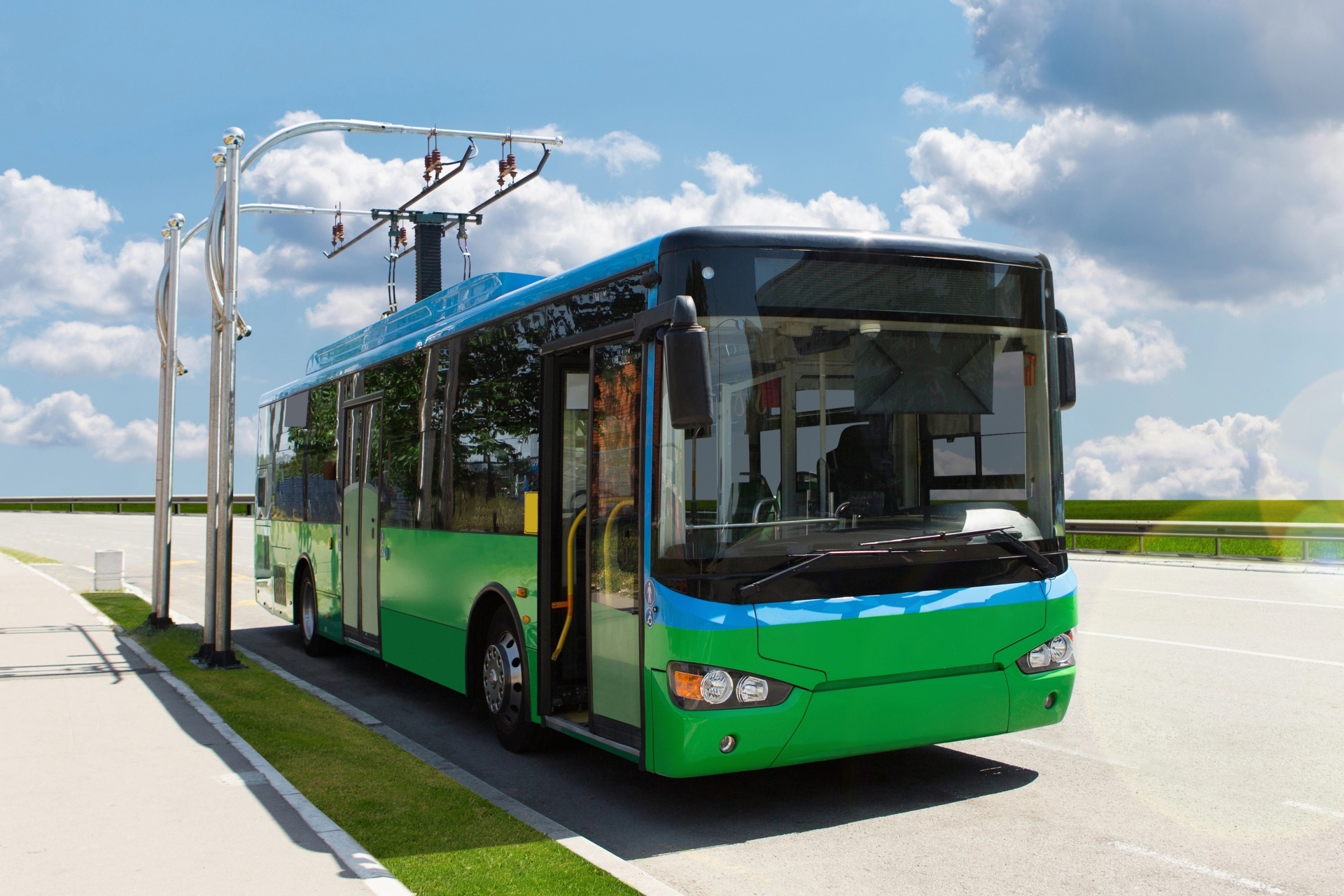
In 2024, 2,301 new minibuses and buses were registered in Poland (19% of which were equipped with alternative propulsion). A significant increase in the number of minibus registrations was recorded compared to 2023, but there were fewer city buses (a decrease of 28.2%). This year, there will likely be more buses serving urban public transport. Incoming regulations mandating fleet modernization may help with this.
Legal changes will increase interest in low-emission buses
From January 1, 2026, municipalities with more than 100,000 inhabitants and entities providing public transport services within their territory will be required to purchase only zero-emission buses. This results from the amendment to the Act on Electromobility and Alternative Fuels (Journal of Laws 2024, item 1853) of November 21, 2024.
The new regulations also introduce changes for smaller local governments. Municipalities with a population of 50,000 to 100,000 are required to use zero- and low-emission buses in public transport, although without specifying minimum thresholds for the share of such vehicles in the fleet.
– The number of new electric bus registrations in the European Union increased by 26.8% in 2024, and their market share rose from 15.9% to 18.5%.** In Poland, there are also quite a few zero-emission buses. They largely secure transport in the largest centers such as Warsaw, Poznań, or Kraków. Now it is time for smaller cities. With our participation, charging installations for buses have already been gained by, among others, Grudziądz and Inowrocław. The introduced legal regulations will accelerate the replacement of the fleet with zero-emission vehicles – electric and hydrogen. This will allow for the reduction of pollutant emissions and the improvement of air quality in many congested cities. We are already seeing an increase in interest from local governments and transport companies in charging installations for electric buses – says Grzegorz Pióro – Technical Development Manager – SPIE Building Solutions.
Investments in charging infrastructure must accelerate
The increase in the number of purchased and registered electric buses requires investments in charging infrastructure. Due to the dimensions of such vehicles, the specifics of their continuous use for a large part of the day, the specific location of charging stations, and the required high power, such infrastructure requires professional planning, analysis, and adaptation to local conditions.
One of the key aspects of implementing electric buses is choosing an operational strategy, which determines the type and scale of the required charging infrastructure. There are two basic operational models:
- Buses with large batteries – these vehicles are equipped with high-capacity batteries (high energy), which allows them to travel the entire route multiple times without the need for recharging during the day. In this model, overnight charging at depots is key, which requires the construction of appropriately powerful charging stations with a large number of bays. The disadvantage of this solution is the greater weight of the batteries, which reduces the number of passengers carried and increases the cost of purchasing the vehicle.
- Buses with smaller batteries and daytime recharging – this strategy uses lower-capacity batteries (high power), which reduces vehicle weight and purchase costs, but requires the installation of pantographs for charging at stops or transfer hubs. It is crucial here to ensure an adequate number of high-power fast-charging points, which requires coordinated planning of infrastructure location and adaptation of the power grid.
The decision on the choice of operational strategy should be made before announcing a tender for the purchase of electric buses. The city must conduct a multi-faceted analysis including, among other things, route length, number of vehicles, projected energy consumption, and the availability of power infrastructure – says Grzegorz Pióro from SPIE Building Solutions.
The expert adds that buses are not bought like passenger cars – the investor must precisely define the technical parameters of the vehicles according to the chosen operational model, including:
- type of lithium-ion battery (high power or high energy technology),
- battery capacity and voltage,
- charging standards and compatibility with urban infrastructure,
- type of pantograph (standard or inverted) and the method of its integration with the charging system.
Technical challenges in building bus charging infrastructure
The specifics of operation and the goals that electric buses are to achieve pose many challenges for investors. First and foremost, it is about power supply and available capacity. It is necessary to analyze the available power at a given location and the possibilities of increasing it. Due to the high level of DC charging power at stops (150÷600 kW), in many cases, investments in modernizing the power grid or even building new transformer stations are required. In the case of overnight charging at the depot, regardless of the operational model, it is always necessary to build charging infrastructure with a power of 10÷30 kW per bay, which usually implies the need to design and carry out a reconstruction of the facility’s power system.
The installation of pantograph masts and chargers is another point requiring analysis. These devices require appropriately prepared space, which usually involves the need for construction work and changes in traffic organization.
It is also extremely important to properly manage grid load. Simultaneous charging of many buses (especially during overnight charging at the depot) generates a large load, which is why intelligent energy management systems are used to optimize charging time and power. One must also remember that after the infrastructure is launched, it is necessary to maintain it on an ongoing basis, monitor it, and react quickly to any failures – hence the great role of professional service and monitoring. We provide support in carrying out these analyses and preparing the infrastructure. We prepare comprehensive studies of transport concepts, energy audits, design, and construction of electric bus charging stations at depots and stops.
Grzegorz Pióro – SPIE Building Solutions.
Summary:
- In 2024, 2,301* new buses and minibuses were registered in Poland, including 433 with alternative propulsion. There will be even more this year, and legal regulations will provide the impetus.
- New electromobility regulations impose an obligation on municipalities with more than 100,000 inhabitants to purchase only zero-emission buses.
- A larger number of electric buses will require the expansion of charging installations for such vehicles. Investments in bus shelters with charging installations and a larger number of devices at depots are necessary.
- The expansion of charging infrastructure brings many challenges, including securing the required power supply and capacity, preparing space for the installation of pantographs and chargers, or ensuring service and monitoring of the infrastructure.
—–
In 2024, 433* buses with alternative propulsion were registered in Poland, including 200 zero-emission and 184 low-emission ones. The largest increase was in battery buses (BEV) at 195, hybrids at 81, and hydrogen vehicles (FCEV) at 31.
*PZPM and JMK analyses based on Central Vehicle Register data
**ACEA data – European Automobile Manufacturers’ Association
Source: Brandscope