








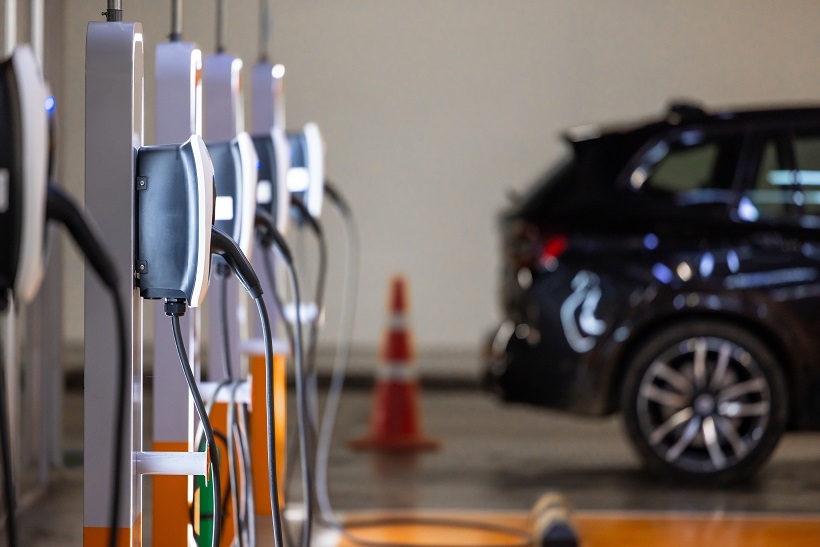
Electromobility in Europe is developing at a rapid pace, and EU regulations are encouraging drivers to purchase zero-emission vehicles. To this end, governments and local authorities are investing heavily in charging infrastructure, but primarily with electric cars in mind. Micromobility, on the other hand, is still being marginalized, even though it could become a real alternative to cars in cities. One of the biggest problems is the lack of publicly accessible 230V chargers, which are crucial for users of microcars, scooters, or electric three-wheelers. What impact does this have on the development of this sector?
Currently, electric vehicle charging infrastructure in Poland is focused mainly on cars. Public stations usually offer fast DC chargers or slower AC chargers with a power of 11-22 kW. Meanwhile, most light electric vehicles, including microcars and light quadricycles, have batteries designed for charging from a 230V socket. What are the consequences of this?
Lack of urban 230V chargers
Micromobility is a term that is increasingly appearing in discussions about the future of urban transport. It includes not only scooters or electric bicycles, with which it is commonly associated, but also light electric vehicles such as three-wheelers, scooters, or microcars, which represent an alternative to passenger cars and public transport. This solution fits into the strategy of sustainable transport and exhaust emission reduction. According to a McKinsey & Company report[1], integrating micromobility into urban infrastructure can significantly reduce the number of cars on the roads and greenhouse gas emissions. Despite this, European cities are not investing in the development of charging infrastructure for smaller vehicles.
– Currently, it is difficult to find easily accessible power sources, such as 230V sockets, which are essential for micromobility. The automotive industry has focused mainly on the development of fast-charging stations for electric cars, completely ignoring the needs of smaller vehicles – notes Maciej Płatek, CEO of the Electroride brand. In practice, this means that owners of these vehicles are forced to charge them at home, in garages, or at workplaces – provided they have the opportunity to do so.
Impact on the development of micromobility
Currently, in Poland, charging stations designed for electric cars dominate, offering higher-power connectors that are not adapted to the needs of smaller vehicles. The lack of urban 230V chargers limits the options for users who are forced to rely on home charging. This is particularly problematic for people living in apartment blocks who do not have access to a socket in an underground garage or a residential parking lot. As a result, many people may give up using electric vehicles on a daily basis because they are not sure they will be able to charge them in a convenient place.
The problem is also visible in Western Europe, where the development of charging infrastructure is focused mainly on larger electric vehicles, such as passenger cars and delivery vans. In countries such as Germany, the Netherlands, or France, there is a noticeable trend towards the development of electric transport, but public charging points adapted for light electric vehicles, such as scooters or mopeds, still constitute a minority.
How to improve the situation?
– For micromobility to develop in Poland, it is necessary to increase the availability of 230V chargers in urban spaces. A key step should be investing in publicly accessible charging stations, which should be placed in high-traffic areas, such as parking lots at shopping centers, public transport stations, or urban recreational zones. Cooperation with the private sector is also important, which should be required to install charging points in new residential developments and on commercial premises – suggests Maciej Płatek, CEO of the Electroride brand.
Another solution could be the integration of chargers with other elements of urban transport, for example by placing them in bicycle parking lots or near public transport stations, which would facilitate users’ access to energy. No less important are changes in legal regulations that could encourage investment in charging infrastructure, for example through tax breaks for companies installing 230V chargers in urban spaces.
Micromobility has the potential to become an integral part of urban transport, offering residents a flexible and efficient alternative to private cars. Its development could contribute to reducing road congestion and improving air quality in cities, as well as significantly reducing residents’ dependence on private cars. However, the lack of adequate charging infrastructure for light electric vehicles affects their usability. The current situation forces users to rely solely on home charging, which may cause many potential users to give up on purchasing them.
[1] https://www.mckinsey.com/industries/automotive-and-assembly/our-insights/the-future-of-mobility-mobility-evolves
Source: Electroride