








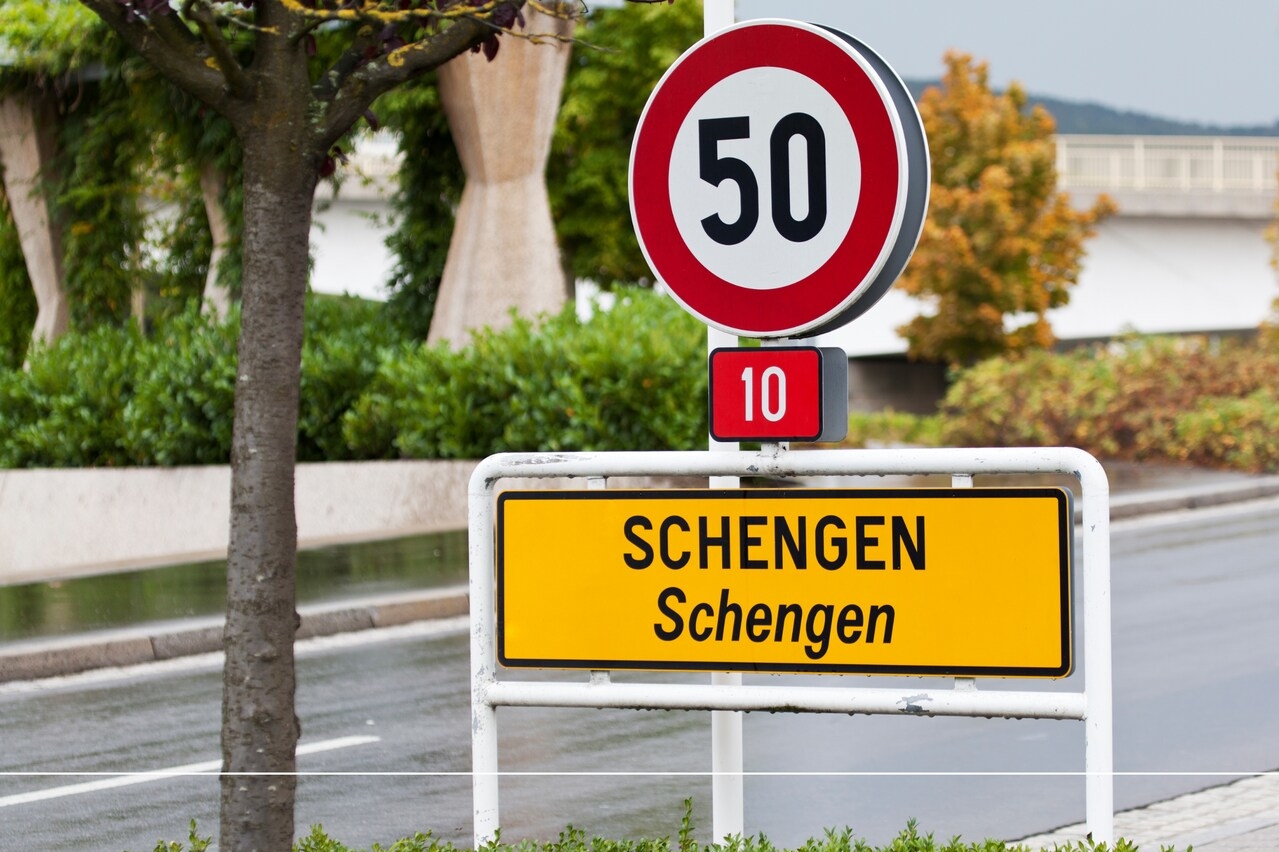
On January 1, 2025, Romania and Bulgaria gained full access to the Schengen Area, a goal they have been pursuing since their accession nearly 20 years ago. Fewer borders on the continent is great news for the European transport sector – planning routes through both countries will become easier and free from hours-long checks. Joining Schengen is a huge opportunity, especially for the rapidly developing Romania. Its position on the continent has strengthened in recent years, and transport is a key sector of the Romanian economy.
Even more open borders
Admission to the Schengen Area crowns the long-standing efforts of Bulgaria and Romania for full accession to the European Union. Both countries joined the community in 2007, but it was not until March 2024 that sea and air borders were opened within Schengen. Land restrictions were lifted on January 1, 2025, following a decision made by members of the EU Council on December 12, 2024. Such a long delay was due to concerns about the uncontrolled flow of immigrants through Bulgaria and Romania, linked to inadequate protection of their borders, which simultaneously became the new borders of the European Union. Austria held the veto for the longest time, but in 2024 its authorities decided to concede, taking into account the small scale of illegal immigration on the Romanian-Hungarian border.
Opening the borders does not mean an immediate abandonment of checks. For at least the first six months of 2025, ad-hoc checks will be maintained at the Romanian-Hungarian and Romanian-Bulgarian borders. However, their burden should not be greater than the checks at the borders with Germany, which have been reinstated in recent years.
Faster transport in the south
– Expanding the Schengen Area in the south is good news not only for Bulgaria and Romania, but for all carriers performing transports in this region. Important trade routes connecting Europe with Turkey and the rest of the Asian countries run through the Black Sea and around its coast, which means that transport in these directions should be more efficient. Those transporting goods to and from Greece, which is connected to Bulgaria by the longest land border, will also benefit – says Jarosław Roślicki, Corporate Sales Director at Transcash.eu.
The inclusion of Romania and Bulgaria in the Schengen Area primarily means time savings for the industry. According to the Transport Guide, the average waiting time at the Romanian-Hungarian and Romanian-Bulgarian borders before January 1, 2025, was 6 hours, and in the event of tighter controls – up to 72 hours. Polish entrepreneurs using routes passing through these countries estimate that opening the borders could shorten delivery times by an average of one day. Another plus for the TSL industry resulting from the opening of borders is easier planning of routes passing through Bulgaria and Romania, which until now caused significant difficulties due to the unpredictability of checks.
Romania the “Tiger of Europe”?
The expansion of the Schengen Area in the south is discussed mainly in terms of the benefits for the TSL industry and trade in general, but this decision is primarily a huge development impulse for both countries, and especially for Romania. A review of economic indicators from recent years shows that the potential of the Romanian economy is constantly growing, and its pace of development matches European powers.
According to International Monetary Fund estimates, in the coming years, it is Romania that will be among the leaders in terms of GDP growth, overtaking Poland and Hungary.
– Even before the borders were opened, it was clear that the Romanian economy was on par with its competitors from Eastern and Central Europe, and joining the Schengen Area will only strengthen its position. Polish entrepreneurs in the transport industry should closely monitor the actions of Romanian competitors in the industry, which in this country also constitutes one of the foundations of the economy – notes Jarosław Roślicki from Transcash.eu
Romanian TSL sector: competitive and hungry for more
The Romanian Road Transport Association presents the current situation of the sector in the report “Road Transport Market in Romania, 2018–2030”. According to it, the Romanian road transport market reached a value of 19 billion euros in 2023, and the TSL sector is the main exporter of services in the country. The local transport sector is affected by problems similar to those in Poland, including a shortage of drivers and rising business operating costs. Easier access to EU markets may be an opportunity for many Romanian carriers to expand their operations, although it should be borne in mind that the sector is still struggling with a crisis and is oversaturated.
The high position of the Romanian TSL industry on the continent is evidenced by the results of the Eurostat study “Key Figures on European Transport 2023 Edition” from 2022. Romania, tied with the Netherlands and the Czech Republic, ranks sixth in Europe in terms of the scale of transport work calculated in tonne-kilometers. The first place in this regard belongs to Poland, however, both in Romania and Bulgaria, international transports account for a larger percentage of total transport work than in our country.
The dynamics of transport work of Romanian companies in Europe is also huge. Between 2012 and 2022, the number of tonne-kilometers for carriers from this country increased by 118%, while in Poland in the same period the increase was just over 50%. Romania also remains at the forefront in Europe in terms of employment in transport. In 2022, 451,000 people worked in this sector in Romania, which gives it 2nd place in this respect in Eastern Europe. Poland took first place with a result of 747,000.
Romania and Bulgaria in Schengen – opportunity or threat?
– The competitiveness of carriers from Romania and Bulgaria will increase after joining Schengen, but Poland’s position in this sector remains secure. Both countries are covered by the restrictions of the Mobility Package, which means that their activities must fall within the framework of EU law. Expanding the Schengen Area to the south is a good and desirable step that will serve transport market participants, as well as other companies already operating in this part of Europe or planning to expand – says Jarosław Roślicki.
Source: Transcash / GutPR