








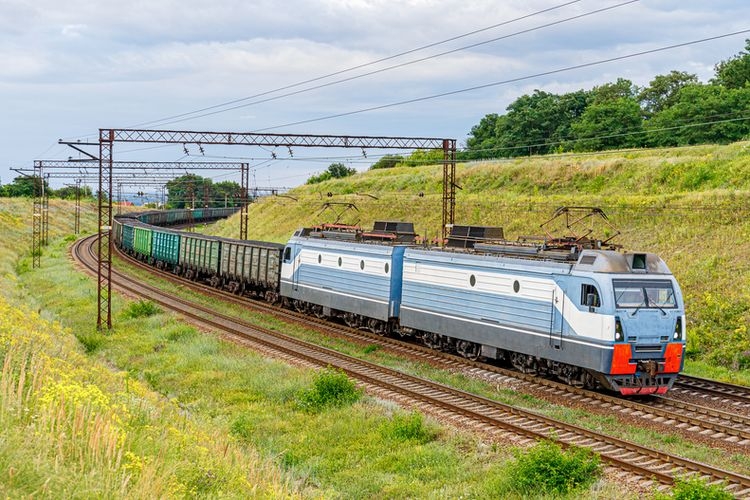
Everything indicates that after years of intensive investment in road infrastructure and support for road transport in Europe, the time has come for rail. In the first days of November, the Centre for EU Transport Projects (CUPT) announced a call for proposals for investments in intermodal transport. In December, another long-awaited call was launched, this time for equipping railway vehicles with ERTMS, the European Rail Traffic Management System. Together with the modernization of railway infrastructure and the development of digital technologies that have been ongoing for several years, this means that, albeit only in the third decade, rail transport is finally entering the 21st century.
Road freight transport is a Polish specialty. According to Eurostat, more than 20 percent of transport in the European Union is carried out by trucks registered in Poland1. But when looking at rail transport, we are far behind. However, successive ministers assure that the modernization that has been ongoing for years will soon bring the intended effect. Poland has a real chance to become an intermodal transport hub in Central and Eastern Europe, thanks to its strategic location and developing infrastructure. According to data from the Office of Rail Transport, there are currently 45 intermodal terminals operating in Poland. The largest is in Gdańsk, and the smallest is in Myszków.
Broad implementation of digital solutions is also needed for success.
– Using new technologies to manage, integrate, and optimize rail transport is one of the key steps to developing intermodal transport. Digitalization allows for more effective management of processes on the railway and cost reduction, and every increase in the competitiveness of rail transport works in its favor – says Piotr Sikorski, creator of railway technologies and CEO of SP Tech Solutions.
The most valuable resource used in innovative technologies for the railway industry is data. Supply chain management (SCM) platforms and transport management systems (TMS) are responsible for collecting and connecting this data. Within these systems or as separate tools, there are also analytical modules that allow for the implementation of optimizations where they will be most effective.
– In transport, especially intermodal, where goods are exposed to multiple transshipments, data security also counts. Hence, many solutions for this industry are based on blockchain systems, which ensure transparency and immutability of data and reduce the risk of errors or fraud. They also enable the automation of certain processes, such as customs clearance, invoicing, or settlements between operators – adds Piotr Sikorski. The largest European intermodal hubs also use autonomous management systems that coordinate the operation of terminals.
Digitalization and optimization play a fundamental role in shaping the future of rail, especially in the context of integrating intermodal transport. The development of technologies for the railway industry and the gradual modernization of infrastructure bring us closer to realizing the trucks to rails2 postulate, which was first voiced nearly 30 years ago. As its creators noted back then, intermodal transport is an optimal solution that combines the interests of all parties and meets the conditions of sustainable development in both environmental and social terms.
1 – data for 2022
2 – https://instytutsprawobywatelskich.pl/co-robimy/tiry-na-tory/